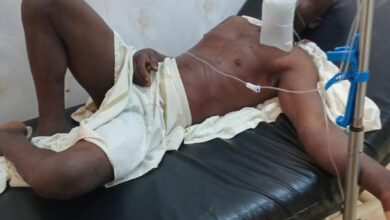
Gov’t rolls out digital bed management system to tackle ‘no-bed syndrome’
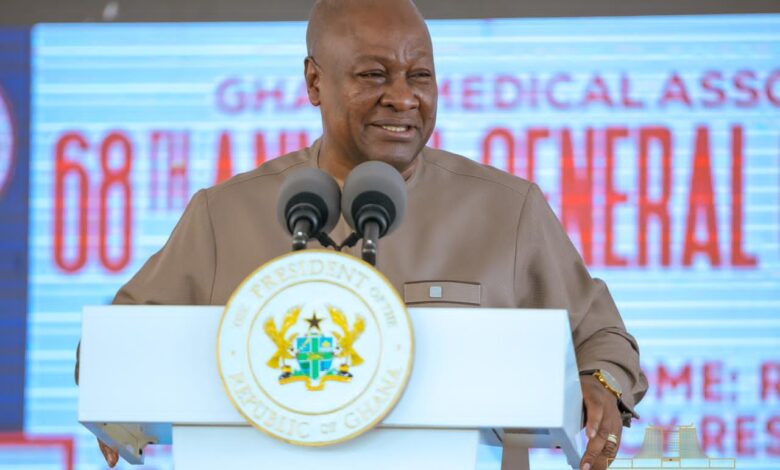
President John Dramani Mahama has announced the rollout of an Integrated Bed Management and Referral Coordination System (IBMRC) as part of efforts to tackle Ghana’s persistent ‘no-bed syndrome’ and improve emergency healthcare delivery.
The digital system, being piloted by the Ministry of Health, is expected to help hospitals and ambulance teams identify health facilities with available beds and the capacity to receive emergency patients, while facilitating faster referrals and transfers.
The pilot involves Korle Bu Teaching Hospital, Komfo Anokye Teaching Hospital, Tamale Teaching Hospital, Greater Accra Regional Hospital at Ridge, the 37 Military Hospital, the University of Ghana Medical Centre and the National Ambulance Service.
Addressing the 68th Annual General Conference of the Ghana Medical Association, President Mahama stressed that tackling the no-bed syndrome required more than simply increasing the number of hospital beds.
“Normally, people say there is no bed, but it is not just about the bed. A bed becomes a place of care when trained professionals, functioning equipment, oxygen and essential supplies are available to provide the treatment a patient needs,” he said.
He explained that the new system would help address challenges associated with emergency referrals by providing information on the actual clinical capacity of receiving facilities.
President Mahama, however, acknowledged that better referral coordination must be accompanied by an expansion of emergency care infrastructure to enable hospitals to accommodate more patients.
He cited Korle Bu Teaching Hospital as an example, noting that although the facility has a functional bed capacity of 1,500, its Accident and Emergency Department has only 65 beds.
To address the gap, government is targeting emergency bed capacity equivalent to at least 10 per cent of each facility’s functional bed capacity.
At Korle Bu, this would require increasing emergency beds from the current 65 to at least 150.
President Mahama said work would begin next year on the expansion of Accident and Emergency Centres at Korle Bu, Komfo Anokye, Tamale Teaching Hospital and the 37 Military Hospital.
He added that the expansion would be supported with the necessary healthcare professionals, medical equipment, oxygen and essential supplies to ensure the additional beds become fully operational.
The President further announced that the Ghana Armed Forces Critical Care and Emergency Hospital was opening to the public, with the facility expected to begin receiving patients immediately.
He emphasised that hospitals must not turn away critically ill patients simply because they lack available beds, insisting that every emergency patient must first be assessed and assisted.
“When a patient arrives in critical condition, we cannot simply say, ‘No bed, no bed, go somewhere else.’ At the very least, the patient must be assessed. If the facility can provide stabilisation, it must do so before arranging a transfer to another hospital that can provide the required treatment,” he stated.
He said the new digital referral system would also help ensure that families receive clear information and guidance rather than being left to navigate the referral process on their own.
President Mahama maintained that the government’s broader healthcare reforms were aimed at building an emergency response system capable of providing timely, coordinated and effective care to patients across the country.