EPR Must Be Globally Accountable: The Or Foundation Calls For Policy That Reaches Kantamanto
The call was made at the U.S. Embassy Ghana's American Spaces program – Freedom250: Rethinking Fashion: Lessons from the OR Foundation, presented by Liz Ricketts in Accra on Wednesday, 21 October 2026.
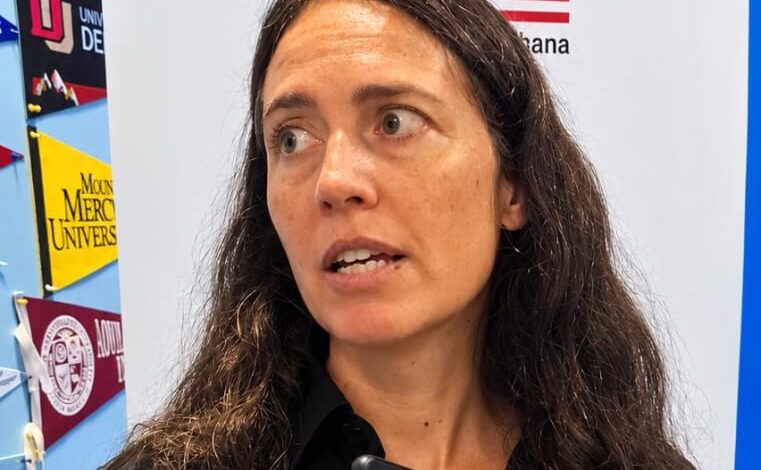
As Ghana’s Kantamanto Market continues to carry the weight of the world’s textile waste, advocates say new fashion policies risk ignoring the community at the true end of life.
It is a necessary move to acknowledge that the fashion industry has a textile waste problem, but acknowledging it is not enough. That is the message that echoed at the U.S. Embassy Ghana on Wednesday.
Speaking at the American Spaces Freedom250: Rethinking Fashion program, Liz Ricketts, Co-Founder and Executive Director of The OR Foundation Ghana, said there is a critical gap between global policy and reality on the ground.
“The idea is sound, but the way that the policies are being constructed don’t take communities like Kantamanto into account,” she told the audience at the U.S. Embassy Ghana event. “And it’s very necessary that people understand and acknowledge and support Kantamanto because Kantamanto is the biggest secondhand clothing market in the world, and it’s where most of the clothing that will be covered by EPR will end up.”
Extended Producer Responsibility (EPR) policies require fashion brands to pay fees to cover the end-of-life of the clothes they produce. For Ricketts, the problem is where that money stops.
Her team is calling for what they term Globally Accountable EPR – a model where the fees paid by brands travel with the clothes to support the true end of life.
“If we don’t extend the policy to the true end of life, then unfortunately, all those policies would do is subsidize exports and not actually document or understand the impacts that could be had,” she explained at the Freedom250 dialogue.
Ready to Receive, But Overlooked
Addressing a key concern from policymakers, Ricketts noted that one of the biggest barriers is bias against the informal economy. Policymakers often question how funds would be tracked if sent to a market like Kantamanto.
Ricketts says that concern is misplaced.
“Most of the people who are doing the work work in what is considered the informal economy, and unfortunately sometimes there’s bias against supporting the informal economy because of those questions around how would the money flow,” she said.
“But we have a lot of experience distributing resources in a traceable and documented and reportable way to individuals who work in the market. So we are set up to be able to make sure that the money gets to the people who really need it, who are again truly dealing with the end of life.”
The Or Foundation currently works with a team of over 200 people and has spent 15 years documenting waste flows and piloting direct support in the market.
What Should Kantamanto Become?
With over 26,000 people working in Kantamanto and only three bathrooms serving them, Ricketts told the U.S. Embassy audience that dignity has to be the starting point.
“If you have the biggest second-hand clothing market in the world right now, in Kantamanto you have over 26,000 individuals working there, and you only have three bathrooms. So at the most basic level, people deserve better than that,” she said.
But her vision, shared during the Rethinking Fashion lecture, goes beyond basic infrastructure.
“I think Kantamanto should be fit for what it is, which is a global leader in textile circularity. So for us, Kantamanto shouldn’t just be a place of resale, but also a place where we are investing in upcycling as industry. So a space where there’s actual remanufactories, a space where clothing can be upcycled at scale, and where the talent and the creativity of the Ghanaian designers can be featured, and also a place that’s safe and dignified.”
The goal, she said, is for Kantamanto to be recognized not as a dumping ground, but as a leader in circularity.
OWO October Festival Returns This Sunday
Ricketts was speaking ahead of The Or Foundation’s annual community festival.
This Sunday marks the 5th edition of the Obroni Wawu October Festival (OWO Festival) in Kantamanto, running from 12 p.m. to 8 p.m.
The all-day event will feature a fashion show, live screen printing workshops, weaving with recycled yarns, talks, an exhibition, and live performances including Sister Derby.
The highlight remains the fan-favourite Drip Contest, where anyone can show up in their best upcycled or secondhand fit for a chance to win 2,000 Ghana Cedis.
For Ricketts and her team, the festival is a showcase of what Kantamanto already is — creative, resilient, and circular — and what it could become if global policy finally follows the clothes