Mahama: Slavery reparations must go beyond financial compensation
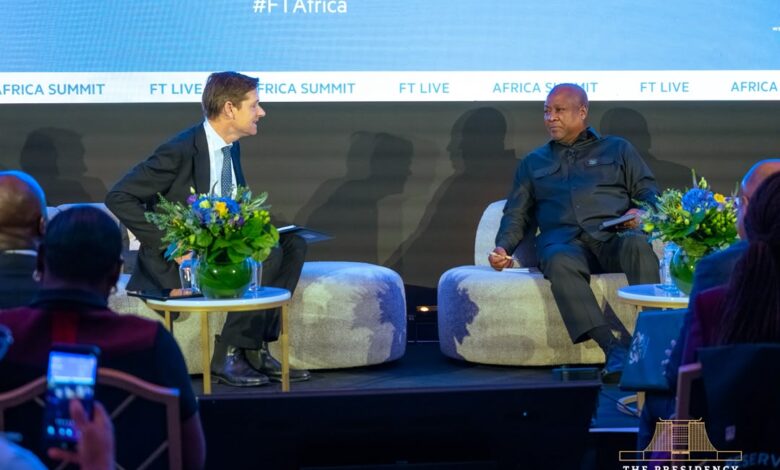
President John Dramani Mahama has called for a broader approach to reparations for slavery, insisting that efforts to address the legacy of the transatlantic slave trade must go beyond financial compensation to include historical acknowledgment, the return of looted artefacts and measures to promote prosperity in the Global South.
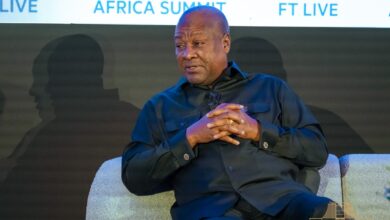
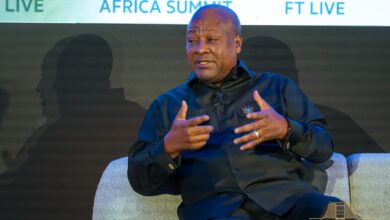
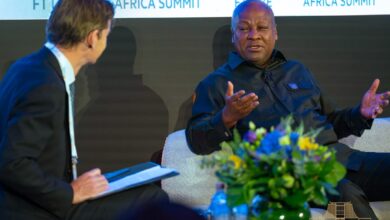
Speaking at the FT Africa Summit in the United Kingdom, President Mahama said reparations should recognise the scale of the suffering caused by centuries of slavery, forced labour and other abuses, while ensuring that such atrocities are never repeated.
He argued that reducing reparations to a financial settlement would fail to address the wider historical and social consequences of slavery.
“It is uncharitable to think that a simple payoff is the response to centuries of brutality, forced labour and other abuses,” he said.
President Mahama said the campaign for reparative justice had made progress following a United Nations General Assembly vote in which 123 countries supported the recognition of slavery as the gravest crime against humanity.
He said the vote had helped open the door to discussions with countries that were previously reluctant to engage on the issue.
“We have set the record. The UN General Assembly, by a vote of 123, has accepted that slavery was the gravest crime against humanity. Since that vote was taken, several countries have opened up to dialogue,” he stated.
According to the President, discussions on reparations should begin with an honest acknowledgment of what happened and a willingness to explore practical ways of addressing its lasting consequences.
He disclosed that Ghana had received approaches from Germany, France and other countries to discuss the issue, describing dialogue as an important step towards achieving meaningful progress.
“We have had approaches from Germany, France and several other countries to discuss the issue. I do not think that a simple payoff is what we demand for years of slavery. There are many other things and many other ways of repair. We call it repair,” he said.
President Mahama explained that reparations could include the return of African artefacts taken during colonialism and slavery, alongside initiatives that improve the conditions necessary for economic development across Africa and the wider Global South.
He said some countries had already begun returning artefacts, describing such actions as part of the broader effort to confront historical injustices.
“We are willing to have artefacts that were taken away returned, and some countries have begun to return them,” he added.
The President cautioned against dismissing the issue simply because slavery happened centuries ago, arguing that confronting historical wrongs was necessary to prevent similar abuses in the future.
“If you want to remain in an isolationist world and refuse to discuss the reality of history, that is your choice. But it happened. We cannot simply say that because it is history, we should let it pass,” he said.
He further stressed the importance of ensuring that the lessons of slavery inform present-day efforts to protect human dignity and combat exploitation.
“Those who do not learn from the mistakes of history are bound to repeat them in the future,” President Mahama stated.
He said Ghana wanted reparations discussions to produce a lasting commitment to preventing slavery and similar abuses from happening again, including forms of exploitation that persist in modern times.
“We want a guarantee that this will not happen to any human being again in this world. We should continue to fight slavery wherever we find it, even in modern times,” he said.
President Mahama also urged countries that had abstained from the UN vote not to view the reparations debate as a demand for immediate financial payments, but as an opportunity to engage constructively on historical responsibility and the future of international cooperation.
He said the broader objective should be to create conditions that enable countries in the Global South to achieve sustainable prosperity.
“We can begin by looking at how to improve conditions for prosperity in the Global South,” he said.
The President maintained that addressing historical injustices and promoting development in Africa should not be seen as a threat to Western countries, but as an opportunity for stronger global partnerships.
“A strong Global South is not a threat to the West. A strong Global South is an advantage. It shows what we can achieve together if we work together,” he said.
His comments add to Ghana’s growing diplomatic efforts to advance discussions on reparations and encourage international cooperation on the lasting consequences of slavery, while placing historical recognition, restitution and shared prosperity at the centre of the debate.