Mahama announces plans to expand rubber production in Western North
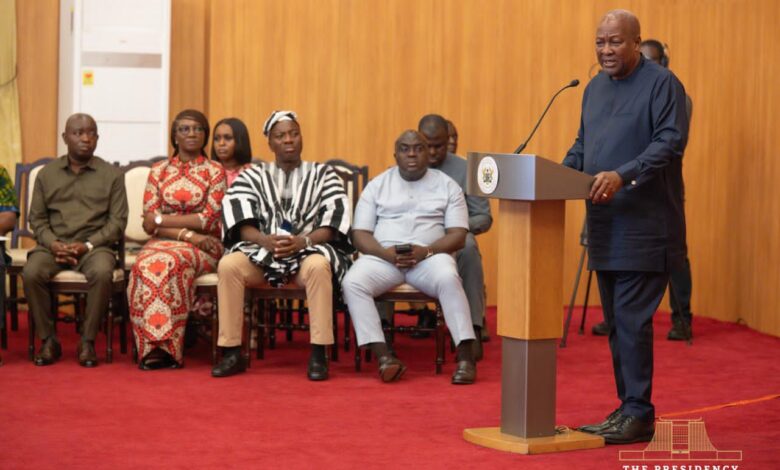
President John Dramani Mahama has announced plans to expand rubber production in the Western North Region as part of the government’s efforts to diversify agriculture and create additional income opportunities for farmers.
He said the initiative would target farms where cocoa production was no longer sustainable, allowing farmers to switch to rubber cultivation and generate alternative sources of income.
Speaking during a courtesy call by the Western North Regional House of Chiefs at the Presidency, President Mahama said the region had been identified as a key area for increased rubber production under the government’s proposed New Economy Policy.
“Apart from that, we want to plant rubber on some farms where cocoa production is no longer sustainable. Western North has been targeted as one of the regions where we are going to increase rubber production so that it can earn extra income for our people,” he said.
The initiative forms part of the government’s broader plan to invest approximately US$2 billion annually over five years in nine strategic sectors of the economy under the New Economy Policy, representing a total investment of US$10 billion.
President Mahama said the policy would focus on job-creating sectors, including agriculture and agribusiness, textiles and garments, pharmaceuticals and tourism, to stimulate economic growth and expand employment opportunities.
He also announced plans to establish 100,000 hectares of oil palm plantations, urging traditional authorities to support the initiative by making land available for cultivation or establishing plantations themselves.
The President explained that chiefs and landowners would not necessarily have to surrender their lands to the government but could own and cultivate oil palm plantations, with the government providing seedlings and employment opportunities for young people.
He said the agricultural investments were intended to improve rural incomes, create jobs and strengthen the country’s productive capacity.
President Mahama further highlighted reforms in the cocoa sector, pointing to the Ghana Cocoa Board Act, 2026, which guarantees cocoa farmers at least 70 per cent of the world market price.
He said Ghana was currently paying cocoa farmers 71.18 per cent of the international market price, exceeding the statutory minimum.
The President expressed hope that the expansion of rubber and oil palm production, alongside measures to improve cocoa farmers’ earnings, would strengthen agricultural livelihoods in the Western North Region and contribute to the government’s broader economic transformation agenda.