

Gov’t to Reform Property Rates Collection System-Ayariga
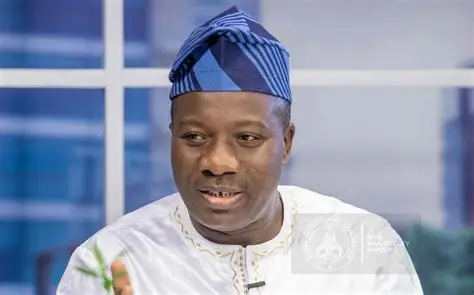
The Minister for Local Government, Chieftaincy and Religious Affairs, Mahama Ayariga, has disclosed that he is working with President John Dramani Mahama and the Finance Minister to reform the property rates regime to provide Metropolitan, Municipal and District Assemblies (MMDAs) with adequate funding to deliver essential services.
Mr Ayariga said he was also engaging development partners to ensure their support aligns with the government’s plans.
Speaking at the Government Accountability Series on Monday, October 5, he said the current property rates system was characterized by inefficiencies, inconvenience for property owners and corruption, with some payments ending up in private hands.
He said the government would introduce a centrally controlled system for collecting property rates, eliminating cash payments.
“Most local government staff deliberately ensure that the systems designed at the local level do not function for ulterior motives. We will roll out a centrally controlled mechanism for the collection of the rates which will totally take out cash collection. All payments will be electronic involving only MTN MoMo and electronic bank transfers,” he said.
Mr Ayariga said the government’s approach was to improve service delivery at the local level to encourage voluntary compliance by property owners.
He explained that when residents see local authorities providing the services they are entitled to, they would be more willing to pay their property rates, reducing the need for enforcement.
On urban mobility, the Minister said the government was taking steps to address congestion in major cities.
He said President Mahama had approved the trial of a contraflow system to facilitate the movement of commuters during peak hours using the Ayalolo Bus Rapid Transit (BRT) buses.
According to Mr Ayariga, the President was satisfied with the initial results of the trial and had scheduled a stakeholder meeting to review the exercise and determine how it could be sustained.
He assured the public that the contraflow system would remain in place as a mass-transit solution until alternative measures were developed to improve mobility in Ghana’s major cities.
By Esther Padmore Amonoo
