President Mahama: Health investment will create jobs, boost manufacturing and protect economies
President John Dramani Mahama has urged African countries to treat healthcare as a major economic investment, arguing that stronger health systems can create jobs, boost local manufacturing and protect economies from external shocks.
He said Africa could no longer afford to view health spending simply as a social cost to be funded only when resources are available.
“Health is not a charitable cost; it is an investable, high-growth economic sector,” President Mahama said.
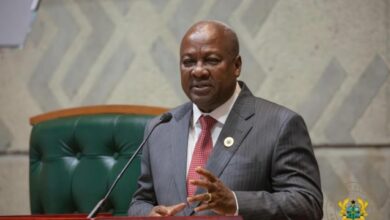
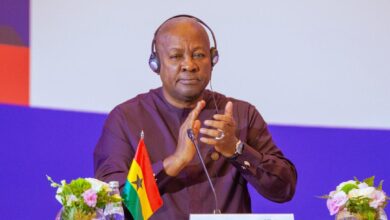
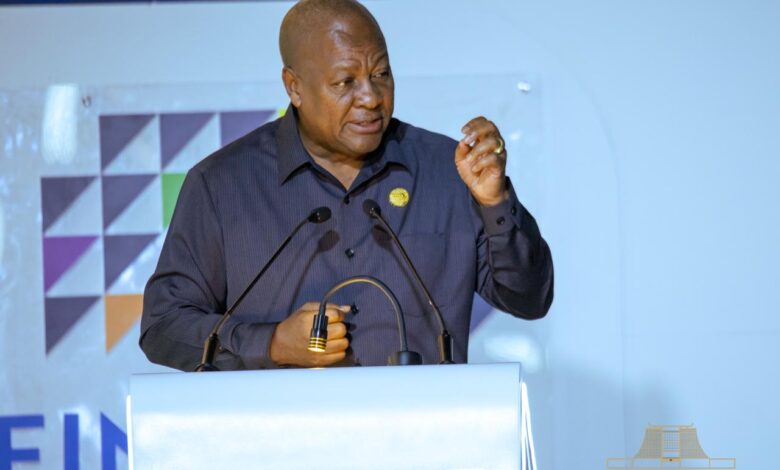
He made the remarks while delivering the keynote address at the Alamein Africa Forum in Egypt, held alongside the 8th African Union Mid-Year Coordination Summit.
President Mahama said investing in healthcare has benefits that go far beyond hospitals and medicines, as a healthier population strengthens human capital, supports productivity and contributes to economic growth.
He cited estimates showing that every dollar invested in newborn care can generate about $87 in economic and social returns, while research by the Lancet Commission found that falling mortality rates accounted for nearly a quarter of income growth in developing economies in the early 2000s.
President Mahama said Africa’s heavy dependence on imported medicines and vaccines presents both a challenge and an opportunity.
He noted that the continent currently imports more than 70 per cent of its pharmaceuticals and nearly 99 per cent of its vaccines, with tens of billions of dollars leaving African economies each year to purchase health products from abroad.
Building pharmaceutical manufacturing capacity locally, he said, would help African countries retain foreign exchange, reduce exposure to international supply disruptions and strengthen domestic industries.
“African manufacturing does not serve a single country of 10 or 30 million people. It serves a single unified market of 1.4 billion consumers,” he said.
He said the African Continental Free Trade Area (AfCFTA) could provide local pharmaceutical manufacturers with access to a vast continental market, making investments in production more commercially attractive.
President Mahama also highlighted the employment opportunities that could come with expanding health manufacturing.
He said Africa faces a shortage of about six million health workers, while nearly one million trained healthcare professionals and science graduates remain unemployed.
According to him, developing local pharmaceutical and biotechnology industries could create jobs in research and development, clinical trials, engineering, biotechnology and manufacturing.
“It means high-value jobs in Africa,” he said, stressing the need to retain skilled professionals and provide meaningful employment opportunities for the continent’s young population.
He also pointed to the potential for locally manufactured medicines to reduce costs for patients by cutting logistics expenses and intermediary margins.
President Mahama said Ghana was taking steps to strengthen its health sector and reduce its reliance on imported health products.
He cited the expansion of the National Health Insurance Scheme, the introduction of free primary healthcare, the establishment of the Ghana Medical Trust, and efforts to strengthen the Food and Drugs Authority and the National Vaccine Institute.
These measures, he said, form part of Ghana’s broader effort to move from being primarily a consumer of health products to becoming a producer.
President Mahama stressed that governments alone could not finance the transformation required across Africa.
He therefore called for greater participation from private investors, commercial banks, industrial developers and sovereign wealth funds to finance pharmaceutical manufacturing and other health-related industries.
“Let us stop treating health as a line-item expense in our budget. Let us build the factories, integrate supply chains, fund innovators and secure our citizens’ future,” he said.
For President Mahama, achieving health sovereignty would not only help Africa respond more effectively to future health emergencies but also create a new source of industrial growth, employment and economic resilience for the continent.