Beyond politics: Why Kwame Nkrumah’s ideals still matter for today’s leaders
By Alhaji Seidu Agongo
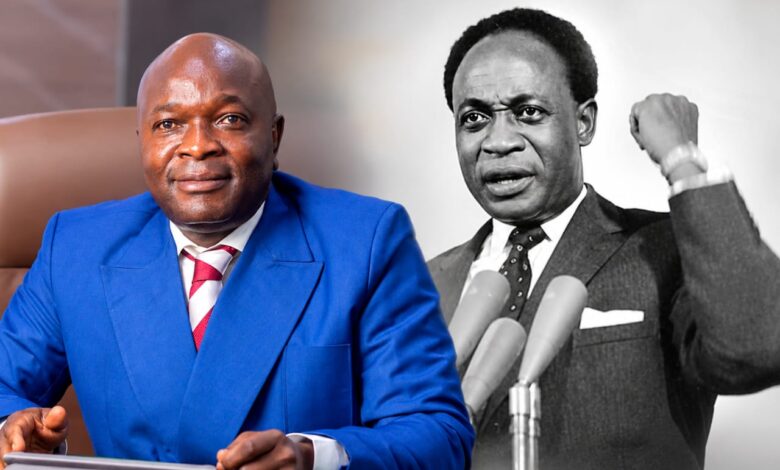
As world leaders gather for the 81st Session of the United Nations General Assembly (UNGA) in New York, few African statesmen loom as large over the institution’s history as Ghana’s founding president, Dr Kwame Nkrumah.
Decades after his overthrow in 1966, the questions he raised about African unity, economic independence, global inequality and self-determination remain central to the challenges confronting today’s leaders.
The renewed debate in Ghana about Dr Nkrumah’s legacy has gained added relevance following recent remarks by former New Patriotic Party running mate Matthew Opoku Prempeh. At Dr Nkrumah’s 117th birthday celebration event, Dr Prempeh called on Ghanaians to rise above partisan politics and honour Dr Nkrumah’s contribution to Ghana, Africa and the wider world. Speaking at the NkrumahFest in Nkroful, the former Member of Parliament described Ghana’s first president as a “generational thinker”, a liberation icon and an architect of nation-building whose legacy transcends political divisions.
Those comments marked a notable evolution from the controversy that surrounded his 2024 comparison of Nkrumah and former President Nana Akufo-Addo, remarks for which he later apologised and clarified.
Today, however, Dr Prempeh’s call for us to view Dr Nkrumah through a national rather than partisan lens presents an opportunity to revisit the enduring relevance of Osagyefo’s ideas.
Nkrumah beyond Ghana
The significance of Nkrumah was never confined to Ghana. At a time when much of Africa remained under colonial rule, he articulated a vision of political and economic liberation that resonated across the continent.
Long before regional integration became fashionable, Dr Nkrumah argued that Africa could only achieve meaningful development through unity, collective security and shared economic progress. As Dr Prempeh himself observed in Nkroful, Nkrumah’s vision was “expansive, visionary and fiercely Pan-African.”
That message remains strikingly relevant, years after he was forced out. Across Africa, governments continue to grapple with fragmented markets, trade barriers, debt vulnerabilities, resource dependency and geopolitical competition among global powers. The recent creation of the African Continental Free Trade Area (AfCFTA), headquartered in Accra, can be viewed as a modern expression of the continental integration project that Dr Nkrumah championed more than six decades ago.
Dr Nkrumah was also among the earliest African leaders to challenge the structure of the international economic order. He warned that political independence would mean little without economic sovereignty. His concerns about unequal trade relations, dependence on commodity exports and foreign control of strategic resources still echo across policy discussions from Accra to Addis Ababa.
Africa’s demand for stronger voice
As African leaders prepare to address the world through the UN General Assembly, many of the issues dominating the agenda would be familiar to Dr Nkrumah: climate justice, development financing, global governance reform, peace and security, and equitable representation in international institutions.
The debate about Africa’s demand for a stronger voice within the UN Security Council, for instance, reflects the very struggle for global equality that Dr Nkrumah advocated throughout his career.
Dr Nkrumah’s speeches at the UN were notable not merely for their rhetoric but for their insistence that newly independent states deserved equal treatment and respect in world affairs.
He argued that peace could not be separated from justice, and that global prosperity could not be sustained while large parts of humanity remained marginalized. Many of those arguments continue to shape the positions advanced by African governments, including our own President John Dramani Mahama at multilateral forums today.
Yet perhaps Dr Nkrumah’s most relevant lesson for contemporary leaders lies closer to home.
He believed leadership should be driven by a long-term national vision rather than short-term political calculations. While historians continue to debate aspects of his governance and political methods, few dispute his ambition for Ghana and Africa.
He was willing to think beyond electoral cycles and immediate popularity, focusing instead on industrialisation, infrastructure, education and continental influence.
That is the challenge confronting today’s political class. Across Africa, public frustration often stems not from a lack of resources but from a perceived lack of transformational leadership. Citizens increasingly expect leaders to articulate clear national visions, invest in productive sectors, create opportunities for young people and build institutions capable of outlasting individual administrations.
Nkrumah’s lessons
In this regard, Dr Prempeh’s recent comments deserve attention. By acknowledging that Dr Nkrumah’s legacy should rise above partisan rivalries, he touched on an important truth: nations advance when they build on their shared history rather than weaponise it for political gain.
As the world turns its attention to the UN this week, Ghana’s first president offers a reminder that great leadership is not measured solely by electoral victories or economic statistics. It is measured by the ability to inspire a people, shape a nation’s identity and articulate ideas that remain relevant long after one has left office.
More than half a century after his death, Dr Kwame Nkrumah continues to do exactly that. His message of unity, self-reliance, strategic development and Pan-African cooperation remains not just a historical legacy, but a blueprint that many of today’s leaders would do well to revisit.
By Alhaji Seidu Agongo
The writer is a businessman and philanthropist