From donor dependence to self-reliance: President Mahama advances Accra Reset
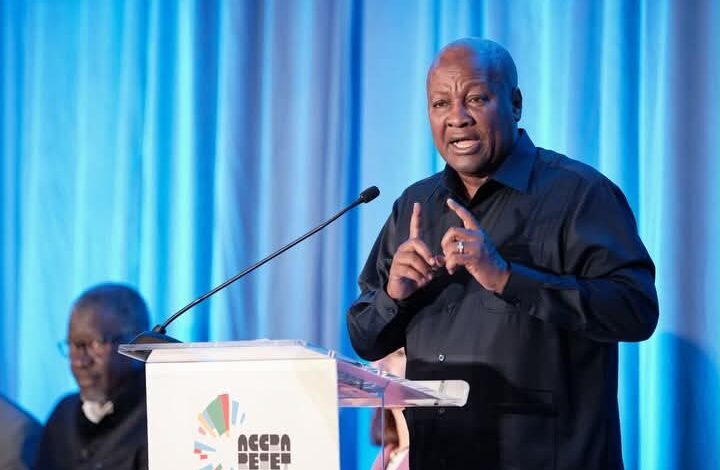
President John Dramani Mahama has called for a fundamental shift from donor dependence to greater self-reliance among countries in the Global South, arguing that nations must strengthen their capacity to determine and finance their own development priorities.
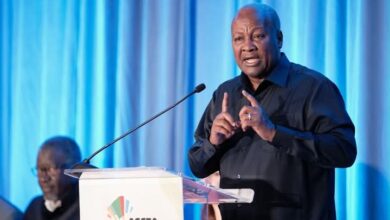
Speaking at the “Full Circle: Making Global Development Work Again” side event of the 81st United Nations General Assembly in New York, President Mahama said the Accra Reset was aimed at challenging a global development system in which critical decisions, resources and influence remain concentrated outside developing countries.
He said the initiative, launched a year ago, was born out of the recognition that countries in the Global South could no longer rely solely on appeals for increased foreign aid to address their development challenges.
President Mahama identified geostrategic marginalisation, geopolitical vulnerability and donor dependence as three interconnected challenges confronting developing countries.
“These are not three separate misfortunes; they are interconnected threats of a broken global system,” he said.
According to him, addressing the challenges would require countries to build stronger political authority, productive capacity and financial resilience.
Linking Ghana’s reset to the global agenda
President Mahama linked the Accra Reset to Ghana’s own Resetting Ghana Agenda, saying his administration was pursuing reforms to strengthen the economy, fiscal management, governance institutions and industrial capacity.
He stressed that Ghana’s domestic transformation could not be separated from the wider global development system.
“A national reset without a global reset leaves us building on shifting sands. Likewise, a global reset without domestic discipline is unfeasible. They are two sides of the same coin,” he said.
The President said greater national control over development priorities must also come with stronger domestic accountability.
“There can be no ownership without control,” he stated.
He cautioned, however, that transferring greater authority to national governments without strengthening accountability would not automatically deliver genuine sovereignty.
Building domestic productive capacity
Using Ghana’s health sector as an example, President Mahama said development should go beyond building hospitals and other infrastructure while continuing to rely heavily on foreign suppliers for essential medicines and medical products.
He advocated stronger domestic pharmaceutical manufacturing supported by government procurement and access to regional markets.
The approach, he said, reflects the broader philosophy of the Accra Reset, under which countries would build the productive capacity required to meet essential needs while maintaining international partnerships.
He rejected suggestions that greater self-reliance amounted to isolation from the international community.
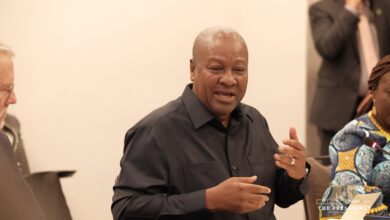
“This sovereign health agenda, Accra Reset, is not a retreat into isolationism. We are seeking pragmatic interdependence, a mature equal partnership where we see one another as equals,” he said.
Accra Reset moves from ideas to implementation
President Mahama said the Accra Reset had spent the past year developing structures to move the initiative from an international policy concept into practical programmes.
A Presidential Council, Guardian Circle and high-level panel on reform of the global health architecture and governance have been established as part of the process.
The high-level panel has produced a report, “A Sovereign Future for Health,” containing 10 recommendations aimed at strengthening the ability of countries in the Global South to shape their health systems and reduce vulnerabilities arising from external dependence.
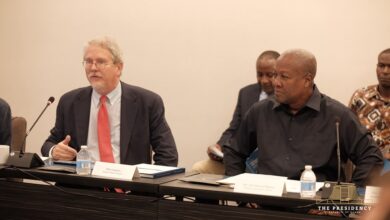
President Mahama said Ghana would work with governments, global health institutions, development finance institutions, philanthropies and private-sector organisations to translate the recommendations into country-level programmes.
He also called for stronger networks linking research, regulatory oversight, local manufacturing and distribution systems across developing countries.
Health as the first test
President Mahama said health was chosen as the first major area for the global reset because of its fundamental importance to human wellbeing.
He identified maternal and child health as an immediate area where the proposed reforms must produce measurable results.
He pointed to the Mother Africa Initiative and the Business United for Mothers, Babies, and Youth (BOMBI) campaign as efforts designed to bring government policy and private-sector responsibility together to improve outcomes for mothers and children.