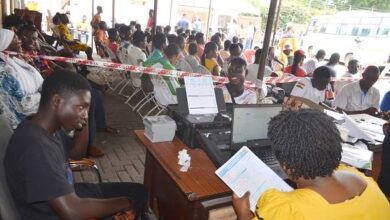
For a young Ghanaian struggling to stay in university, a scholarship is not merely an announcement, a press release or a name on a list. It is a lifeline. It is the difference between continuing a programme and deferring it; between remaining in the lecture hall and returning home; between pursuing a dream and watching that dream slowly slip away.
That is why the growing concern over outstanding payments under Ghana’s Local Tertiary Scholarship deserves more than silence.
The Ghana Scholarships Authority has opened another application cycle for the 2026/2027 academic year, with applications running from April 10 to May 15, 2026.
The development is welcome for students who need financial assistance.
But there is a difficult question that cannot be ignored:
What about beneficiaries of previous local scholarship awards who are still waiting for payments that, according to complaints from affected students, have been outstanding for more than a year?
This is not an argument against giving scholarships to new students. It is a question of accountability, financial planning and fairness.
A new batch while an old commitment remains?
Government scholarship programmes are built on a simple understanding: once a student has been approved and awarded support under the applicable conditions, there should be a credible mechanism for that support to be delivered.
The Ghana Scholarships Authority itself states that approved scholarship support is processed to beneficiary institutions according to award terms and funding schedules.
That raises a legitimate public-interest question when students who have already been awarded scholarships say they have waited for extended periods without receiving the expected payments.
How long should a beneficiary wait?
What happens when the university demands payment?
Who bears the burden when a student cannot register, sit examinations or obtain important academic documents because of outstanding fees?
And perhaps most importantly, how can a new cycle of scholarship commitments be sustainably created if previous commitments have not been fully settled?
These questions deserve clear answers.
Where is the money?
One of the central questions surrounding the reported arrears is financial.
Was the money budgeted but not released?
Was it released in stages?
Were there administrative delays?
Are there outstanding verification or reconciliation issues between the Authority and beneficiary institutions?
Was the amount allocated sufficient to cover existing obligations?
Or are there other reasons for the delays?
The 2026 Budget states that the Scholarship Secretariat undertook various scholarship-related disbursements and would broaden scholarship coverage in 2026.
But broad budgetary figures do not, by themselves, answer the specific question of how much remains outstanding under the Local Tertiary Scholarship and when those arrears will be paid.
That information should be made public.
Do not allow speculation to replace accountability
There are already questions in the public space about whether scholarship funds were properly released, adequately budgeted for or appropriately administered.
Such questions should not automatically become accusations.
There is an important distinction between asking “Where is the money?” and declaring that money has been diverted or misapplied.
The latter requires evidence.
The appropriate response, therefore, is transparency.
If the funds have not been released, tell the public.
If they have been released but payments are delayed, explain why.
If there are administrative problems, identify them and provide a timetable for resolving them.
If the funding allocation is inadequate to meet existing commitments, say so openly.
Public confidence is strengthened when difficult questions are answered with facts rather than silence.
Students cannot pay fees with scholarship promises
For policymakers, a delayed scholarship payment may appear as an administrative matter.
For a student, it can become a personal crisis.
Imagine a student who has already been told that government will support his or her education. The student proceeds with registration, attends lectures and continues the programme with the expectation that the approved scholarship will eventually settle the relevant expenses.
Then months pass.
Another semester begins.
The bill remains.
The university wants its money.
The student has no money.
The parents are struggling.
Eventually, the scholarship that was supposed to reduce financial pressure becomes a source of uncertainty.
This is why scholarship administration must be judged not only by how many students receive award letters, but also by how efficiently approved financial support reaches them.
The Authority already has a public database
Interestingly, the Ghana Scholarships Authority has a public scholarship database that provides information on beneficiaries, institutions, scholarship types and award years.
That is a useful step towards transparency.
But the public needs more than information about who has been awarded a scholarship.
There should also be greater transparency about the status of the financial obligation attached to those awards.
A student may appear in a database as a beneficiary while still waiting for payment.
The public therefore needs to know not only:
Who received the scholarship?
but also:
Has the scholarship been paid?
How much has been paid?
How much remains outstanding?
Why is it outstanding?
When will it be paid?
Publish the arrears
The Ghana Scholarships Authority should consider publishing a periodic Local Tertiary Scholarship Payment and Arrears Report.
Such a report could provide:
The number of beneficiaries with outstanding payments;
The academic years affected;
The total amount outstanding;
Amounts already released and paid;
Institutions affected;
Reasons for significant delays;
The current status of outstanding claims; and
A realistic timetable for settlement.
Such transparency would help students, parents, tertiary institutions, Parliament and taxpayers understand the true situation.
It would also prevent rumours from filling the information gap.
Parliament should ask the difficult questions
Scholarship funding is a public matter because it involves public resources and the educational future of Ghanaian citizens.
Parliament therefore has an important oversight responsibility.
The relevant authorities should be able to answer straightforward questions:
How much was budgeted for local tertiary scholarships?
How much was actually released?
How much has been paid?
How much remains outstanding?
How many students are affected?
What is the timetable for clearing the arrears?
And, importantly:
What financial provision has been made to ensure that new scholarship commitments do not create another cycle of arrears?
These are not hostile questions. They are accountability questions.
The new applicants also deserve certainty
There is another dimension that must not be forgotten.
Students applying for the new scholarship cycle also deserve to know that the system they are entering is financially sustainable.
The Authority’s published guidance makes clear that scholarship awards depend on eligibility, verification, programme criteria and available funding.
That makes proper financial planning essential.
The objective should not simply be to increase the number of scholarship beneficiaries every year.
The objective should be to create a scholarship system where approved beneficiaries receive the support they are entitled to within a predictable and clearly communicated framework.
A scholarship is a promise
Ghana needs scholarships.
Thousands of academically capable but financially challenged students need assistance to complete their education.
The Local Tertiary Scholarship can therefore play an important role in expanding access to higher education.
But the credibility of such a programme depends on more than announcements.
It depends on implementation.
A scholarship award creates an expectation. When that expectation remains unfulfilled for an extended period, confidence in the entire system suffers.
Government must therefore ensure that the enthusiasm surrounding new scholarship applications does not overshadow the legitimate concerns of students who are already beneficiaries.
Before another promise, honour the existing ones
The issue is ultimately one of priorities and accountability.
New students deserve opportunities.
Existing beneficiaries deserve the support they were awarded.
Taxpayers deserve an explanation of how allocated funds are being managed.
Universities deserve clarity about outstanding obligations.
And the Ghana Scholarships Authority deserves the resources and administrative systems necessary to deliver its mandate effectively.
The country should not have to choose between supporting new students and paying existing beneficiaries. A properly planned scholarship system should be capable of doing both.
But where arrears exist, they must be acknowledged, quantified and addressed.
Before another batch of students is celebrated as scholarship beneficiaries, let Ghana also ask a simple question: What has happened to the students who were awarded scholarships before them and are still waiting?
They are not asking for charity.
They are asking for a commitment already made to them to be honoured.
A scholarship should not end with an award letter. The real measure of a scholarship is whether the promised support actually reaches the student.