President Mahama swears in three new Supreme Court Justices
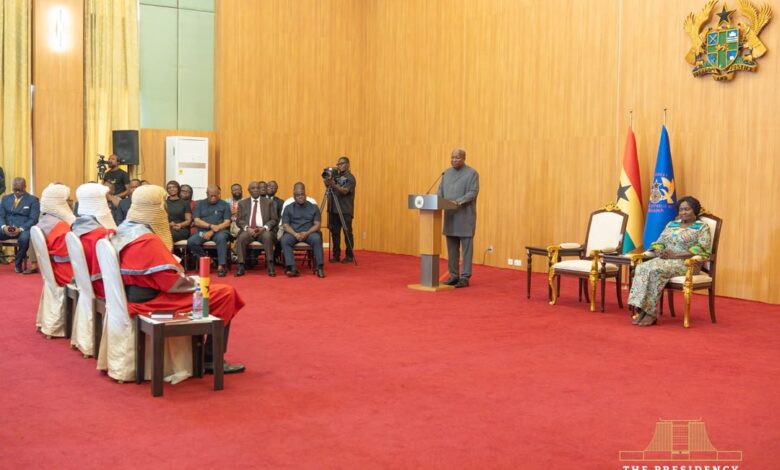
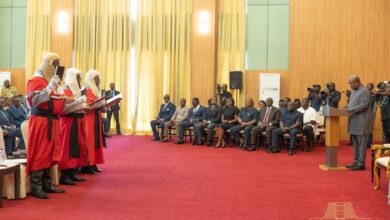
President John Dramani Mahama has sworn in three new Justices of the Supreme Court, charging them to uphold the Constitution, protect citizens’ rights and administer justice without fear or favour.
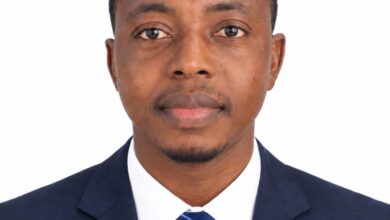
The newly sworn-in Justices are Justice Sophia Rosetta Oduokunwa Bernasco-Essa, Justice Edward Amoako Asante and Justice Anthony Forson Jr.
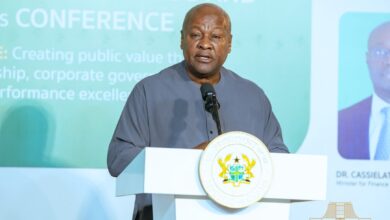
Speaking at the swearing-in ceremony, President Mahama congratulated the three Justices on their appointments and approval by Parliament, describing service on the Supreme Court as one of the highest and most demanding responsibilities in Ghana’s constitutional democracy.
He also acknowledged the families, colleagues and mentors of the new Justices for the support and sacrifices that contributed to their professional journeys.
President Mahama said the Supreme Court occupied a unique and indispensable position in Ghana’s governance, stressing that as the final judicial authority, its decisions give meaning to the Constitution, settle matters of national importance and shape the development of the country’s laws.
He said the authority of the Court rested not on political power or force, but on the confidence and trust of the Ghanaian people.
“That confidence and trust [is] that every matter brought before it will be determined independently, impartially, and strictly according to the law,” he said.
The President said Supreme Court Justices required qualities beyond legal knowledge, including sound judgment, personal integrity, intellectual courage, patience and a deep commitment to justice.
He therefore charged the new Justices to protect constitutional rights, preserve the separation of powers and ensure that no individual or institution was placed above the law.
Oath is consequential
President Mahama reminded the Justices that the oath they had taken was “consequential, not ceremonial,” describing it as a solemn covenant with the people of Ghana.
He urged them to remain guided by the Constitution, particularly when determining cases involving strong public emotions or competing political interests.
“Let the quality of your reasoning define your legacy, the fairness of your decisions, and your unwavering loyalty to the Constitution,” President Mahama said.
He reaffirmed his commitment to judicial independence, explaining that an independent judiciary was essential to protecting citizens and ensuring that their rights could be determined fairly, including in politically sensitive cases.
However, he stressed that judicial independence must be accompanied by accountability, discipline and fidelity to the judicial oath.
Mahama calls for judicial reforms
The President also called on the judiciary to pursue reforms aimed at improving efficiency, embracing appropriate technology and making justice more accessible to Ghanaians.
He expressed concern about prolonged cases, avoidable adjournments and delays in delivering judgments, warning that such challenges could erode public confidence in the justice system and ultimately amount to a denial of justice.
President Mahama further urged the Supreme Court to ensure that its judgments were clear, coherent and well-reasoned to provide dependable guidance to lower courts, public institutions, lawyers and citizens.
He said the three new Justices brought complementary experience to the apex court.
Justice Bernasco-Essa brings extensive judicial experience from the Court of Appeal, while Justice Asante combines national appellate experience with his former leadership of the ECOWAS Court of Justice.
Justice Forson, a former President of the Ghana Bar Association, joins the Supreme Court from private legal practice, bringing decades of experience in litigation and leadership within the legal profession.
President Mahama said their diverse professional backgrounds would enrich the deliberations of the Supreme Court and contribute to the continued development of Ghanaian law.
He reminded the Justices that behind every case file were human beings whose rights, livelihoods, freedoms and futures could depend on the decisions of the Court.
“Approach every matter with humility, listen patiently, examine the law carefully, decide courageously, and let justice and the national interest remain your abiding purpose,” he said.