Nana Oye Bampoe Addo Opens Historic Ghana-Burkina Faso HR Café, Calls for AI-Driven, Disciplined Public Service
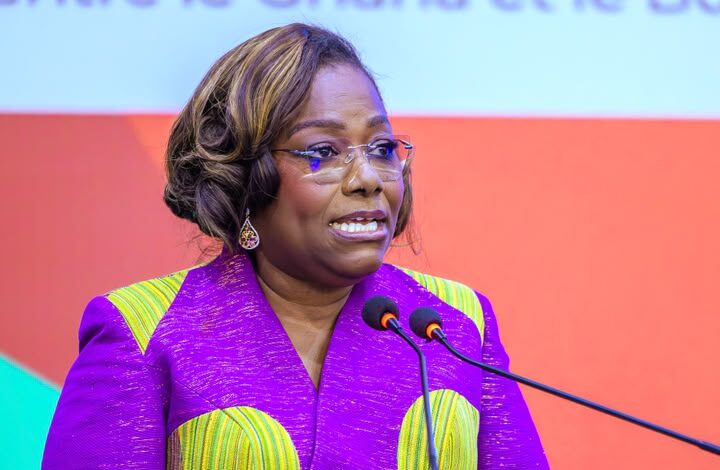
Deputy Chief of Staff (Administration) at the Office of the President, Hon. Nana Oye Bampoe Addo, has called for a re-imagining of the public sector in Ghana and Burkina Faso around human capital, artificial intelligence and institutional discipline.
She made the call on Monday, September 7, 2026, when she delivered the keynote address at the opening of the 10th Edition of the HR Café – the first international edition, hosted in Ghana under the theme: “Shaping the Future of Work: Human Capital, AI and Administrative Cross-Learning Between Ghana and Burkina Faso.”
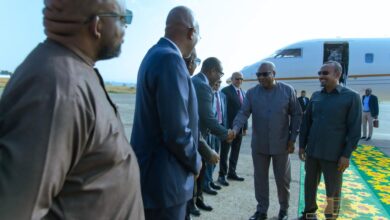
The event, held in Accra in the hall named after former UN Secretary-General Busumuru Kofi Annan, brought together the Chief of Staff to the President of Burkina Faso, Ghana’s Special Envoy to the Alliance of Sahel States (AES), senior government officials, ministers and public servants from both countries.
Ghana-Burkina Faso Ties Move to Human Capital
Nana Oye Bampoe Addo said the Café marks a new chapter in relations between the two neighbours who share over 500 kilometres of border and diplomatic ties dating back to the early post-independence era.
She recalled that in February 2026, the two countries signed seven agreements covering mutual recognition of driver’s licences, transport and road transit, cross-border cooperation and a joint boundary commission. On trade, the two countries reaffirmed their commitment at the 14th WTO Ministerial Conference in Yaoundé in March, with plans to host Burkinabè traders in Ghana in the coming months.
“That relationship has now taken a turn toward human resource management, with the 10th edition of this HR Café, its first international edition, hosted here in Ghana,” she noted.
She congratulated the organising committees, declaring “Ayekoo / Bien joure” as history was being made.
Quoting Kofi Annan’s 2009 statement in Lagos that Africa’s greatest resource is its human capital, she linked it to Dr Kwame Nkrumah’s 1961 call to mobilize total manpower and to Thomas Sankara’s philosophy of tying national development to the training of its own people.
She said the African Continental Free Trade Area (AfCFTA) now gives cross-learning a new meaning – beyond goods to the movement of human capital, exemplified by Ghana’s recent deployment of trained nurses to St. Kitts and Nevis under the Ghana Labour Exchange Programme.
Ghana’s Reset Agenda and Public Sector Reforms
Using the platform for peer learning, the Deputy Chief of Staff outlined Ghana’s public sector reform journey under President John Dramani Mahama’s Reset Agenda.
She disclosed that she chairs the Oversight Committee for the finalisation of the National Public Sector Reform Strategy II, launched in June 2026, which rests on seven pillars including a capable and disciplined workforce and digitised systems.
According to her, the reform started with government itself – President Mahama inherited a large administration and built a lean government, capping ministerial appointments at 60 and cutting ministries from 30 to 23.
“The irony is that this smaller government has proven even more efficient, delivering more with less,” she said.
Other reforms she highlighted include:
– The Coordinated Programme of Economic and Social Development Policies (CPESDP), a four-year framework submitted to Parliament in January 2026, and a Medium-Term National Development Policy Framework guiding MDAs and MMDAs.
– AI for Leadership: A three-day Ministerial AI Bootcamp organised with UNDP to equip ministers to drive ethical and inclusive AI adoption.
– Accountability: Operation Recover All Loot (ORAL), now at recovery and prosecution stages, and the first-ever Code of Conduct for Government Appointees enforced by the Office of the Chief of Staff, alongside disciplinary measures.
– Governance Architecture: The establishment of the National Governance Advisory Council led by Senior Presidential Advisor Dr. Valerie Sawyerr, to promote integrity and review governance institutions.
– Digital Sovereignty: The adoption of the tiKa Secure Government Virtual Meeting Platform, a sovereign, government-owned platform for executive operations, with secure document sharing; the digitalised Passport Office and the Ghana Revenue Authority’s AI trade valuation platform, which she said has already yielded GH¢1 billion collected in a single month.
She stressed that all reforms have been anchored on effective coordination and cordial but independent relations between institutions like the Public Services Commission, Parliament and the Presidency.
Burkina Faso’s Reform Story
Nana Oye Bampoe Addo was full of praise for Burkina Faso’s own transformation under President Comrade Captain Ibrahim Traoré.
Citing Financial Afrik and the Institute for Security Studies (ISS Africa), she noted three key moves: the adoption in January 2026 of the RELANCE Plan, a national development framework to 2030 aimed at restructuring state action; Traoré’s reversal of his predecessor’s salary increases for government officials while remaining on his own captain’s salary as an example of fiscal discipline; and the building of strategic state institutions including a national gold refinery and the National Support Centre for Artisanal Cotton Processing.
“These efforts remind us that cross-learning at this Café runs both ways,” she said.
Future of Work is Human, Not Machine
On shaping the future of work, she argued that institutional discipline, AI-enabled service delivery, and coordinated planning are the three practical ways reforms strengthen the public sector.
“Human resource management is not a support function to public administration, it is the engine of it,” she declared.
She however warned of the risks of technology: job displacement, data insecurity, and over-reliance that could erode human judgment.
“Technology must remain the servant, and the human being the master, never the reverse.”
In a frank moment, she identified the biggest ill facing the public sector as lack of discipline and professionalism – “poor ethical standards, professional misconduct, and sheer nonchalance.”
She drew laughter when she asked the Burkinabè delegation: “We call it Ghanaman Time. My Burkina brothers and sisters, do you also have your version, maybe ‘Burkinaman Time’?”
She urged participants to use the next few days of sessions, institutional visits to the Ghana Ports and Harbours Authority and a university, and tourist tours to chart a roadmap hinged on AI and modern tools for shared growth.
“We must innovate to allocate, monitor and discharge assignments better, track KPIs daily, and measure productivity through real-time data.”
She ended by thanking President Ibrahim Traoré, his Chief of Staff, Ghana’s Special Envoy to the AES and the organising committee for choosing Ghana to host the historic maiden international edition.
“I thank you, and God bless our two nations.”