Guinea-Bissau voters approve constitution expanding presidential powers
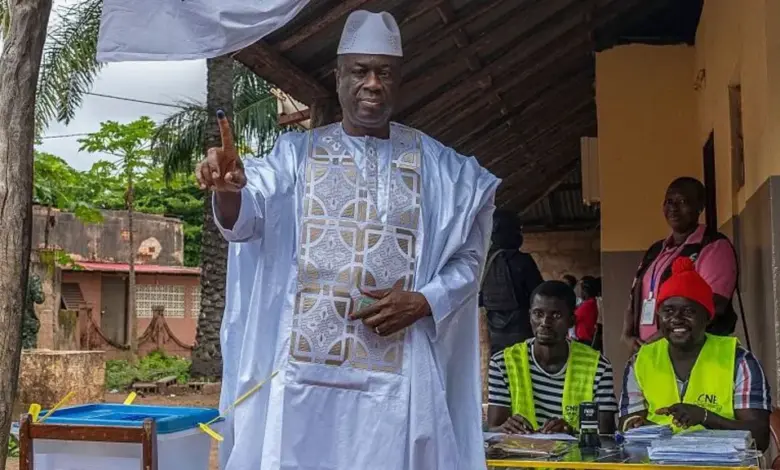
Voters in Guinea-Bissau have approved a new constitution that significantly strengthens the powers of the presidency ahead of general elections scheduled for later this year.
The referendum was organised by the country’s military authorities, who seized power in November 2025 following a disputed presidential election.
Provisional results released by the electoral commission showed that 70 per cent of voters supported the proposed constitutional changes, while 30 per cent voted against them. Voter turnout was reported to be nearly 60 per cent.
The reforms give the president sweeping new powers, including the authority to appoint and dismiss the prime minister and cabinet, establish or abolish ministries, and dissolve Parliament in cases of a serious political crisis.
The changes significantly alter the balance of power within Guinea-Bissau’s semi-presidential system by strengthening the presidency at the expense of the prime minister.
Under the previous arrangement, Parliament selected a prime minister from the majority party or coalition, who subsequently formed the government. The military authorities argued that the system had contributed to recurring political disputes and instability.
Under the new constitution, the president will have greater control over the government. However, the five-year presidential term and the two-term limit remain unchanged.
The reforms also reduce the number of parliamentary seats from 102 to 65 and cut the number of electoral constituencies from 29 to 12.
New eligibility requirements have also been introduced for presidential candidates, including a condition that they must have lived continuously in Guinea-Bissau for the five years preceding an election.
Opposition Boycott
The country’s main opposition party, the African Party for the Independence of Guinea and Cape Verde (PAIGC), boycotted the referendum, arguing that the process lacked sufficient political and institutional safeguards.
The party warned that the constitutional changes could lead to an excessive concentration of power in the presidency and undermine Guinea-Bissau’s democratic transition.
PAIGC leader Domingos Simões Pereira accused the authorities behind the referendum of attempting to weaken democracy and restrict political freedoms.
Some activists who spoke to the BBC described the referendum as a formality and claimed that as many as 90 per cent of registered voters did not participate.
History of Political Instability
The referendum comes after another period of political turmoil in Guinea-Bissau, a country that has experienced at least nine attempted or successful coups since gaining independence from Portugal in 1974.
The military took control in November 2025 following a disputed presidential election in which then-President Umaro Sissoco Embaló and opposition candidate Fernando Dias both claimed victory.
The junta said it intervened to prevent a plot by unnamed politicians who allegedly had the backing of a prominent drug trafficker and were seeking to destabilise the country.
The takeover placed Guinea-Bissau among a growing number of West and Central African nations that have experienced military coups in recent years.
Guinea-Bissau remains one of the world’s poorest countries and has long faced concerns over drug trafficking. The United Nations has previously described it as a “narco-state”, citing its remote coastline and numerous uninhabited islands as attractive routes for traffickers.
Elections to Test Military’s Pledge
The constitutional changes come ahead of presidential and parliamentary elections scheduled for December, which the military authorities say will pave the way for a return to civilian rule.
The elections are expected to provide a crucial test of whether the military leadership will honour its commitment to restoring democratic government.
They will also reveal how the expanded powers of the presidency affect the country’s already fragile political system and its longstanding tensions between presidents and prime ministers.