Annoh-Dompreh Leads Pan-African Push For Traditional Medicine in Historic Health Reform
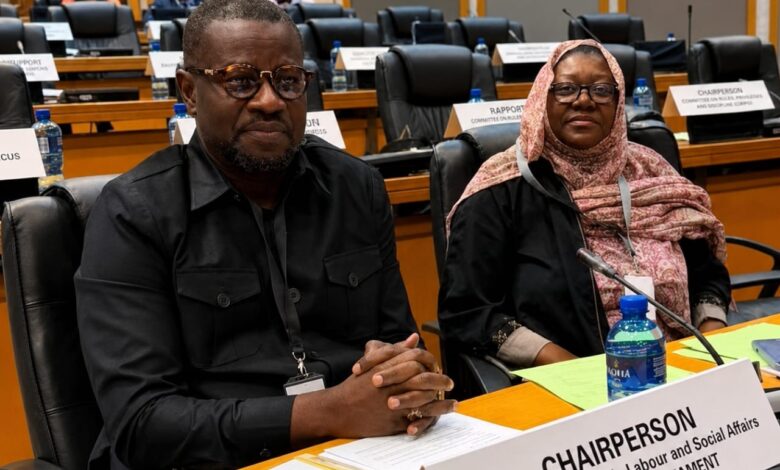
The Pan-African Parliament (PAP) has taken a significant step towards reshaping Africa’s healthcare landscape by endorsing a series of landmark resolutions aimed at integrating traditional medicine into national health systems, strengthening maternal and neonatal healthcare, and advancing the continent’s health sovereignty.
The breakthrough follows the presentation of a comprehensive report by the Chairman of the PAP Committee on Health, Labour and Social Affairs, Frank Annoh-Dompreh, who urged African Union Member States to stop overlooking indigenous medical knowledge and instead establish legal frameworks that regulate, protect and scientifically validate traditional medicine.
The resolutions, adopted during the First Ordinary Session of the Seventh Pan-African Parliament in Midrand, South Africa, mark one of the strongest continental commitments yet to harmonise laws governing traditional medicine while reducing Africa’s dependence on foreign health systems.
From Oversight Mission To Continental Action
The resolutions stem from a Parliamentary Oversight Mission jointly undertaken by the Pan-African Parliament Committee on Health, Labour and Social Affairs and the Africa Centres for Disease Control and Prevention (Africa CDC) Regional Office in Lusaka, Zambia, from December 3 to 6, 2025.
The mission formed part of the Pan-African Parliament’s mandate to strengthen parliamentary oversight and monitor the implementation of African Union health policies, including Agenda 2063, the African Union Health Strategy (2016–2030), the Continental Framework for Reproductive, Maternal, Newborn, Child and Adolescent Health and Nutrition, the Maputo Plan of Action and the Sustainable Development Goals.
Led by Annoh-Dompreh, the delegation met Zambia’s Minister of Health, senior government officials, Members of Parliament, Africa CDC experts, healthcare professionals, development partners, community health workers and traditional health practitioners to assess progress in maternal and neonatal healthcare.
Africa Still Faces A Maternal Health Crisis
Presenting the Committee’s report, Annoh-Dompreh said although several African countries have made progress in reducing maternal mortality, the continent still accounts for about 70 per cent of global maternal deaths and more than 40 per cent of neonatal deaths, most of which are preventable.
The Committee commended Zambia for improving maternal healthcare through expanded primary healthcare, increased skilled birth attendance and greater political commitment.
However, it also identified persistent challenges, including shortages of skilled health workers, inadequate health infrastructure, weak referral systems, shortages of essential medicines, unreliable electricity, adolescent pregnancies and limited financial resources that continue to affect healthcare delivery, especially in rural communities.
The report concluded that African governments must intensify investments in healthcare if they are to achieve the Sustainable Development Goal target of reducing maternal mortality to fewer than 70 deaths per 100,000 live births by 2030.
Traditional Medicine Receives Major Recognition
One of the mission’s most significant outcomes was the Committee’s recommendation that African governments formally recognise traditional medicine as an essential component of national healthcare systems.
According to the report, millions of Africans—particularly women living in rural communities—continue to rely on traditional birth attendants and herbal practitioners as their first source of healthcare.
Rather than allowing indigenous medical knowledge to remain outside formal health systems, the Committee recommended the development of strong legal and regulatory frameworks that promote scientific research, clinical validation, quality assurance, licensing and product standardisation.
Annoh-Dompreh stressed that traditional medicine should complement—not replace—conventional medicine, provided it meets internationally accepted standards of safety, efficacy and quality.
He further argued that protecting Africa’s indigenous medical knowledge would not only improve healthcare but also preserve cultural heritage, stimulate scientific innovation and create new economic opportunities across the continent.
Continental Model Law Proposed
To achieve these objectives, the Committee recommended that the Pan-African Parliament prioritise the development of a Pan-African Model Law on Traditional Medicine and the Protection of Local Knowledge.
The proposed legislation will provide African Union Member States with a harmonised legal framework covering research, regulation, licensing, manufacturing, commercialisation and the ethical use of traditional medicine while safeguarding indigenous knowledge and intellectual property rights.
Following the presentation, the Pan-African Parliament adopted a resolution mandating the Committee on Health, Labour and Social Affairs to lead the development of the Model Law in collaboration with the African Medicines Agency (AMA), Africa CDC and other stakeholders.
Driving Africa’s Health Sovereignty
The Committee also placed renewed emphasis on Africa’s Health Security and Sovereignty Agenda, arguing that recent disease outbreaks—including COVID-19, Ebola, Mpox, Marburg Virus Disease and cholera—have exposed Africa’s dependence on foreign funding, imported medicines, vaccines and health technologies.
The report endorsed Africa CDC’s efforts to strengthen vaccine research, local pharmaceutical manufacturing, digital disease surveillance, health workforce development and domestic health financing.
The Parliament subsequently adopted another landmark resolution urging Member States to domesticate Africa CDC frameworks on biosafety, biosecurity, public health emergency preparedness, data governance and local manufacturing of health products.
It also called on governments to honour the Abuja Declaration by allocating at least 15 per cent of their national budgets to the health sector and to establish statutory emergency health funds.