Ghana exceeds 2026 first-half economic targets as recovery gains momentum – Ato Forson
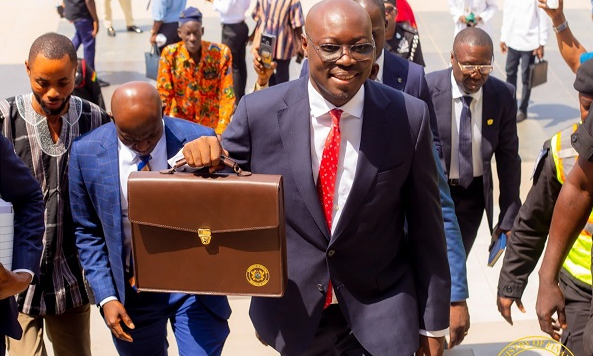
Finance Minister Dr. Cassiel Ato Forson has announced that Ghana’s economy outperformed its first-half 2026 targets, citing stronger economic growth, lower inflation, improved fiscal discipline, and renewed investor confidence as evidence that the country’s recovery remains firmly on course.
Presenting the 2026 Mid-Year Budget Review in Parliament, Dr. Forson said Ghana exceeded its key macroeconomic targets, with overall GDP growth reaching 6.4 percent in the first quarter of 2026, significantly above the full-year target of 4.8 percent. Non-oil GDP growth also stood at 6.3 percent, surpassing the annual target of 4.9 percent.
The Finance Minister highlighted a sharp decline in inflation, which fell from 13.7 percent in June 2025 to 5.3 percent by the end of June 2026, outperforming the government’s year-end target of 8 percent, plus or minus one percentage point.
He said Ghana also recorded a primary fiscal surplus of 0.9 percent of GDP on a commitment basis during the first half of the year, placing the government on track to achieve its 1.5 percent end-year target.
According to Dr. Forson, provisional fiscal performance for the first half of 2026 was stronger than anticipated, reflecting prudent expenditure management and continued fiscal consolidation. Total expenditure stood at 8.0 percent of GDP, well below the half-year target of 9.9 percent, while interest costs fell to 1.3 percent of GDP, generating savings equivalent to 0.5 percent of GDP due to lower borrowing costs and improved debt management.
On public debt, Dr. Forson noted that domestic debt now accounts for 54.4 percent of Ghana’s total public debt portfolio, with external debt making up 45.6 percent.
He assured Parliament that the government remains committed to meeting all debt obligations, recalling that it paid the GH¢10.1 billion sixth Domestic Debt Exchange Programme (DDEP) coupon in full and on time in February, and pledged that the GH¢10.8 billion seventh coupon due on 18 August 2026 would also be paid promptly.
Since January 2025, he said, Ghana has paid US$2.1 billion in principal and interest to Eurobond holders without putting undue pressure on the country’s foreign exchange reserves.
“Payment after payment, coupon after coupon, Ghana is proving one thing beyond dispute—we now keep our word,” Dr. Forson told Parliament, adding that the country’s credibility in international financial markets has been restored.
He said government borrowing costs have fallen significantly, saving the country GH¢4.2 billion in interest payments over the past six months. Treasury rates have also declined, resulting in lower lending rates for businesses and households, while Ghana’s Eurobond yields have dropped by approximately 300 basis points since the beginning of the year.
Dr. Forson further announced that Ghana has successfully returned to the long-term domestic bond market after raising GH¢2.7 billion through its first seven-year cedi-denominated bond since the 2022 debt default, describing the achievement as overcoming the country’s long-standing “original sin”—the inability to borrow long-term in its own currency.
Looking ahead, the Finance Minister acknowledged that Ghana faces GH¢111 billion in DDEP bond maturities in 2027 and 2028, but said government has strengthened the Sinking Fund to prepare for these obligations.
He revealed that the fund had accumulated GH¢15.6 billion as of 22 July 2026, with a target of GH¢30 billion by the end of the year—enough to fully repay the GH¢13 billion DDEP obligations due in February 2027.