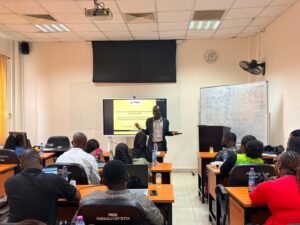
Africa Extractive Media Fellowship Launches Second Cohort to Strengthen Extractive Sector Reporting
By Sampson Osei Sarpong
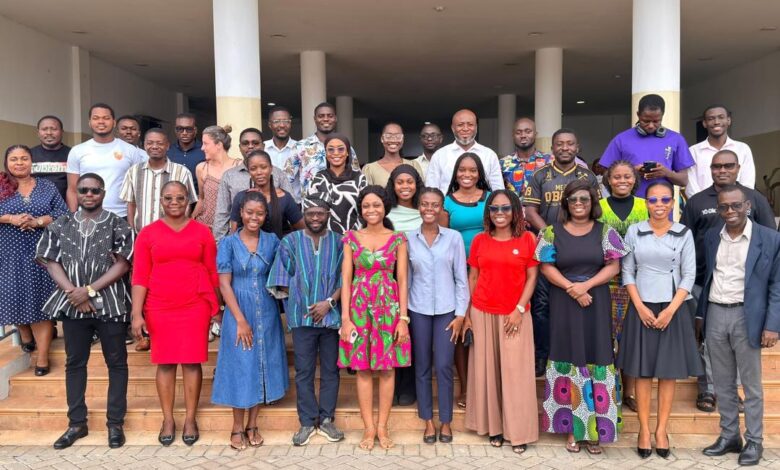
The Africa Extractive Media Fellowship (AEMF) has commenced its second cohort in Accra, with 42 of the 50 selected Ghanaian journalists participating in the opening session of the six-month capacity-building programme aimed at strengthening reporting on the country’s and other African extractive sectors.
The second cohort follows the successful completion of the inaugural fellowship, during which 20 journalists graduated after undergoing intensive training in extractive sector reporting. Organisers say the selection of 50 journalists for the new cohort reflects the growing interest in specialised reporting on Ghana’s mining, oil and gas industries.
It is spearheaded by a consortium of partners, including Newswire Africa, the Australian High Commission, the Ghana Chamber of Mines (GCM), the University of Ghana Business School (UGBS), and the University of Mines and Technology (UMaT).
The fellowship, held at the University of Ghana School of Business, officially began with a two-day training workshop on Wednesday, July 8, and Thursday, July 9. Participants will reconvene at the same venue for two selected training days every month throughout the six-month programme.
The fellowship is designed to equip journalists with the knowledge and practical skills needed to produce compelling, accurate and impactful stories on Ghana’s mining, oil and gas industries. Participants will undergo intensive training in investigative reporting, data journalism, resource governance, environmental reporting and storytelling, enabling them to hold stakeholders accountable and amplify the voices of communities affected by extractive activities.
As part of the six-month programme, fellows will embark on a series of field visits to key extractive industry sites, including the Tema Oil Refinery (TOR) and selected mining companies across Ghana. The tours are intended to give participants first-hand exposure to industry operations, challenges, and best practices, enabling them to produce well-informed and balanced reports.
The fellowship also provides opportunities for participants to engage with industry experts, policymakers, regulators and civil society organisations to deepen their understanding of the opportunities and challenges within Ghana’s extractive sector.
The Programme Lead for the Africa Extractive Media Fellowship, Kwakye Afreh-Nuamah, said the initiative was born out of a need to “complete Africa’s story.”
He added that the fellowship would empower journalists to amplify community voices, ensure accuracy in reporting, and hold both local and multinational corporations accountable.
Kwakye Afreh – Nuamah underlined that the programme seeks to strengthen media coverage of natural resource governance, transparency and accountability while promoting informed public discourse on the management of Ghana’s natural resources. By the end of the fellowship, participants are expected to produce in-depth stories that contribute to greater public awareness, encourage responsible management of the country’s extractive industries, and reinforce the media’s role in advancing responsible resource governance and sustainable development across the continent.
During the opening day of the workshop, participants were taken through the growing role of artificial intelligence (AI) in journalism and how AI tools can support story development, research and reporting. The session was facilitated by Dr. Jefferson Seneadza, who highlighted the opportunities and ethical considerations of using AI in newsrooms.
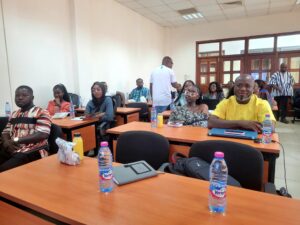
On the second day, officials from the Public Interest and Accountability Committee (PIAC) including the Executive Secretary Isaac Dwanena ESQ introduced participants to Ghana’s petroleum sector, providing an overview of the country’s petroleum industry and the utilisation of petroleum revenues. The session sought to strengthen participants’ understanding of petroleum revenue management and the accountability mechanisms that govern the sector.