Dr. Ekua Amoakoh’s IVLP selection; An architect of change
Anamaal Amadu, youth and political advocate
Since the 1940s, a powerful tradition has unfolded across the United States. Each year, a carefully selected delegation of emerging leaders drawn from government, media, business, and civil society convene under the International Visitor Leadership Program (IVLP). Beyond the site tours, seminars and meetings lies invaluable connections, networks and access to perspectives that shape future decisions.
Over the decades, the program has hosted individuals who would go on to shape the course of nations and narratives. Among its alumni are global figures such as former Ghanaian President John Agyekum Kufuor, former UK Prime Ministers Tony Blair and Margaret Thatcher, Nobel laureates, and some of the world’s most influential journalists and academics. They arrive as rising voices and become architects of change.
Handpicked and nominated by the U.S. Department of State, IVLP participants are selected not only for what they have done, but for what they are poised to do. The program was designed to deepen international relationships, but more importantly, to invest the kind of influence that shapes policy, frames public thought, and builds bridges long before they are needed.
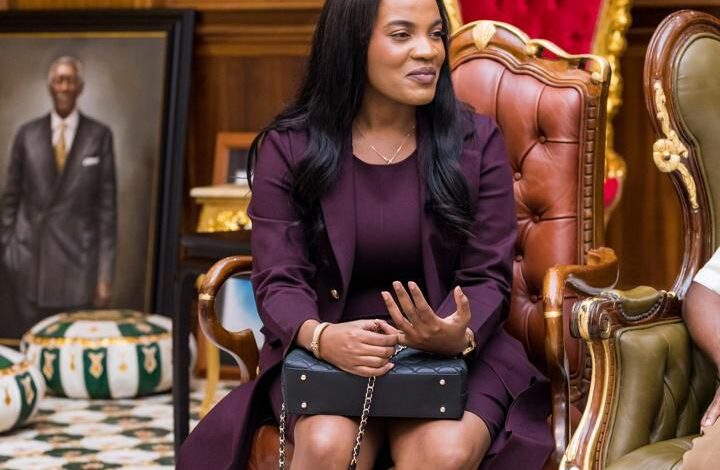
This year, the circle of influence expands to include a name that has, in recent times, become increasingly difficult to ignore. Once described as “one to watch,” Dr. Ekua Amoakoh has moved from promise to prominence. A medical doctor by profession, she entered Ghana’s political communications space ahead of the 2024 general elections with clarity. Her calm delivery, measured tone, and command of complex issues quickly set her apart.
She became the spokesperson for health during Dr. Mahamudu Bawumia’s presidential campaign, translating technical realities and challenges into public understanding. And when the elections ended in a bitter defeat, highly contested, and emotionally charged, she did not retreat but instead she stepped up perhaps instinctively understanding what Magaret Thatcher once said “you may have to fight a battle more than once to win it”.
Since then, her trajectory has been anything but accidental. From campaign communicator to deputy spokesperson and now serving as spokesperson and press secretary to Dr. Bawumia, former Vice President and now leader of the opposition party the New Patriotic Party (NPP). Her rise reflects something deeper than political alignment. It reflects trust. The kind that people gravitate towards both leaders and the masses.
Her IVLP nomination isn’t just symbolic its confirmation. It positions her within a global network of individuals who do not merely participate in systems but shape them. Through tailored engagements across U.S. institutions, policy environments, and leadership circles, the program offers more than exposure. It offers access.
This matters today because influence is no longer confined to elected office. It lives in the ability to interpret policy, to manage narratives, to negotiate perception across borders. It lives in people who understand both the language of governance and the pulse of the public.
As the history of the IVLP suggests, alumni of this same program have gone on to redefine the status quo. Sometimes loudly, often subtly. They build alliances, reframe national conversations, and in some cases, alter the entire trajectory of their countries.
Excited to see what this opportunity for greater collaboration evolves to become not only for her and her political career but the impact on Ghanaian public life. Moments like these rarely exist in a vacuum. It’s significance is sure to have ripple effects for years to come.
About the IVLP
The International Visitor Leadership Program (IVLP) is the premier professional exchange program of the U.S. Department of State that brings emerging leaders and accomplished professionals from around the world to the United States for short-term visits to engage with their American counterparts. Administered through the Bureau of Educational and Cultural Affairs, the program is designed to foster mutual understanding between the United States and other nations by creating opportunities for participants to exchange ideas, experiences, and best practices with American institutions and experts.
The program seeks to strengthen professional relationships among current and future global leaders while promoting international cooperation, diplomacy, and cross-cultural understanding. Through these exchanges, participants gain firsthand exposure to the United States’ institutions, policies, and approaches to addressing societal challenges. The knowledge and experiences acquired during the program are intended to equip participants with new perspectives and practical insights that they can apply in their home countries to drive positive change, advance professional development, and contribute meaningfully to their communities and national development efforts.
The writer, Anamaal Amadu, is a youth and political advocate.