Ghana Signs Defence Partnership with EU, Rules Out Foreign Military Bases
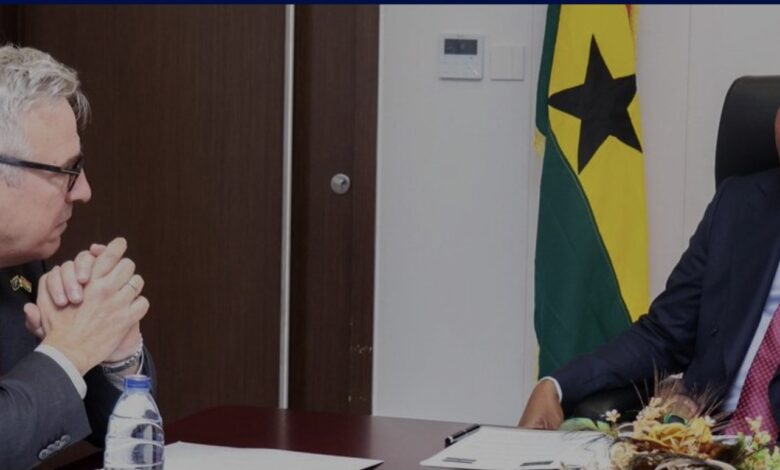
The Government of Ghana has formalized a new Security and Defence Partnership with the European Union, a move the Ministry of Foreign Affairs says will strengthen both national and regional security without compromising sovereignty.
In a press statement issued Monday, the Ministry explained that the agreement creates a structured framework for cooperation on counter-terrorism, maritime security in the Gulf of Guinea, cybersecurity, border management, and support for peacekeeping and crisis response operations. The deal also opens the door for technical assistance, training, and equipment for Ghana’s security agencies.
The Ministry was quick to address public concerns that have circulated since news of the partnership emerged. “The agreement neither provides for the establishment of foreign military bases in Ghana nor does it permit the stationing of foreign troops on Ghanaian soil,” the statement read. “Ghana’s sovereignty and territorial integrity remain fully protected under this arrangement.”
Building on Existing Ties, Not Starting from Scratch
Officials stressed that the partnership is not a sudden shift in policy. Ghana and the EU have a long record of collaboration on security and governance programs, both bilaterally and across West Africa. This new agreement, the Ministry said, simply “formalises and deepens existing collaboration within a coherent and forward-looking framework.”
The timing reflects mounting security pressure in the region. Violent extremism in the Sahel has edged closer to coastal states, while piracy and illicit trafficking remain persistent threats in the Gulf of Guinea. For Accra, deepening strategic partnerships is part of a proactive approach to safeguard peace, stability, and development at home and with neighbors.
Addressing Misinformation
The Ministry noted that it had seen “misinformation and misinterpretations” about the partnership’s scope. It reassured the public that claims of foreign bases or troop deployments “are inaccurate and do not reflect the substance or intent of the agreement.” Cooperation, it added, is based on mutual respect and Ghana’s own national security priorities.
Foreign Policy Principles Unchanged
Beyond the security details, the statement reaffirmed Ghana’s broader diplomatic posture. The Ministry said the country’s positions on global historical and moral issues, including its stance at the United Nations on the transatlantic slave trade, remain unchanged. Ghana also restated its commitment to non-alignment, Pan-Africanism, good neighbourliness, and peaceful coexistence.
“Ghana cherishes and values its relations with neighbouring states and remains steadfast in its commitment to regional peace and mutual respect,” the Ministry said. “In this regard, Ghana will neither enter into any bilateral nor multilateral arrangement that would undermine the security, sovereignty or territorial integrity of its neighbours.”
What the Partnership Covers
Under the framework, Ghana and the EU will collaborate in five key areas:
Counter-terrorism: Intelligence sharing, capacity building, and preventive strategies to address violent extremism spreading from the Sahel.
Maritime security: Joint efforts to combat piracy, illegal fishing, and trafficking in the Gulf of Guinea, a vital corridor for Ghana’s trade and energy sectors.
Cybersecurity: Technical support and training to protect critical infrastructure and government networks from growing digital threats.
Border management: Enhanced systems and equipment to monitor Ghana’s northern borders and curb illicit flows of arms and persons.
Peacekeeping and crisis response: Support for Ghana’s contributions to regional and UN missions, including logistics and pre-deployment training.
The EU is expected to provide equipment, specialized training, and funding through existing instruments like the European Peace Facility, but all activities will be led by Ghanaian agencies.
Regional Implications
Security analysts say the deal positions Ghana as a stable anchor in West Africa at a time when several neighbours face political transitions and insurgent threats. By opting for a partnership focused on training and equipment rather than basing, Ghana maintains its non-aligned stance while still accessing EU expertise and resources.
Civil society groups have called for continued transparency as implementation begins. The Ministry echoed that sentiment, closing its statement with a pledge: “The Government of Ghana remains committed to transparency, accountability and the protection of national sovereignty in all its international engagements.”
Looking Ahead
Implementation will roll out in phases, with technical teams from both sides set to meet in Accra next month to finalize priority projects. For now, the Ministry’s message is clear: the EU partnership is meant to boost Ghana’s capacity to handle its own security, not outsource it.
As the sub-region navigates complex threats, Ghana is betting that deeper cooperation, grounded in mutual respect and national ownership, will keep the country secure while preserving the principles that have long defined its foreign policy.