2026 is a year of transition, not full renegotiation — Mahama
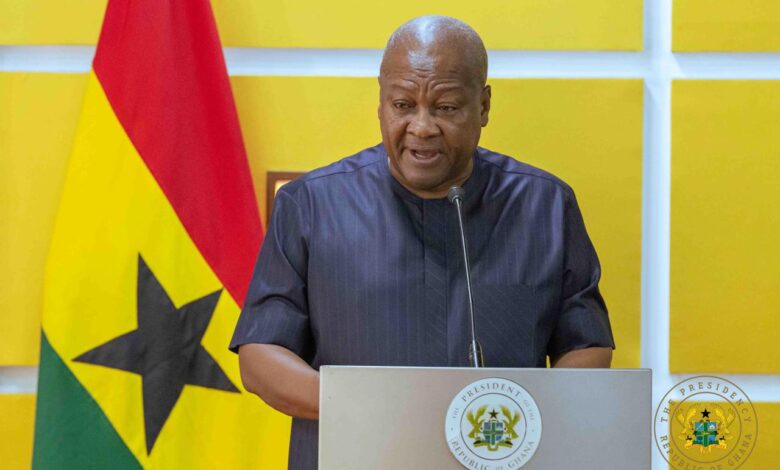
President John Dramani Mahama has signaled a cautious approach to public sector wage adjustments in 2026, describing the year as a period of transition rather than one for comprehensive renegotiation of conditions of service.
Addressing leaders of organized labor at a high-level engagement, the President underscored the need for prudence as government undertakes major structural reforms in the public sector compensation system.
“2026 will not be a year for full renegotiation of conditions of service across the public sector,” Mahama stated. “Instead, government will carry out targeted, modest adjustments to specific allowances as an interim measure.”
He explained that the decision is intended to maintain macroeconomic stability while laying the groundwork for a more sustainable and equitable pay framework. According to the President, managing expectations responsibly is critical as the country transitions toward a reformed system.
“This approach is necessary to maintain macroeconomic stability, manage expectations responsibly, and create the space needed to build a credible and sustainable national emoluments framework,” he said.
The announcement comes as part of a broader reform agenda that will see the transition from the Fair Wages and Salaries Commission to a new Independent Emoluments Commission in 2026. The proposed body is expected to bring greater coherence, transparency, and independence to the determination of public sector pay.
“Our goal is to move away from fragmented and ad hoc wage decisions toward a system that is fair to workers, responsible to taxpayers, and sustainable for future generations,” Mahama noted.
While the decision may raise concerns among workers anticipating broader salary reviews, the President emphasized that the move does not signal a retreat from engagement with labor.
“Let me be clear, this is not a withdrawal from engagement with labor,” he assured. “It is a strategic push to address the structural foundations of our compensation system in the interest of everybody.”
Mahama added that the transition will be implemented in phases and in close consultation with organized labor to ensure that the concerns of workers are fully taken into account.
“This reform is not designed against labor,” he said. “It is designed with labor and for the long-term stability of Ghana’s public sector compensation system.”
He further indicated that, as part of the transition, government will develop a comprehensive national emoluments policy aimed at addressing pay disparities, harmonizing allowances, and strengthening performance-based compensation.
As Ghana navigates ongoing fiscal pressures, the President reiterated the importance of balancing worker welfare with economic realities.
“We stand at a defining moment,” Mahama concluded. “We can either continue with a system that produces periodic tensions and unsustainable outcomes, or we can work together to build a modern, fair, and resilient framework.”