Ghana Reaffirms Commitment to 100% Sustainable Ocean Management by 2030
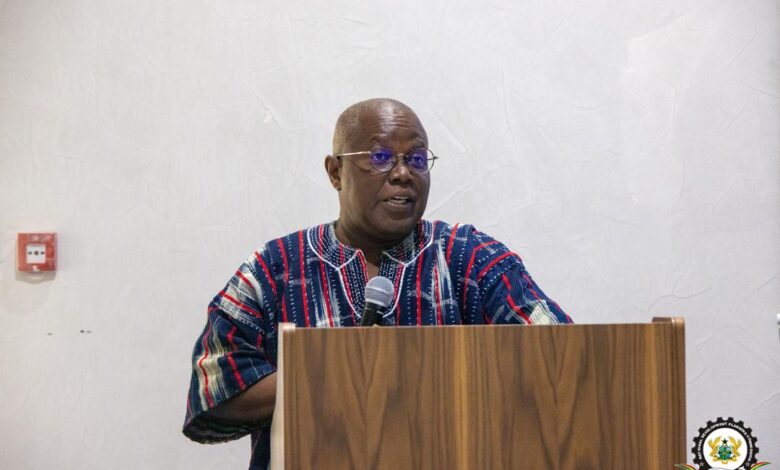
Ghana has reaffirmed its pledge to achieve 100% sustainable management of its ocean space by 2030 at a high-level Stakeholder Workshop on the Ocean Panel Progress Report 2026, held on 26 February in Accra.
Organised by the SDGs Advisory Unit at the Office of the President, the workshop brought together representatives from ministries, departments and agencies; academia, civil society, and the private sector to consolidate Ghana’s inputs into the 2026 progress report of the High-Level Panel for a Sustainable Ocean Economy.
Held under the theme “Advancing Ghana’s 100% Sustainable Ocean Management Commitment”, the meeting focused on strengthening inter-agency coordination of the Sustainable Ocean Plan and aligning national Blue Economy actions with the Ocean Panel Transformations Agenda.
In his welcome remarks, Dr. Nii Moi Thompson, Senior Advisor to the President on the SDGs and Chairman of the National Development Planning Commission, highlighted Ghana’s role as a founding member of the Ocean Panel.
“Ghana’s commitment reflects our recognition that the ocean is central to food security, economic transformation, climate resilience, and social inclusion,” Dr. Thompson said. “The upcoming progress report is not merely a technical exercise but a global accountability platform through which Ghana can demonstrate leadership, highlight innovation, and strengthen our standing as a responsible ocean state.”
Delivering a message on behalf of the Fisheries Commission, Prof. Benjamin Betey Campion, Executive Director, emphasised the economic and environmental imperatives of ocean governance.
“Environmental degradation and rising carbon emissions continue to pose serious risks to our economy,” Prof. Campion noted. “Studies indicate that inefficiencies and climate-related losses could cost the nation hundreds of millions of dollars in annual GDP if not properly addressed. Through innovation, coordinated action, and strong institutions, we can safeguard our environment while promoting inclusive economic growth.”
Ms. Eyram Agbemava of the SDGs Advisory Unit presented an overview of Ghana’s Sustainable Ocean Plan (SOP) and its strategic framework. She explained that the plan is closely aligned with the Sustainable Development Goals, particularly SDG 13 (Climate Action), SDG 14 (Life Below Water), and SDG 15 (Life on Land).
“The Sustainable Ocean Plan emanates from the High-Level Panel for Sustainable Ocean Economy, which comprises 19 Heads of State,” Eyram said. “Ghana is proud to be a founding member alongside countries such as Jamaica, Australia, and Canada. Each member country is mandated to develop a Sustainable Ocean Plan to ensure 100% sustainable management of its marine and coastal areas under national jurisdiction by 2030. This is central to achieving the Ocean Panel’s Transformation Vision.”
The workshop provided a platform for stakeholders to align national efforts, exchange knowledge, and chart a coordinated path towards sustainable ocean management, ensuring Ghana continues to lead in ocean governance on the global stage.
The 2026 Ocean Panel Progress Report will assess member countries’ progress in three core areas: advancement towards the 100% sustainable ocean management target; implementation of selected priority actions under the Transformations Agenda, including Ocean Wealth, Ocean Health, Ocean Equity, Ocean Knowledge and Ocean Finance; and key ocean action highlights, with emphasis on ocean finance, the ocean climate nexus and ocean equity.
The report is expected to be launched during the 2026 Ocean Panel Leaders’ Meeting on the margins of the United Nations General Assembly in New York in September 2026.