Forestry Commission Seeks Stronger Legal Powers After Death of Resource Guard in Volta Region

The Forestry Commission has renewed its call for stronger legal backing and enhanced operational powers following the killing of a resource guard in the Volta Region, describing the incident as part of a growing threat faced by field officers protecting the country’s forest reserves.

Chief Executive Officer of the Commission, Dr Hugh Brown, says the current legal and operational framework is no longer adequate to deal with increasingly armed and violent environmental criminals, including illegal miners, poachers, and illegal loggers.
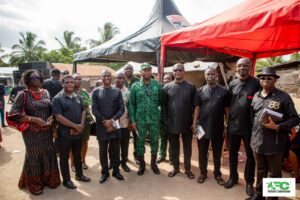
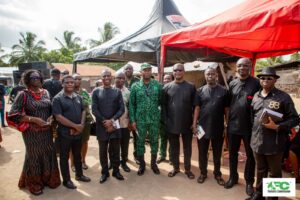
He made the remarks at the burial service of Raphael Ganyo, a 28-year-old Wildlife Division resource guard who was shot and killed by a suspected poacher while on patrol at the Kalakpa Resource Reserve on January 6, 2026.
According to Dr Brown, the tragedy underscores the urgent need to reform the Forestry Commission Act to grant officers greater enforcement powers and access to more advanced weaponry.
“We are taking steps to review the Forestry Commission Act, and that will pave the way for us to have the legal mandate to carry arms within the forest reserves and wildlife parks, and be able to enforce law and order,” he stated.


He explained that field officers are increasingly exposed to violent confrontations with well-armed criminal groups who often outmatch them in firepower.
“The kind of arms and ammunition we are permitted to use do not match what we are confronted with in the field,” Dr Brown noted, adding that existing procedures requiring external authorisation for certain weapons delay effective response in high-risk situations.
Rising attacks on forestry personnel
The Commission says Ganyo’s death adds to a troubling pattern of violence against its staff.
Official records indicate that more than a dozen Forestry Commission officers have been killed over the past eight years, while over 50 others have suffered injuries from attacks linked to illegal mining and poaching activities.
Within the Wildlife Division alone, 23 staff members have reportedly been killed or severely injured between 2017 and 2026. The Forestry Services Division has also recorded at least 10 fatalities over the same period in confrontations with illegal miners.
Notable past incidents include the killing of officers at Kogyae Strict Nature Reserve in 2017, Mole National Park in 2018, and Bia National Park in 2019.
Push for reforms and better equipment
Dr Brown further highlighted operational challenges facing the Commission, including inadequate patrol vehicles, insufficient protective gear, and a personnel shortfall of about 2,400 staff.
He said these constraints significantly limit the ability of officers to patrol vast forest reserves and respond effectively to illegal activities.
“We believe that once we get the legal framework in place through the review, we should be in a better position to protect the nation’s precious natural resources,” he added.
Honouring Raphael Ganyo
In recognition of his service, the Forestry Commission posthumously promoted Raphael Ganyo to Chief Resource Guard, the highest rank within the resource guard structure.
The Commission also announced plans to rename the Zitoe Camp in his honour and pledged support to his bereaved family, including the employment of two relatives within the Wildlife Division and a GH¢50,000 donation.
Dr Brown described the interventions as part of efforts to honour fallen officers whose sacrifices, he said, highlight the dangers involved in protecting Ghana’s forests and wildlife.