NPP EXTERNAL BRANCHES TO GOVT: “Our Money Counts, Our Votes Must Count, Our Voices Will Not Be Silenced”
..Demands ROPAA Implementation Before 2028, Blasts $1.89m Cost Of Flying Delegates To Kumasi, Demands Probe Into 4-Tonne Cocaine Scandal And Freedom For Nurse Salomey
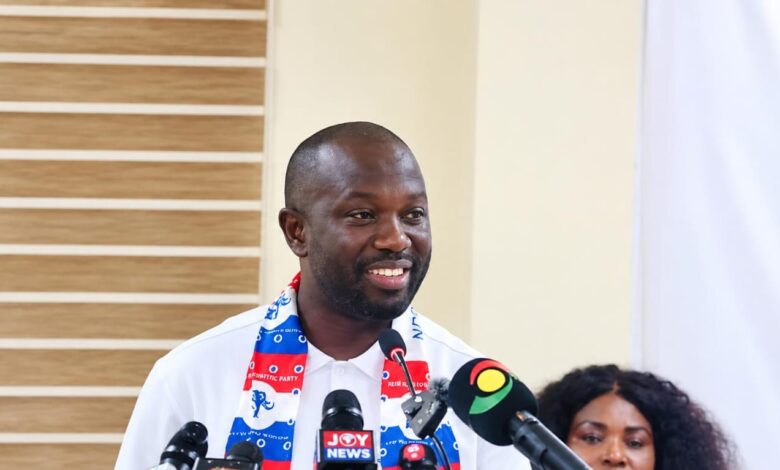
The External Branches of the New Patriotic Party (NPP) have issued a damning seven-point press statement ahead of the party’s National Delegates Conference in Kumasi on Saturday, 3rd October 2026, declaring that diaspora exclusion can no longer be tolerated and that government must answer tough questions without criminalizing critics.
Addressed by NPP UK Branch Chairman, Andy Owusu, on behalf of thirty External Branches, the statement is themed: *OUR MONEY COUNTS. OUR VOTES MUST COUNT. OUR VOICES WILL NOT BE SILENCED.*
1. ROPAA: 20 Years Of Excuses Is Enough
The External Branches expressed complete displeasure at the 20-year failure to implement the Representation of the People (Amendment) Act, 2006 (Act 699).
“The law was passed in 2006. Twenty years later, its promise remains unfulfilled. A child born when this law was passed is now old enough to vote. Yet the institutions responsible are still asking her parents to wait,” the statement said.
The group said it will not excuse the failure because some of it occurred under NPP governments, but insisted accumulated failure does not give the present government permission to continue it.
Citing best practice, they noted Senegal has had diaspora parliamentary seats since 2017, South Africa allows overseas voting at all its embassies, Nigeria’s National Assembly has passed a Diaspora Voting Bill, and Kenya’s Supreme Court in 2015 compelled its electoral body to implement progressive diaspora voting.
Quoting former President J.A. Kufuor who signed ROPAA into law: “The Ghanaian abroad remains a Ghanaian, and must not be deprived of his citizenship rights.”
They demanded a Constitutional Instrument and a published, costed, time-bound roadmap within 90 days for full implementation before the 2028 general elections.
“Our remittances were $6.65 billion in 2024, exceeding FDI by $4.9 billion, and are projected at $7.8 billion in 2025 – 6% of GDP. Our money counts. Our votes must count too,” they stressed.
2. One Member, One Vote Must Be Real
The External Branches welcomed the Supreme Court’s ruling widening participation in internal party elections including presidential and parliamentary primaries and urged the NPP to comply fully.
Quoting Dr. J.B. Danquah: “Liberty is not a favour to be granted; it is a right to be respected and a tradition to be safeguarded.” They called on new leadership to publish an implementation programme within its first 90 days that gives ordinary members real power.
3. Proxy Is Not Solution – $1.89m Cost To Fly 630 Delegates
While appreciating the National Council’s decision to allow proxy voting at the Kumasi conference, the group said it does not solve the problem.
Using an indicative figure of 630 External Branch delegates and approximately $3,000 per person for airfare, accommodation and logistics, full attendance could cost about *$1.89 million* before internal travel.
“Is this a reasonable burden to impose on committed members whenever the party elects its leadership? Delegates have jobs, families and financial obligations. Some cannot obtain leave. Others simply cannot afford the journey. Their commitment does not diminish because they cannot purchase a ticket to Ghana,” the statement argued.
They also criticized the current proxy system which requires a delegate to entrust nine separate choices to another person with no verification mechanism.
Demanding best practice like the ANC, UK Conservative Party, Ghana Bar Association and Ghana Medical Association which all use secure postal and electronic voting, they called for secure online voting or supervised voting within External Branches with credible authentication, ballot secrecy, candidate agents and auditable results.
4. Don’t Reverse Reform – Retain Chairman As Party Leader
The group opposed a proposal before conference to transfer party leadership from the National Chairperson to the presidential candidate once elected, as provided in the NPP’s 2025 Constitution.
Quoting Prof. K.A. Busia: “A party that seeks to govern a democratic nation must first demonstrate democracy within its own ranks.” They urged delegates to retain the current provision and give it a fair opportunity to operate.
*5. Four Tonnes Of Cocaine Demands More Than Four Lines Of Assurance*
In its most hard-hitting section, the External Branches addressed the reported interception in France of a container from Ghana allegedly carrying approximately four tonnes of cocaine.
While noting accused persons have pleaded not guilty and courts must determine criminal responsibility, they said government has a separate responsibility to explain institutional failure.
“Four tonnes cannot be brushed aside as a minor lapse. How was the container processed at Tema? What inspections were conducted? Who was responsible at each stage? Were procedures ignored? Was there negligence? Was there collusion?” they queried.
They expressed deep concern that partner countries in the transnational investigation are now reluctant to share intelligence with Ghanaian authorities due to lack of confidence, warning this undermines joint security, anti-money laundering efforts and Ghana’s international standing.
“This container did not travel through a vacuum. Credible reports indicate this network involves at least five jurisdictions. Ghana is reportedly the fifth country in this chain. How did our port become a trusted node for an international narcotics network?” they asked.
Taking a swipe at government’s flagship programme, they said: “The administration campaigned on a ‘Big Push’. Ghanaians expected a big push for jobs, infrastructure and prosperity. They now deserve a big push to expose the networks moving narcotics through our trade routes. The Big Push must never become a bitter joke about what criminals can push through Ghana’s borders.”
They demanded an investigation that follows evidence to its destination even if it leads to a public official or politically connected person, citing Kenya’s 2014 public inquiry at Mombasa Port and Senegal’s 2022 port audit after 1.5 tonnes interception as best practice.
They warned honest Ghanaian exporters of pineapples, yams and cocoa derivatives face greater scrutiny, delays and costs due to reputational damage and called on Ghana Export Promotion Authority to speak.
6. Give Us Structure To Deliver
The External Branches revealed they have submitted comprehensive proposals to amend Article 8 of the NPP Constitution including uniform framework for branches and chapters, stronger chapters with voice in branch decision-making, increased representation to five seats on NEC and ten seats on National Council, express constitutional basis for voting within country of residence, and stronger accountability provisions.
*7. Police Must Not Become Government’s Complaints Department*
Finally, the group warned against criminalizing political speech.
“A government elected by the people must expect to be questioned by the people. The police must not become a complaints department for wounded political egos,” the statement said.
Referring to the case of nurse Salomey Awiti Bafoh, which records a not-guilty plea and refusal of bail on 25th September in proceedings relating to alleged assistance in disseminating content associated with “Ghana Jollof”, they called for her release on appropriate bail, citing health, family circumstances and welfare of children.
Quoting Justice Sowah: “An accusation is not a conviction. Detention must never become punishment in advance of judgment.”
“If government wants fewer damaging headlines, it should provide better answers. Arresting a critic does not answer a criticism. Detaining a citizen does not resolve a scandal,” they concluded.
They urged Kumasi delegates to choose leaders with competence, integrity and discipline to rebuild the party for victory in 2028, stating: “Twenty years is long enough to wait for ROPAA. Party members must have a stronger voice. Government must answer serious questions. And citizens must remain free to ask them.”