POWA Founder Dr Victoria Hamah: Attacks on Lordina Mahama and Samira Bawumia Reinforce Unequal Power
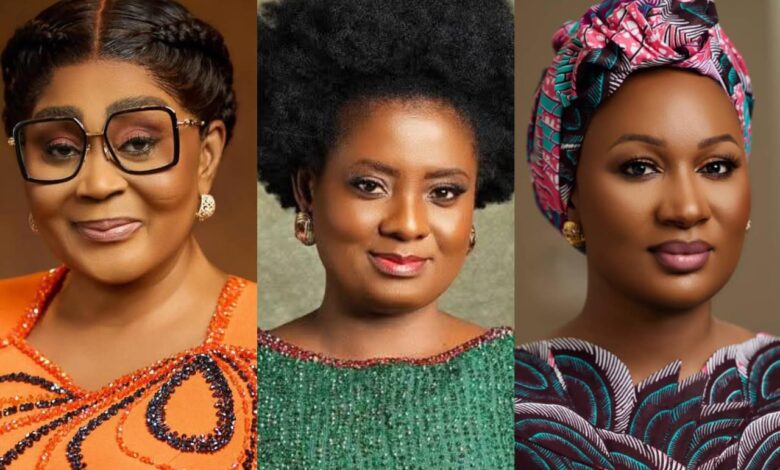
Dr Victoria Lakshmi Hamah, Founder of the Progressive Organisation for Women’s Advancement (POWA), has warned that personal attacks, insults and gendered mockery directed at First Lady Lordina Mahama and former Second Lady Samira Bawumia reinforce the unequal power structures that continue to limit women’s collective political influence in Ghana.
In a press statement issued on Tuesday, September 29, 2026, and titled “WHEN WOMEN DIVIDE, UNEQUAL POWER WINS: POWA CALLS FOR AN END TO GENDERED ATTACKS ON LORDINA MAHAMA AND SAMIRA BAWUMIA,” Dr Hamah said the attacks extended beyond partisan political exchanges.
The POWA founder also argued that the treatment of the two prominent women reflects a wider pattern of personal humiliation that undermines women’s dignity and political agency.
She said political differences between Lordina Mahama and Samira Bawumia should not be allowed to become a basis for turning women against one another, particularly when both have platforms that could be used to advance issues affecting women, girls and vulnerable communities.
Dr Hamah said women could belong to different political parties, hold opposing political views and disagree strongly without becoming enemies, stressing that “when women divide, unequal power systems benefit.”
Dr Hamah said the attacks on the two women represented a broader concern about the manner in which prominent women are treated in public and political life.
She said the issue was not about shielding either Lordina Mahama or Samira Bawumia from legitimate public scrutiny, noting that women in political and public office must remain accountable for their conduct, statements and policies.
“Our concern is not to shield either woman from legitimate public scrutiny,” Dr Hamah said. “Women in political and public office must remain accountable for their words, actions, and policies. However, accountability is fundamentally different from humiliation, misogyny, and personal attacks.”
Dr Hamah said Lordina Mahama and Samira Bawumia, having occupied highly visible positions within Ghana’s political leadership, had an opportunity to use their public platforms to promote the interests of women, girls and vulnerable communities.
She said those platforms should not become “instruments of pitting women against one another”, arguing that Ghana needed more women who could compete politically while still identifying areas of common interest and working together.
Dr Hamah said women’s political experiences were shaped not only by gender, but also by class, party affiliation and access to institutional power.
She warned that when women are encouraged to spend their political energy fighting one another, attention can be diverted from the structural inequalities that continue to restrict women’s participation and influence.
“When women are encouraged to expend their political energy fighting one another, attention can be diverted from the structural inequalities that continue to limit women’s participation and influence,” she said.
Dr Hamah cited inadequate political representation, economic inequality, violence against women and girls, unequal access to opportunities, unpaid care burdens and barriers to decision-making as some of the challenges confronting Ghanaian women.
She said these challenges required collective action and called on women’s rights organisations, women’s groups, civil society organisations and Ghanaians generally to reject the normalisation of gendered insults and personal attacks against women in public life.
Dr Hamah also urged women across Ghana to resist divisions that had historically weakened their collective bargaining power, saying solidarity did not require women to abandon their political identities or differences.
“Lordina Mahama need not agree with Samira Bawumia, and vice versa. Solidarity does not require political uniformity,” she said.
“It requires recognising that advancing women’s collective development is bigger than any political party,” Dr Hamah added.
She also called on men who believe in equality to reject gendered political attacks and urged political actors across the political divide to demonstrate that political competition could coexist with respect for women’s dignity.
Dr Hamah further appealed to First Lady Lordina Mahama and former Second Lady Samira Bawumia to consider leading a broader conversation on women’s political solidarity beyond party lines.
She said Ghana needed more women at the decision-making table and women who could disagree politically without destroying one another.
“Ghana needs more women at the table. It needs women who can disagree without destroying one another. It needs women who can compete politically while still cooperating on issues that affect the lives of millions of women and girls,” Dr Hamah said.
She further emphasised that partisan politics should not be allowed to undermine opportunities for women to work collectively on issues affecting their lives and advancement.
“Women’s power is people’s power,” Dr Hamah said, adding: “Let us not allow partisan politics to pit women against one another when there is so much work to be done together.”