Africa must strengthen institutions to unlock opportunities for its youth – President Mahama
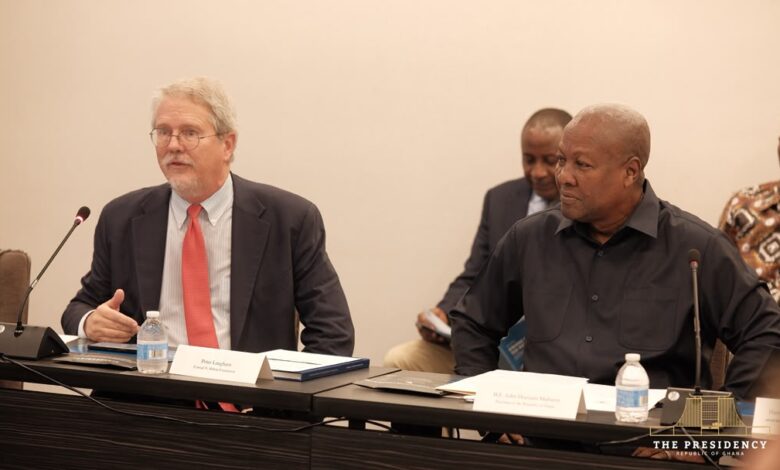
President John Dramani Mahama has called on African countries to strengthen their institutions, financing systems and delivery mechanisms to create more opportunities for the continent’s growing youth population.
According to President Mahama, Africa’s ability to turn its development ambitions into meaningful outcomes will depend largely on the strength of its institutions and its capacity to mobilise and deploy resources effectively.
He made the call at a presidential roundtable organised by the Open Society Foundation in New York on Monday, on the sidelines of the 81st United Nations General Assembly.
The roundtable brought together presidents and chief executives of major global foundations to discuss Africa’s development priorities and the changing international environment.
President Mahama said the global order was undergoing significant disruption, with countries in the Global South facing mounting debt pressures and other economic challenges.
However, he said the changing environment also presented opportunities for innovation, new partnerships and reforms that could support sustainable development.
“In all the disruption and chaos are born new ideas and partnerships,” President Mahama said.
He stressed that African countries must use the moment to focus on creating jobs, improving public services, developing infrastructure and expanding opportunities, particularly for young people.
“This is when we must create jobs for our people, improve public services, build infrastructure, and expand opportunity, especially for our young people,” he said.
Agenda 2063
President Mahama said Africa had already established a long-term strategic pathway through the African Union’s Agenda 2063, which seeks to promote productive economies, stronger institutions, deeper regional integration and expanded opportunities for Africans.
He said the next priority should be to build the institutional and financial capacity required to translate those ambitions into concrete development outcomes.
The President also highlighted Ghana’s Accra Reset Initiative, saying it seeks to help countries respond with greater urgency and self-reliance to changes in the global environment.
“The Accra Reset asks what countries need to act with urgency in a changing world, and what a more balanced relationship with international partners could look like,” he said.
President Mahama explained that sovereignty in the context of development was not simply about independence but about having the capacity to determine priorities, mobilise resources and implement decisions.
“When I speak about sovereignty in this context, I am speaking about the capacity to act. A country needs to be able to set its priorities, negotiate effectively, mobilise resources, and follow through on its decisions,” he said.
Ghana’s responsibility
The President acknowledged that Ghana still had significant progress to make in taking greater ownership of its development trajectory.
He identified stronger coordination across government, better preparation of programmes and projects, increased domestic resource mobilisation, sound financial management and institutions capable of delivering measurable results as key priorities.
He also called for greater involvement of civil society, businesses, academia and local communities in national development.
“We must carry our share of the responsibility if we want greater room to lead,” President Mahama said.
Call for long-term partnerships
President Mahama further urged international development partners and philanthropic organisations to focus more on building long-term national capabilities rather than concentrating mainly on short-term programmes.
He asked whether international cooperation could do more to strengthen local systems that meet required standards while reducing unnecessary duplication and maintaining accountability.
The President said philanthropic organisations had an important role to play in supporting health, education, governance and research across Africa.
He urged foundations to use their flexibility to support institutional capacity, public goods, early-stage programmes and social priorities in areas where commercial finance may not be readily available.
“Where an approach proves successful, the next step should be its adoption into public systems, local delivery institutions, and long-term financing models,” President Mahama said.