Christian Council Of Ghana Pays Working Visit To Ghana Gold Board, Calls For Ethical Stewardship Of Mineral Wealth
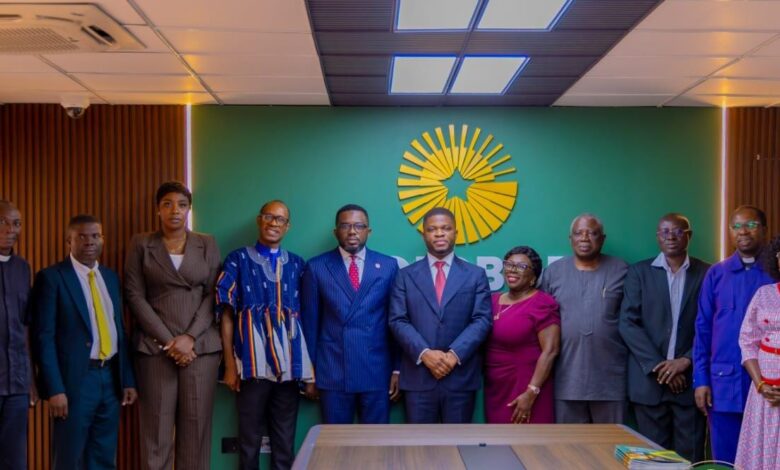
A high-level delegation from the Christian Council of Ghana has paid a working visit to the Ghana Gold Board (GoldBod) headquarters at the old Bank of Ghana building in Accra, to engage the Board’s leadership on its mandate and operations in safeguarding the nation’s mineral wealth.
The visit, which took place on Monday, September 7, 2026, was led by Dr. Joyce Laco Steiner, Director of Programmes and Advocacy of the Christian Council. She was accompanied by a team of counsellors and advocacy representatives.
According to the Council, the engagement was to obtain first-hand information on the Board’s operations, regulatory direction and future plans, amid ongoing public discourse surrounding the gold sector.
In her remarks, Dr. Steiner said the Christian Council views the Ghana Gold Board as a strategic institution with a direct role in national development and that responsible stewardship of Ghana’s natural resources is essential to the spiritual, moral and socio-economic well-being of the people.
She noted that mineral wealth is not only an economic asset but a divine endowment requiring integrity, transparency and accountability.
“The earth is the Lord’s and the fullness thereof,” Dr. Steiner said, referencing Psalm 24, to reinforce the belief that the earth and its resources belong to God and must therefore be managed with seriousness and moral purpose.
Dr. Steiner stressed that the Christian Council sees its participation in governance as a sacred civic responsibility, insisting that the natural resources entrusted to Ghana must be protected for present and future generations.
She said the Council has been monitoring public discourse and narratives surrounding the operations of GoldBod, and expressed concern when such matters undermine public confidence. She noted that the mineral sector requires professionalism, neutrality and truthfulness rather than partisan rivalry.
“The delegation came to hear from the horse’s own mouth to understand the Board’s posture, its regulatory direction, and its future engagements,” she said.
A major theme of the visit was advocacy for ethical governance in the gold value chain. Dr. Steiner expressed appreciation for the Board’s efforts to ensure environmental stewardship and prevent destructive practices, pointing out that ongoing national economic challenges make it more important for institutions to work for the common good.
She commended the Board’s frameworks aimed at strengthening compliance and improving governance of gold purchasing and trade, including measures that enhance traceability, discourage illegal trade and promote sustainable operations.
She also welcomed steps to regulate environmental impacts, particularly in mining communities, and efforts aimed at restoring lands and reducing pollution associated with illegal mining.
Dr. Steiner assured the Board that the Christian Council of Ghana will remain a key partner in the nation-building agenda, especially where advocacy can help strengthen public understanding and support moral and governance-oriented reforms.
GoldBod CEO Outlines Reforms
In his address, the Chief Executive Officer of the Ghana Gold Board, Sammy Gyamfi, gave a detailed presentation on the evolution of governance in the gold sector and why the establishment of GoldBod marks a major shift toward stronger regulation, improved enforcement and better value capture for the country.
Mr. Gyamfi explained that prior arrangements in the gold market suffered from weaknesses, including limited regulatory powers and inadequate enforcement across parts of the value chain. He said these gaps contributed to revenue leakages and made it difficult for Ghana to maximize benefits from the gold sector.
He said GoldBod was designed to address those structural challenges by strengthening oversight and ensuring that gold purchasing, trading and compliance occur within a regulated framework aligned with national priorities.
He further outlined the Board’s emphasis on ensuring that gold purchased and processed in Ghana can be accurately assessed for purity and quality, adding that improved systems are essential for correct valuation and for reducing revenue losses.
The CEO also highlighted the Board’s efforts to support local value addition, stressing the importance of moving beyond raw export toward processing that creates jobs, builds domestic capability and retains more economic benefits within Ghana.
Mr. Gyamfi underscored that GoldBod’s approach is not simply about regulation but about building a healthier economic ecosystem where environmental responsibility and economic value can coexist, through mechanisms to reduce illicit trade, strengthen monitoring and improve compliance.
The meeting concluded with both institutions reaffirming a shared interest in strengthening Ghana’s governance architecture and supporting responsible stewardship of national resources.
The Christian Council delegation expressed optimism that the engagement will deepen cooperation and enable advocacy grounded in accurate understanding, while commending the Board for clarity and ongoing work to protect Ghana’s people and economy.