NDC Accused of Floods? PIAC’s Dr. Steve Manteaw Slams NPP …Stop Looking at Mahama—Ask Cecilia Dapaah Where Your Sanitation Money Went
By Innocent Samuel Appiah
Ghana is once again mourning families affected by devastating floods, with reports indicating that about 34 lives have been retrieved, especially in the Greater Accra region. Houses have been washed away, businesses shattered, and communities left grappling with displacement and uncertainty. But as the nation searches for relief and long-term solutions, political blame has flooded the public space—this time with the NPP accusing the Mahama administration of doing too little within 18 months.
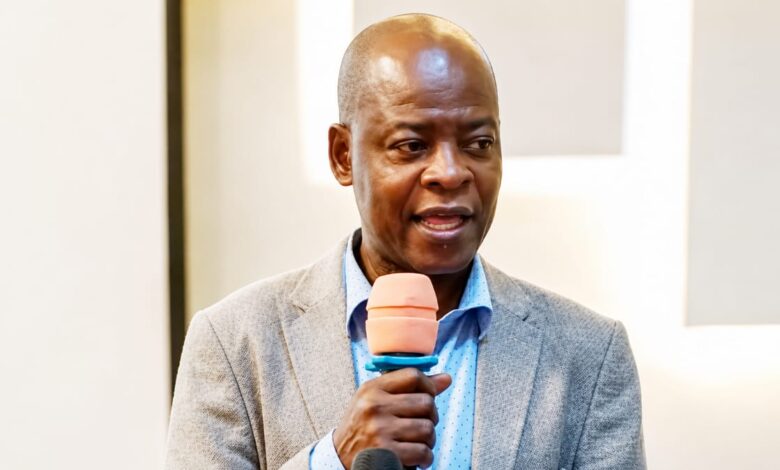
Reacting sharply to the blame, past Chairman of the Public Interest and Accountability Committee (PIAC), Dr. Steve Manteaw, has challenged the opposition to stop performing politics with people’s suffering and instead confront the hard questions of accountability, beginning with the Akufo-Addo-led administration and those tasked with flood-risk management through sanitation interventions.
According to Dr. Manteaw, the opposition’s account is not only erroneous, but calculatingly selective. He insists that if the NPP truly wants answers, they should direct their scrutiny toward the structures, ministries, budgets, and officials responsible for flood prevention during the eight years of their rule rather than targeting an administration that is being criticized as though catastrophe began on day one.
“Flooding is not a new story that started in the last 18 months. Flooding is linked to policy direction, infrastructure readiness, investment priorities, planning, enforcement, and maintenance. Those things don’t appear by magic overnight. If the opposition wants credibility, they must be accurate about time, mandate, and responsibility,” Dr. Manteaw said in an interview.
Sanitation Ministry, Big Promises, and Money for Dredging
At the centre of the former PIAC Chairman’s argument is the Akufo-Addo-led government’s sanitation agenda, mainly the decision to create and operate a dedicated ministry on sanitation and related works. He questions the logic of spending years building institutional structures while citizens remain vulnerable to recurring disasters.
He points unambiguously to the ministry of sanitation, led under the Akufo-Addo administration by Cecilia Dapaah, and the funds allocated for dredging works—works widely understood to be essential to improving drainage systems and reducing flooding in vulnerable areas.
“In the Akufo-Addo era, sanitation was not treated as an afterthought. A whole ministry was created. Funds were released. There were commitments, including money for dredging works, which are not ceremonial activities, were meant to prevent communities from drowning in their own floodwaters,” Dr. Manteaw stressed.
To him, the opposition’s failure to account for those years is the biggest gap in its political messaging, arguing that when money is released for dredging and flood mitigation, the public expects evidence of results: cleared waterways, improved drainage capacity, reduced risk in flood-prone zones, and measurable readiness before disasters strike.
“But today, when citizens are suffering, the opposition wants the public to forget what happened before. They want us to pretend the past administration didn’t have the mandate, the budget, and the time,” he said.
“Don’t Blame Mahama Like You Inherited Nothing”
Dr. Manteaw’s message to the NPP is blunt: opposition parties must stop framing the flood crisis as if the current administration inherited a perfect system or a country with no institutional responsibilities from the previous government.
He argues that the NPP is behaving as though Ghana’s flood risks started with the Mahama administration—while ignoring that flood management is long-term and requires continuity, maintenance, and evaluation of what was built or funded in prior years.
Dr. Manteaw maintained, “If the NPP’s argument is that flooding proves failure, then it must also prove failure earlier. You cannot accuse an 18-month administration of negligence while refusing to interrogate what your eight-year administration delivered, especially when the tools for prevention were funded and the Ministry of Sanitation had a central role.”
He also described the opposition’s approach as political opportunism—using suffering as a platform to score points rather than as a moment to demand documentation and accountability. “The public is not asking for slogans. The public is asking: what did the money do, what outcomes were achieved, and where are the results?” he said.
Accountability Must Be Complete, Not Selective
Whereas Dr. Manteaw criticized the opposition’s blame strategy, he also stressed that accountability for the current administration should not be abandoned. He argues that governance requires transparency during crises and decisive action to protect lives, both in emergency response and in flood-prevention planning. He however insists that accountability must be consistent and comprehensive.
“Accountability cannot be selective. If citizens are suffering now, leaders must respond now—but you cannot erase the role of previous responsibility. You must be willing to ask difficult questions of the administration that held the mandate when the dredging funds and sanitation promises were made” he intimated.
The former PIAC Chairman further urged that the public demand clarity on what was done with dredging allocations: whether works were completed, whether they were sustained, whether drainage systems were properly maintained, and whether flood-prone communities were genuinely protected.
A Warning to the NPP
Dr. Manteaw concluded by warning the NPP against turning the flood crisis into partisan theatre, saying that if the opposition wants to be trusted as a credible alternative, it must start by confronting its own records and directing questions toward the relevant offices that received mandates and resources.
“Stop shouting at Mahama while avoiding the truth about your own eight years. If you want answers, name the people who held the positions, explain the spending, and show where the prevention outcomes were. Citizens deserve more than blame games—they deserve flood control systems that work,” he said.
As the country continues to mourn and rebuild, Dr. Manteaw’s central point remains: when lives are lost and communities are destroyed, accountability must go beyond partisan attacks and focus on the measurable results of governance, especially the dredging and sanitation responsibilities that were funded before the current crisis escalated.