GoldBod purchases 135.843 tonnes of gold between Jan 2025 & May 2026 – Deputy Finance Minister
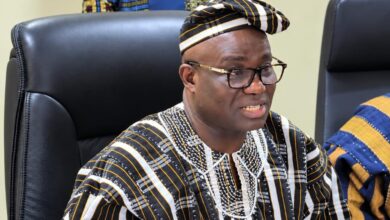
The Deputy Minister of Finance, Thomas Nyarko Ampem, has informed Parliament that the Ghana Gold Board (GoldBod) sourced approximately 98% of its gold purchases from the artisanal and small-scale mining (ASM) sector between January 2025 and May 2026.
According to the minister, GoldBod acquired a total of 135.843 tonnes of gold during the period, of which 135.221 tonnes came from the ASM sector, while the remaining quantity was purchased from large-scale mining companies.
Mr. Ampem disclosed that in 2025 alone, GoldBod purchased, aggregated, and exported 104 tonnes of ASM gold, generating more than $10 billion in revenue for the country.
Speaking in response to questions on the floor of Parliament, he stated that GoldBod’s performance played a significant role in strengthening Ghana’s economy. He noted that the initiative contributed to the appreciation of the Ghana cedi by about 41% in 2025 and helped increase the nation’s foreign reserves from approximately $8.98 billion in December 2024 to $13.8 billion by the end of 2025.
The deputy minister was responding to questions from the Member of Parliament for Oforikrom, Michael Kwesi Addo, regarding the volume of gold purchased by GoldBod, its sources of supply, purchases from licensed small-scale miners, and the total expenditure on gold procurement.
Economic Impact and Gold Purchases
Mr. Ampem revealed that GoldBod spent an estimated $16.1 billion on gold acquisitions between January 2025 and May 2026. Of this amount, about $9.8 billion was spent during the 2025 calendar year.
He emphasized that the government’s broader objective is to transform Ghana’s gold industry by replacing a system characterized by fragmented trading, undervaluation, and smuggling with one that ensures transparency and national benefit.
Through GoldBod, gold is now systematically aggregated, tested, refined, exported, and converted into foreign exchange earnings and reserves that directly support the national economy. He added that the initiative delivers measurable benefits to the country and strengthens Ghana’s economic position.
To improve regulatory compliance and sustainability within the mining sector, GoldBod has intensified collaboration with the National Anti-Illegal Mining Operations Secretariat (NAIMOS) in efforts to combat illegal mining activities.
The minister stressed that GoldBod’s mandate extends beyond gold purchasing. Its purpose is to ensure that Ghana’s gold resources contribute directly to the country’s reserves, balance sheet, and economic sovereignty.
He further described GoldBod as a key component of Ghana’s macroeconomic recovery strategy, focused on foreign exchange generation and the reduction of gold smuggling.
Addressing Gold Smuggling
Mr. Ampem explained that the Ghana Gold Board Act, 2025 (Act 1140), was enacted to formalize the gold trade, increase transparency, and ensure that the country retains value previously lost through smuggling and fragmented trading networks.
Citing available reports, including findings from Reuters, he noted that Ghana lost approximately $11.4 billion through gold smuggling between 2019 and 2023. He stated that GoldBod is gradually reversing this trend by creating a more accountable and efficient gold trading system.
Licensed Buyers and Aggregators
The deputy minister indicated that GoldBod primarily acquires gold from the ASM sector through licensed buyers operating under its regulatory framework.
As of May 31, 2026, GoldBod had issued licences to 1,184 buyers. These included two aggregators, 67 self-financing aggregators, 736 Tier 2 buyers, and 379 Tier 1 buyers.
Under the licensing requirements, all approved buyers are mandated to purchase gold exclusively from licensed miners before selling it to GoldBod.
Mineral Development Fund Payments
Responding to a separate question from the Member of Parliament for Juaben, Francis Kwabena Brempong Owusu-Akyaw, regarding mineral royalty payments to the Minerals Development Fund (MDF), Mr. Ampem confirmed that the latest payment of GH¢100 million was made on June 3, 2026.
He added that the government transferred a total of GH¢302.5 million to the fund between January and May 2026, bringing total disbursements for the year to GH¢402.4 million.
COCOBOD Reforms and Payments to Licensed Buying Companies
Addressing concerns raised by the Member of Parliament for Kwabre East, Akwasi Gyamfi Onyina-Acheampong, regarding delays in payments to licensed buying companies (LBCs), Mr. Ampem outlined several reforms aimed at resolving the issue.
He explained that the government has introduced a new financing model based on domestic funding arrangements to support cocoa purchases. The objective is to ensure that LBCs have sufficient liquidity throughout the year and are paid promptly.
The deputy minister also announced that a new COCOBOD Bill will soon be presented to Parliament. Among its key provisions is a proposal to prohibit COCOBOD from engaging in quasi-fiscal expenditures, which he said have weakened the institution’s finances and undermined its core mandate of purchasing cocoa.
As an example, he noted that in December 2024, COCOBOD was financing cocoa road projects while simultaneously owing LBCs for cocoa deliveries, some of which dated back to 2022.
Mr. Ampem expressed confidence that the combination of the new financing framework and stricter financial discipline under the proposed legislation would eliminate the recurring payment delays experienced by LBCs.
He further explained that between 2017 and 2023, COCOBOD relied heavily on syndicated loans to finance cocoa purchases and other expenditures, including infrastructure projects. Once these loans were exhausted, management resorted to borrowing from the domestic market through costly Cocoa Bills.
According to the minister, this excessive borrowing strategy resulted in unsustainable debt levels and ultimately contributed to COCOBOD’s default on Cocoa Bill obligations in 2023.