Mahama opens Metropolis International Conference 2026, calls for Africa-led migration agenda
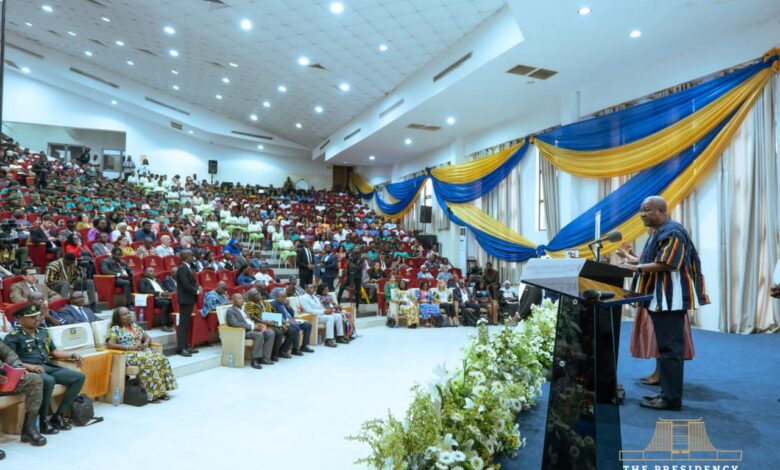
President John Dramani Mahama has officially opened the 2026 Metropolis International Migration Conference in Accra, urging African countries to take greater control of the continent’s migration agenda and ensure that global migration policies reflect African realities and priorities.
The conference, held under the theme “Rethinking African Mobility: Past Lessons, Present Realities, Future Possibilities,” brings together policymakers, researchers, scholars and migration experts to examine migration, integration and the future of human mobility.
Addressing participants at the opening ceremony, President Mahama described the gathering as historic, noting that it was the first time in the 30-year history of the Metropolis International Conference that the global conversation was being held on African soil.
He said the development presented an opportunity for Africa to influence international migration discussions and move beyond being treated merely as a source of migration data and policy challenges.
“When the world discusses Africa, Africa must have a voice in shaping that conversation. The world often looks to Africa for migration data, case studies, and examples of policy challenges. We also produce knowledge and shape policy, and we must write our own mobility agenda,” he stated.
President Mahama stressed that migration has historically been part of Africa’s social, cultural and economic development, long before colonial-era borders divided the continent.
He cited historical trade routes linking West Africa with North Africa and the wider world, noting that cities such as Kumasi, Kano, Timbuktu, Salaga and Djenné were important centres of commerce and knowledge exchange.
“Mobility did not arrive in Africa as a crisis. It has always been part of Africa’s story. Africans will continue to move as they have done for generations,” he said.
However, he maintained that African governments must establish effective institutions, laws and partnerships to ensure that people can migrate safely, legally and with dignity.
The President also condemned recent attacks on foreigners in South Africa, insisting that violence and vigilantism cannot resolve migration challenges.
“South Africa has a legitimate right to address its migration crisis, but the challenges of migration will not be solved by vigilantism,” he said.
“They will not be resolved by marauding crowds, searching for and brutalizing people believed to be illegal immigrants.”
President Mahama acknowledged that Ghana faces its own migration challenges, particularly the influx of refugees from the Sahel region due to violent extremism.
He nevertheless emphasised that well-governed migration could generate significant economic and social benefits for African countries.
Outlining five priorities for improving migration governance, he called for effective implementation of the African Union Free Movement Protocol, stronger international partnerships, closer links between mobility and continental trade, measures to transform brain drain into brain circulation, and efforts to maximise the development benefits of migration.
On African economic integration, the President argued that the continent’s ambition of building a unified market would remain difficult to achieve without easier movement of people.
“The continental market cannot fulfil its promise if goods are able to move more easily than the people who produce them,” he stated.
He also called for international migration partnerships based on dignity, reciprocity and shared responsibility, warning against approaches that treat Africa merely as an external border for controlling migration into other regions.
On the challenge of brain drain, President Mahama urged African countries to invest in training and retaining skilled professionals while creating opportunities for those who migrate to contribute to development back home.
“Our objective should be simple. African professionals should be able to work across borders while the continent continues to benefit from the skills that it helped develop,” he said.
Touching on remittances, he disclosed that Ghana had recorded receipts exceeding $7 billion through the Bank of Ghana, describing the funds as an important source of household income and economic resilience.
He called for reduced remittance transfer charges, improved financial inclusion and greater opportunities for diaspora savings and investment.
“We must reduce those costs, deepen financial inclusion, and create better opportunities for diaspora savings and investment to support productive economic activity back home,” he added.
President Mahama further highlighted Ghana’s commitment to continental integration, pointing to the launch of the country’s electronic visa platform on Africa Day and the waiver of visa fees for holders of African passports.
He said Ghana would continue to prioritise mobility and integration as it prepares to assume the chairmanship of the African Union in 2027.
The President challenged researchers and scholars attending the conference to produce evidence-based studies that reflect African experiences and help shape effective migration policies.
“The work of research is unfinished if its findings never inform policymaking,” he stressed.
He called for a continent where people are not forced to migrate because of conflict, persecution, poverty or despair, but where those who choose to move can do so safely and with dignity.
“Migration is a reality we must govern and an opportunity we must seize,” President Mahama declared before officially opening the Metropolis International Migration Conference 2026.
He expressed confidence that the conference would provide an important platform for Africa and its international partners to rethink migration governance and develop a more inclusive and mutually beneficial approach to human mobility.