Macro Stability Alone Won’t Attract Asian Capital – BoG First Deputy Governor
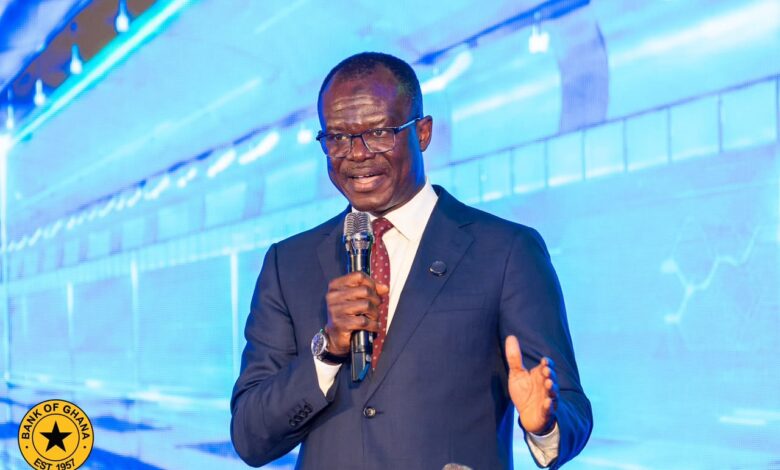
The Bank of Ghana has told Asian investors that Ghana’s economy is rebounding and open for business, but has warned that macroeconomic stability alone will not unlock greater investment flows to West Africa.
First Deputy Governor Dr Zakari Mumuni was speaking at the High-Level West Africa – Asia Capital Dialogue on the sidelines of the IMF-World Bank Annual Meetings at the InterContinental Hotel, Bangkok, Thailand, on Thursday, October 15, 2026. He spoke on behalf of Governor Dr Johnson Asiama.
Theme: Two Conversations. One Question. – Unlocking Greater Asian Investment in West Africa.
Dr Mumuni said the dialogue, convened by the ECOWAS Bank for Investment and Development (EBID), addresses a persistent question: What is constraining the flow of Asian capital into West Africa?
Three Observations from Ghana:
According to him, from Ghana’s perspective:
1. The challenge is not lack of capital or opportunities, but confidence, risk perception, and investment structures.
2. Macro stability is necessary but not sufficient. Investors also need policy predictability, credible institutions, and well-prepared projects.
3. Greater flows depend on practical financing and partnership arrangements.
Ghana Stabilising
Dr Mumuni said Ghana’s recent difficult reforms are yielding results – inflation has eased considerably, debt sustainability has improved, and sovereign credit ratings have been upgraded.
“The lesson is clear: macroeconomic instability increases risk, raises financing costs, and discourages long-term investment,” he said.
Why Asian Capital Is Slow
He listed concerns frequently raised by investors:
– Exchange rate and financing risks
– Regulatory and policy uncertainty
– Contract enforcement challenges
– Infrastructure constraints
– Difficulties in project exit and risk management
He added that development needs do not automatically become investable opportunities. Projects must be commercially viable and backed by credible feasibility studies.
The Opportunity
Ghana offers opportunities in agro-processing, manufacturing, energy, transport and logistics, digital services, and financial technology. Beyond Ghana, the *African Continental Free Trade Area (AfCFTA) presents a larger regional market.
4 Priorities to Change The Equation
Dr Mumuni proposed:
1. Better risk-sharing – DFIs, export credit agencies, governments and private investors allocating risks to those best able to manage them.
2. Stronger project preparation – a robust pipeline of investment-ready projects.
3. Appropriate financing structures – long-term financing and more local-currency financing to reduce currency mismatches.
4. Stronger institutional partnerships – combining Asian capital and expertise with African market knowledge.
Role of Central Banks
He said central banks cannot determine commercial success of projects, but must provide stable monetary environment, price stability, financial stability, efficient payment systems and transparent FX arrangements.
He expressed interest in innovations that improve cross-border payments, with appropriate safeguards.
Practical Agenda
He proposed 4 next steps:
1. Identify priority sectors with genuine commercial interest for Asian investors.
2. Establish structured engagement between African project sponsors and Asian investors.
3. Expand collaboration on trade finance, payment connectivity, and local-currency financing.
4. Create a mechanism for tracking progress.
“Our responsibility in Africa is to make opportunities more investable. Our partners’ responsibility is to assess those opportunities objectively,” he said.
“Ultimately, success will be measured not by the number of discussions we hold, but by the investments made, the businesses expanded, and the partnerships sustained.”