Afienya Industrial Park to position Ghana as West Africa’s manufacturing hub – Mahama
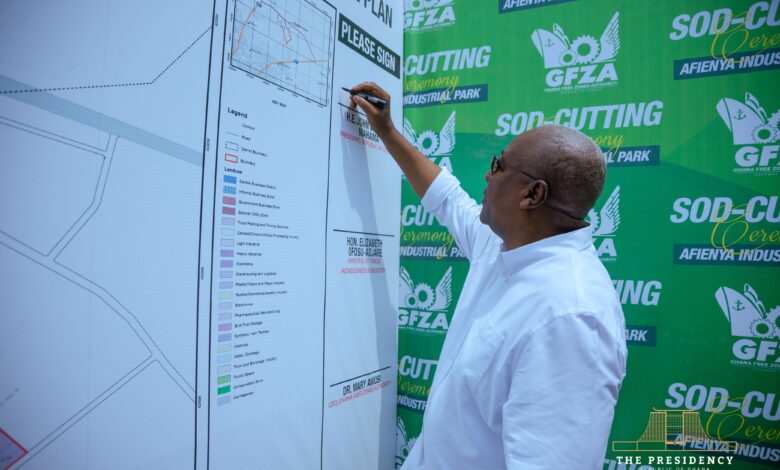
President John Dramani Mahama says the Afienya Industrial Park will play a key role in positioning Ghana as a manufacturing and logistics hub for the West African sub-region by attracting investors, expanding production and creating decent jobs.
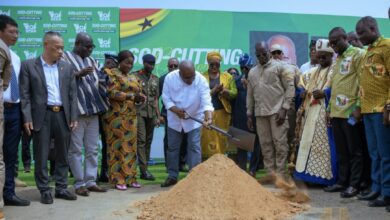
He said the commencement of construction of the 1,238-acre industrial park was part of the government’s efforts to provide the infrastructure businesses need to establish factories, expand operations and increase exports.
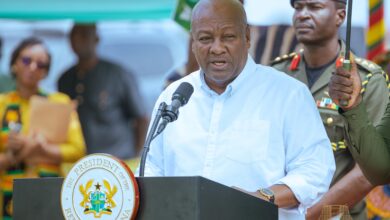
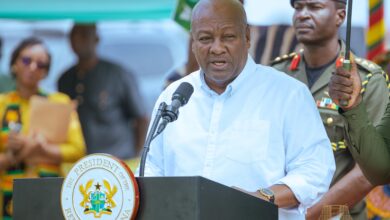
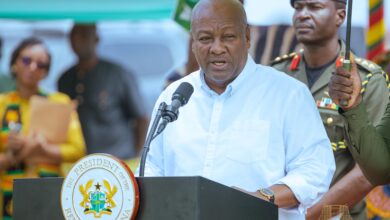
Speaking at the sod-cutting ceremony for the project on Thursday, October 15, 2026, President Mahama said the development was a response to growing investor interest in Ghana, particularly after the Tema Export Processing Zone ran out of space to accommodate interested industries.
“When the Ghana Free Zones Authority informed me that the Tema Export Processing Zone had no space left to allocate to interested industries, it was an encouraging sign of investor interest in Ghana’s economic progress,” he said.
President Mahama cited figures from the Ghana Investment Promotion Centre indicating that registered foreign direct investment had increased from $624 million in 2024 to $2.62 billion in 2025.
He said the government’s responsibility was to ensure that the growing interest translated into actual investments, factories, employment opportunities and increased export earnings.
The Afienya Industrial Park is expected to accommodate more than 120 enterprises and will provide investors with serviced plots and ready-to-use factory shells, supported by essential infrastructure, including electricity, water, roads, drainage, waste treatment facilities and telecommunications.
President Mahama said the park would eliminate some of the difficulties investors face in acquiring land and securing the services required to establish businesses.
“All you need is to come, build your factory, bring your machines, and start to produce,” he said.
The park’s location along the Eastern Corridor Road, its proximity to the Port of Tema and the passage of the Tema-Mpakadan standard-gauge railway line through the industrial enclave are expected to improve the movement of raw materials and finished products.
President Mahama said these transport connections would help manufacturers move imported materials to their factories and transport finished goods to the Tema Port and other regional and international markets.
Priority sectors identified for investment include cocoa processing, cashew and oil palm processing, textiles and garments, pharmaceuticals, medical consumables, automotive components and assembly, and light engineering.
The park will also create opportunities in logistics, data services, business process outsourcing, renewable energy and green manufacturing.
To support the development, President Mahama announced that part of the financing for the park’s infrastructure would be provided under the government’s proposed $10 billion New Economy Programme.
The programme is expected to invest $2 billion annually over four years in productive sectors, with half of the planned investment earmarked for agriculture and agro-processing and the remainder directed towards industry and infrastructure connecting producers to markets.
President Mahama said the initiative would help Ghana increase production, create jobs, reduce dependence on imports and expand exports.
He further called for measures to ensure that residents of Afienya and surrounding communities benefited from the project, including training programmes to prepare local people for employment opportunities within the park.
Farmers, transport operators, local suppliers and small businesses, he added, should also be integrated into the supply chains serving the enterprises.
The President urged investors to take advantage of the opportunities offered by the park and use Ghana as a base for accessing markets across Africa, particularly under the African Continental Free Trade Area (AfCFTA).
“As host of the African Continental Free Trade Area Secretariat, Ghana has an important role in advancing continental trade. We must match that role with the capacity to produce goods that African consumers and businesses want to buy,” he said.
He stressed, however, that access to the wider African market would depend on competitive pricing, consistent product quality and reliable delivery.
President Mahama also directed the Minister for Trade, Agribusiness and Industry to lead a targeted investment outreach programme in collaboration with the Ghana Free Zones Authority and private investors to attract enterprises capable of establishing viable businesses at the park.
He said the success of the project would ultimately be measured by the number of businesses that become operational, the jobs created for Ghanaians and the ability of locally manufactured products to compete in African and international markets.