Ghana must match AfCFTA ambitions with manufacturing capacity – Mahama
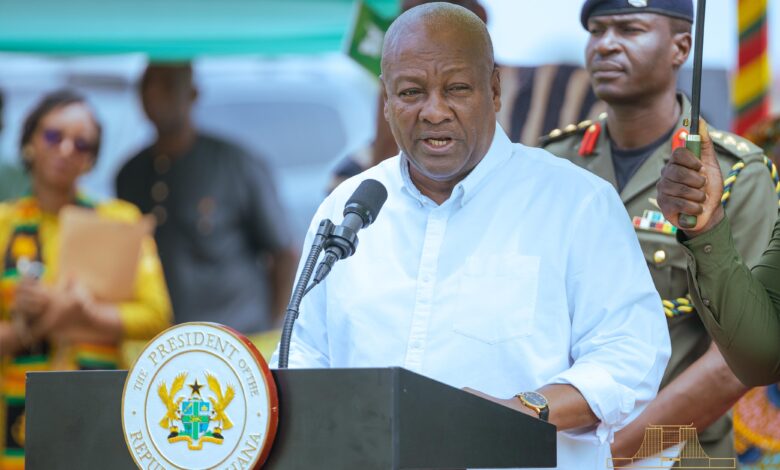
President John Dramani Mahama has called for a stronger manufacturing base to enable Ghana to fully benefit from the African Continental Free Trade Area (AfCFTA), stressing that the country must produce competitive goods that African consumers and businesses want to buy.
He said Ghana’s role as host of the AfCFTA Secretariat must be matched by the capacity to manufacture quality products at competitive prices and deliver them reliably to markets across the continent.
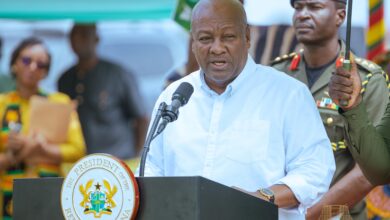
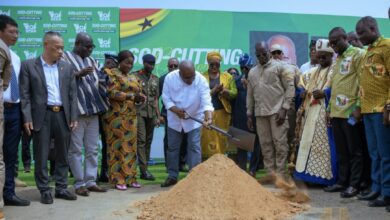
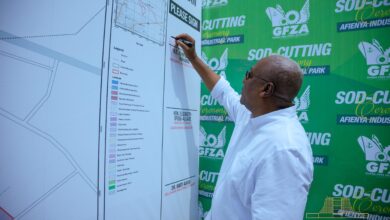
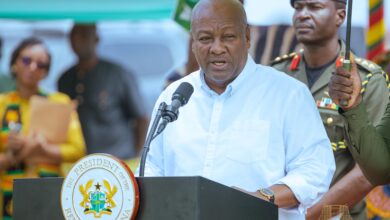
President Mahama made the call on Thursday, October 15, 2026, during the sod-cutting ceremony for the Afienya Industrial Park, where he outlined the government’s plans to expand industrial production, attract investment and boost exports.
“As host of the African Continental Free Trade Area Secretariat, Ghana has an important role in advancing continental trade. We must match that role with the capacity to produce goods that African consumers and businesses want to buy,” he said.
The President described the Afienya Industrial Park as a key part of the government’s efforts to strengthen Ghana’s manufacturing capacity and position the country as a manufacturing and logistics hub for the West African sub-region.
The 1,238-acre industrial park is expected to accommodate more than 120 enterprises, providing serviced plots and essential infrastructure to help businesses establish factories and begin production.
President Mahama said the park would attract investments into sectors such as cocoa processing, cashew and oil palm processing, textiles and garments, pharmaceuticals, medical consumables, automotive components and assembly, and light engineering.
He said the development would also create opportunities in logistics, data services, business process outsourcing, renewable energy and green manufacturing.
According to the President, the park’s location along the Eastern Corridor Road, its proximity to the Port of Tema and the passage of the Tema-Mpakadan standard-gauge railway line through the industrial enclave would give businesses an advantage in transporting raw materials and finished products.
He, however, cautioned that infrastructure and access to markets alone would not guarantee success, insisting that Ghanaian manufacturers must meet the standards and requirements of domestic and regional markets.
“However, access to a wider market must be supported by competitive pricing, consistent quality, and reliable delivery,” he said.
President Mahama urged manufacturers to strengthen their production capacity and ensure that locally manufactured goods could compete effectively with products from other countries.
“My message to investors, therefore, is clear. Establish your businesses here, develop your products here, and use Ghana as the launching pad to reach customers across Africa and beyond,” he added.
The President also linked the industrial park to the government’s proposed $10 billion New Economy Programme, which is expected to invest $2 billion annually over four years in productive sectors to stimulate economic growth and create jobs.
He said part of the programme’s financing would support the infrastructure required to make the Afienya Industrial Park operational.
President Mahama further called for local farmers, transport operators, suppliers and small businesses to be integrated into the industrial park’s supply chains, adding that residents of Afienya and surrounding communities should receive training to benefit from the jobs the project would create.
He also directed the Minister for Trade, Agribusiness and Industry to lead a targeted investment outreach programme, working with the Ghana Free Zones Authority and private investors to attract businesses to the park.
The President said the ultimate measure of the government’s industrialisation efforts would be the establishment of viable businesses, the creation of employment opportunities for Ghanaians and the expansion of Ghanaian products into wider African markets.