Gov’t targets 20,000 jobs through waste management, circular economy – Mahama Ayariga
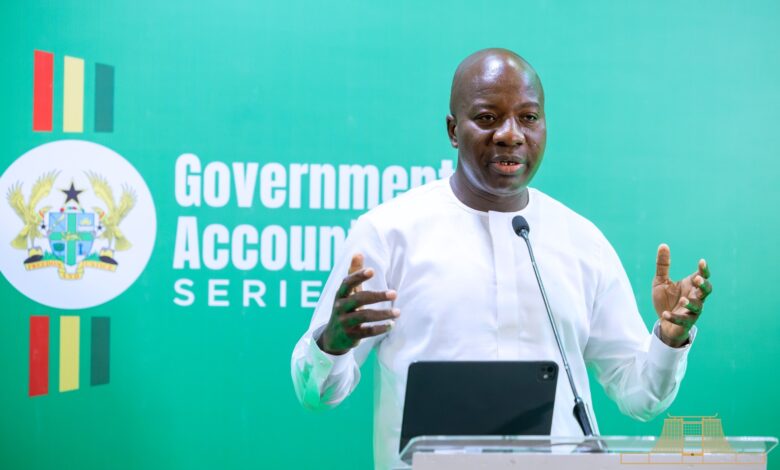
The government is targeting the creation of at least 20,000 permanent jobs through a revamped waste management system and the development of Ghana’s circular economy, Minister for Local Government, Chieftaincy and Religious Affairs, Mahama Ayariga, has announced.
According to him, the new system will not only improve sanitation but also create opportunities for young people, particularly women, to participate meaningfully in the waste management sector.
Speaking at the Government Accountability Series, Mr Ayariga said the government was redesigning the country’s waste management infrastructure to make waste collection more efficient, affordable and economically productive.
“We hope to create not less than 20,000 permanent jobs in the waste management and circular economy,” he said.
He explained that the government would work with existing waste operators rather than displace them as the new system is rolled out.
“There are people already involved in using tricycles to convey the waste. There are people using trucks to convey the waste. We don’t want to displace them. We want to assure them that the new system that we are going to operate will have them included. They will be the ones doing it,” Mr Ayariga said.
The Minister said the government had also identified an opportunity to increase women’s participation in what has traditionally been a male-dominated sector.
He noted that most of the operators currently working at waste transfer stations were men, including both tricycle riders and their assistants.
To address this imbalance, he said the government planned to replace the existing open-bucket tricycles with self-loading and self-tipping tricycles, which could be operated more easily.
“We believe that those can be easily operated also by young girls. So we want to create space for young girls to also get involved in the industry,” he said.
Mr Ayariga urged young men already working in the sector to embrace greater participation by women, stressing that the new system would create room for both men and women.
The Minister said the government’s broader sanitation plan would involve investment in waste collection vehicles, tricycles, household waste bins, transfer stations and engineered landfill sites.
He said the government was working towards constructing engineered landfill sites across regional capitals, with plans for three sites in Greater Accra and two each for Greater Kumasi and Sekondi-Takoradi.
Waste transfer stations are also expected to be established in every Metropolitan, Municipal and District Assembly (MMDA).
Under the proposed system, households would pay electronically for waste collection, while separated waste would also generate revenue from companies involved in recycling and waste-to-energy initiatives.
Mr Ayariga said the government intended to automate payments to make the system more convenient and reduce opportunities for leakages.
He further indicated that the new system was expected to reduce the financial burden on households.
“If a household was paying 300 Ghana cedis for the lifting of waste per fortnight, we might end up paying far less than half of that with a newly designed system,” he said.
He explained that households would no longer necessarily have to deal directly with individual tricycle operators, as payments would be made electronically.
The proposed system would also allow tricycle operators to work at night when traffic is lighter, enabling them to make more trips between collection points and transfer stations.
According to Mr Ayariga, this would allow operators to increase their earnings even as the cost of waste collection for households is reduced.
The Minister said the government was determined to transform waste management from a sanitation challenge into an economic opportunity, with the new system expected to support job creation, recycling and other activities within the circular economy.