Ghana’s Politics of Insults: From Culture of Silence to Political Bravado
Ghana’s political discourse has evolved from a period of fear and silence to an environment where insults and personal attacks have increasingly become part of political communication.
In an article titled “Tracing Ghana’s Politics of Insults: How Did We Get Here?”, Michael Kwame Boadi examines how Ghana moved from what was described as a “culture of silence” during the PNDC era to a political environment where provocative and insulting language can attract public attention and partisan recognition.
The article traces the roots of the “culture of silence” to Professor Albert Adu Boahen’s 1988 J.B. Danquah Memorial Lectures, where he described the restrictions on public expression under the PNDC.According to the article, criticism of political authority during that period could have serious consequences, with restrictions imposed on private newspapers and journalists. It notes that the Catholic Standard was shut down in 1985 after criticising state policy, while a newspaper licensing regime introduced in 1989 gave the state greater control over who could publish.
The article argues that, in such an environment, silence did not necessarily mean agreement. Citizens resorted to proverbs, coded music, jokes and other indirect forms of expression to criticise authority without openly confronting those in power.
However, the transition towards constitutional rule in the late 1980s and early 1990s gradually opened up the space for public expression.The 1992 Constitution guaranteed freedom of speech and expression, including freedom of the press and other media, while the inauguration of the Fourth Republic in 1993 further strengthened the constitutional protection of free expression.
The article identifies the liberalisation of the airwaves, the repeal of criminal libel and the professionalisation of political communication as major developments that shaped Ghana’s contemporary political discourse. The growth of private radio stations and phone-in programmes gave ordinary citizens greater opportunities to participate directly in political discussions.
However, the article argues that the same platforms also created an environment where the loudest and most provocative voices could attract the greatest attention. The repeal of criminal libel laws in 2001 further expanded the space for political expression, while the emergence of party communicators and serial callers created a new form of political communication in which defending one’s party and attacking opponents became increasingly prominent.
According to the article, insults, name-calling and abusive metaphors subsequently became routine features of political competition. It argues that the most worrying development is not simply the existence of insults but the emergence of insults as a form of political capital. Political communicators who aggressively attack opponents may be described within their parties as fearless or loyal, while provocative comments can attract attention through traditional and social media.
The article further argues that this represents a reversal of the earlier “culture of silence.” Whereas courage under the PNDC involved speaking against power despite the risks, contemporary political bravado often involves attacking opponents from within the protection of partisan networks. He cited the 2016 Montie 3 case as an example of the limits of offensive political speech. Three men were sentenced to four months in prison for contempt after threatening Supreme Court justices on radio. Their sentences were later remitted by President John Mahama.
It also points to monitoring by the Media Foundation for West Africa, which recorded hundreds of cases of indecent expressions on radio during the 2020–2021 monitoring period, with political discussion programmes accounting for a significant proportion of the incidents. The article warns that the consequences extend beyond political programmes.
According to Boadi, the culture of insults can crowd out substantive discussions on issues such as jobs, corruption, public services and national development. It can also deepen political polarisation by turning political opponents into perceived enemies rather than competitors.
The article further argues that ethnic and personal attacks can have consequences beyond the media environment, while the hostile nature of political discourse may discourage capable people, particularly women, from participating in politics.
The article argues that political parties, media organisations, regulators, civil society organisations and citizens all have a role to play in addressing the problem.
It says political parties should avoid rewarding insults, media houses should hold presenters and panelists accountable, and institutions such as the National Media Commission and the National Commission for Civic Education should continue monitoring and educating the public.
It concludes that Ghana’s response should not be a return to the culture of silence or the criminalisation of legitimate criticism. Instead, it calls for a political culture in which the freedom to speak is matched by responsibility, truthfulness and issue-based argument.
Ultimately, the article maintains that Ghana’s transition from a culture of silence to constitutional freedom represents a significant democratic achievement, but warns that freedom to speak without fear should not become freedom to speak without responsibility.
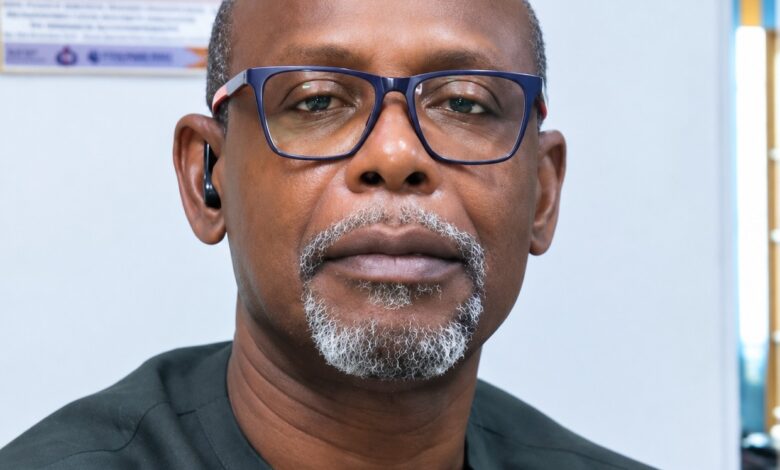
Micheal Boadi, Coperate Manager, Transparency Integrity Ghana