President Mahama hosts ‘Full Circle’ event to push global development reset
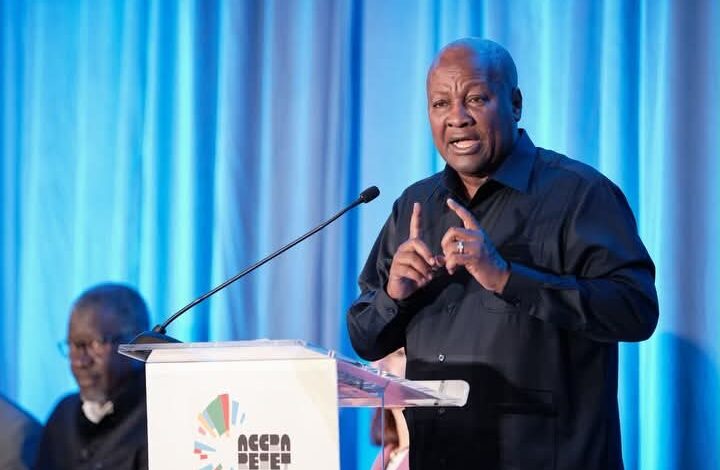
President John Dramani Mahama has brought together global leaders, development experts and representatives of the Global South in New York to renew calls for a rethink of how international development works.
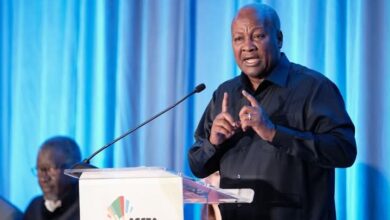
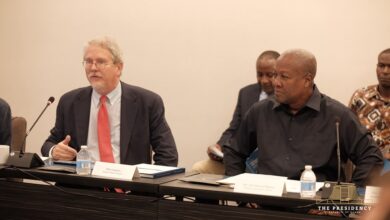
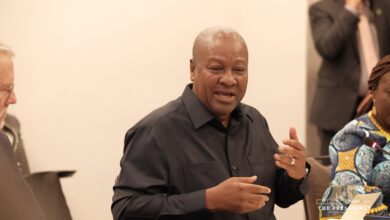
The President hosted a high-level side event, “Full Circle: Making Global Development Work Again,” on the sidelines of the 81st United Nations General Assembly (UNGA), marking one year since Ghana launched the Accra Reset initiative.
The gathering focused on a central question: how can countries in the Global South gain greater control over their development priorities while building stronger and more equal partnerships with the rest of the world?
For President Mahama, the answer lies in moving beyond a system where developing countries remain heavily dependent on external financing and decisions made elsewhere.
He identified geostrategic marginalisation, geopolitical vulnerability and donor dependence as interconnected challenges facing the Global South.
“These are not three separate misfortunes; they are interconnected threats of a broken global system,” President Mahama said.
He argued that countries must strengthen their own political institutions, productive sectors and financial systems if they are to have greater influence over their development choices.
President Mahama used Ghana’s own economic reform programme to illustrate the connection between domestic responsibility and global reform.
He said the Resetting Ghana Agenda was focused on reforms in areas including the economy, fiscal management, governance and industrial development.
According to him, efforts to change the global development system would have limited impact if individual countries were not also prepared to address weaknesses at home.
“A national reset without a global reset leaves us building on shifting sands. Likewise, a global reset without domestic discipline is unfeasible,” he said.
Health was one of the major areas discussed during the event, with President Mahama calling for countries to develop stronger domestic capacity to produce essential medicines and other health products.
He pointed to Ghana’s efforts to support pharmaceutical manufacturing through government purchasing and access to regional markets as part of the broader push for greater health sovereignty.
The President also launched “A Sovereign Future for Health,” a report prepared by a high-level panel established under the Accra Reset.
The report presents 10 recommendations aimed at strengthening global health governance and giving countries in the Global South greater control over their health systems.
President Mahama stressed that greater self-reliance should not mean cutting countries off from one another.
Instead, he advocated what he described as “pragmatic interdependence” based on partnerships in which countries have a stronger voice and greater capacity to contribute.
“Stronger, self-reliant southern partners are not a threat to the global North,” he said.
The President said the next phase of the Accra Reset would focus on implementation rather than simply producing more declarations.
Ghana, he said, would work with governments, international health institutions, development finance institutions, philanthropic organisations and the private sector to develop country-level compacts.
These efforts are expected to strengthen connections between research, regulation, local manufacturing and distribution.
President Mahama also emphasised that greater control must come with greater responsibility.
“There can be no ownership without control,” he said, adding that control must also be accompanied by accountability to citizens.
With Ghana set to assume the chairmanship of the African Union in January 2027, President Mahama said the country would take the Accra Reset agenda into wider continental policy discussions.