North Shore Apparel Ghana Ltd: Weaving visionary leadership into inclusive national transformation
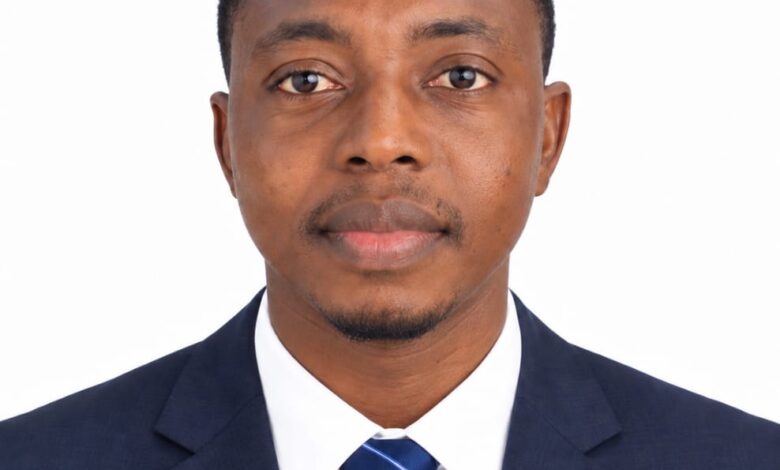
A youth activist of the National Democratic Congress (NDC), Mr Jaga Mohammed Yakubu, has commended His Excellency John Dramani Mahama and the Vice President, Prof. Jane Naana Opoku-Agyemang, for what he described as a “bold beginning” towards a new national vision following the commissioning of North Shore Apparel Ghana Ltd.
Mr Jaga Mohammed Yakubu said the development in Savelugu, an area he described as having been deprived of development for many years, goes beyond the opening of an industrial facility.
According to him, the project represents a defining political and economic statement about Ghana’s leadership priorities, development agenda and future direction.
“At a time when the call for equitable development has never been louder, this landmark project stands as undeniable proof that Northern Ghana is no longer on the margins of progress but at the very centre of a new national vision,” he said.
A Historic Industrial Breakthrough in Northern Ghana
Building on this renewed vision, Mr Jaga said the scale of the project itself tells a compelling story.
“For the first time, the northern part of the country is hosting a manufacturing enterprise of this magnitude,” he stressed.
He said the scale, ambition and operational capacity of North Shore Apparel position it to rival, and potentially surpass, long-established industries in the southern part of the country.
According to him, the ripple effects of the project are not confined to Ghana alone but could extend across the West African sub-region, placing Northern Ghana firmly on the industrial map.
Mr Jaga said, more importantly, the achievement reflects a deeper shift in the philosophy of leadership and development in the history of the Republic of Ghana.
From Promises to Measurable Impact
“This is what purposeful, people-centred leadership looks like—not abstract promises, but visible and measurable transformation for Ghanaians,” he stated.
He said North Shore Apparel, with its capacity to produce a diverse range of garments, including sportswear, workwear, casual wear, children’s clothing and corporate attire, represents more than a factory.
According to him, the project has the potential to contribute to addressing some of the social and economic challenges facing the northern part of the country, including youth unemployment and migration.
He said it also symbolises a shift in national thinking—from exclusion to inclusion, from neglect to investment, and from political rhetoric to tangible results that improve lives while promoting environmentally sustainable practices.
“Such initiatives can promote greater understanding, stronger relationships and social cohesion among people in Northern Ghana,” he stated.
However, to fully appreciate this progress, Mr Jaga said it was necessary to understand the journey that led to the establishment of the facility.
A Story of Neglect Confronted by Responsive Leadership Mr. Jaga said the vision for the project was conceived as far back as 2022, when details of the project were presented to the then NPP government.
He alleged that under the previous administration, the transformative initiative was met with indifference, sidelined, denied the necessary support and excluded from key national programmes such as the One District, One Factory (1D1F) initiative.
He said that in February 2024, Alhaji Nurudeen Mohammed remained determined and committed to the project despite the daunting obstacles.
A sod was subsequently cut for construction to begin.
However, Mr Jaga said that despite the early momentum, the project faced significant setbacks.
He described the absence of government representatives during the initial sod-cutting ceremony in 2024 as symbolic of what he termed a broader pattern of neglect and misplaced priorities.
Consequently, he said, opportunities that could have accelerated development in the north were overlooked, leaving private initiative to struggle in isolation.
A Turning Point Through Strategic Intervention
“But leadership is ultimately measured by choices, and when leadership changed, so too did the trajectory of this project,” Mr Jaga stated.
According to him, under the NDC government, there was a decisive shift from inaction to intervention.
He said through the Ghana EXIM Bank, an institution established under the leadership of President John Dramani Mahama to support industrialisation and export growth, the project received the financial support it needed.
Furthermore, he said strategic support delivered through ADB Bank enabled North Shore Apparel not only to commence operations but also to expand its capacity.
“This is governance in action: identifying promise, investing in it, and ensuring that it delivers real benefits to Ghanaians as a whole,” he stated.
Mr Jaga added that, in addition to financial support, the human impact of the project was equally significant and could contribute to broader socio-economic development.
Transforming Lives Through Employment Creation.
Beyond financing, he said the government, through the Youth Employment Agency (YEA), facilitated the engagement of 1,000 young Ghanaians.
“This is not merely a statistic.
It is 1,000 lives transformed, 1,000 families supported, and 1,000 reasons to believe in a government that prioritises its youth,” he said.
Mr Jaga said the company currently provides about 2,300 jobs and, at full scale, is expected to generate up to 30,000 jobs for young people.
“These are not slogan jobs or mere words.
They are opportunities promised during the campaign that have become a reality for Ghanaians,” he stated.
He said the project was therefore addressing one of the region’s most persistent social challenges.
Breaking the Cycle of Migration and Restoring Dignity
For decades, Northern Ghana has grappled with the painful reality of young people migrating to southern cities in search of better opportunities for survival.
Mr Jaga said this has not only drained the region of its human capital but has also exposed young people to vulnerability, exploitation and unsafe living conditions in cities such as Accra and Kumasi.
“The consequences are evident: young women working as head porters, popularly known as kayayei, young men navigating uncertain livelihoods, and thousands struggling daily for dignity,” he stressed.
According to him, North Shore Apparel has the potential to disrupt this cycle by creating sustainable and dignified employment opportunities within Northern Ghana.
“This will enable young people to build their futures at home, close to their families and communities,” he said.
Ultimately, he added, this would contribute to broader economic stability and national development.
Strengthening the Economy and Enhancing Global Competitiveness
Mr Jaga said the implications of the project extend far beyond job creation.
With its capacity for large-scale production and export, he said North Shore Apparel is positioned to become a significant contributor to Ghana’s foreign exchange earnings.
“By exporting garments to international markets, it can help strengthen Ghana’s foreign exchange position, reduce reliance on imported garments, particularly second-hand clothing, which poses environmental challenges, and enhance Ghana’s competitiveness in the global textile industry,” he stated.
“We Northerners do not know how to thank the Most High God for the implementation of such projects.
Through the visionary leadership of His Excellency John Dramani Mahama and Vice President Prof. Jane Naana Opoku-Agyemang, Ghana is acquiring projects that can transform the lives of its people,” he said.
He said strong economies are built not through dependence but through production, innovation and export-driven growth under selfless leadership.
Mr Jaga Mohammed Yakubu said the project also aligns with broader national policy directions.
Bringing the 24-Hour Economy Vision to Life
The operational model of North Shore Apparel, which runs in shifts, according to Mr Jaga, embodies the vision of a 24-hour economy.
“This is no longer merely a theoretical policy or campaign message.
It is a living testimony and a working example of how Ghana can maximise productivity, expand employment and fully utilise its human and industrial capacity,” he stated.
He said when industries operate continuously, job opportunities multiply, employment expands, incomes rise and communities can become safer places to live as economic engagement replaces idleness.
“This represents a direct link between policy and impact, and between leadership vision and the everyday reality of people’s lives,” he pointed out.
Positioning Northern Ghana as the Next Industrial Frontier
Mr Jaga said the significance of the project becomes even more profound when viewed in the context of Ghana’s future development.
“Perhaps the most powerful message of all is what this project signals for the future. North Shore Apparel is not an isolated success; it is a catalyst,” he stated.
He said the project challenges long-held assumptions about where development can and should occur and demonstrates that Northern Ghana is not only capable of hosting large-scale industrial investments but is ready for them.
With ongoing infrastructure developments, including the Big Push agenda, railway expansion for cargo movement and new airport projects, Mr Jaga said Northern Ghana was rapidly becoming an attractive destination for investment.
Combined with the availability of land, a youthful labour force and a supportive policy environment, he said the conclusion was unavoidable: Northern Ghana is not merely an option but could become a major frontier for industrial growth in Ghana.
Conclusion: A Defining Moment for Ghana’s Future
“The contrast could not be clearer. One approach overlooked potential and allowed opportunity to slip away, while the other recognises value, invests boldly and delivers results that transform lives,” Mr Jaga stated.
He said North Shore Apparel stands as a powerful testament to what is possible when leadership is intentional, responsive and committed to inclusive development.
“It is more than a factory. It is a symbol of hope, a driver of economic empowerment, and a blueprint for balanced national development and growth,” he said.
“If sustained and replicated, initiatives like this will not only redefine Northern Ghana; they will reshape the entire Ghanaian economy,” he pointed out.
“This is not just progress. This is a real turning point for Ghana after years of developmental challenges since the overthrow of His Excellency Dr Kwame Nkrumah in the coup d’état of February 24, 1966.
“And the future has already begun for Ghanaians through the Reset Ghana Agenda,” he stated.