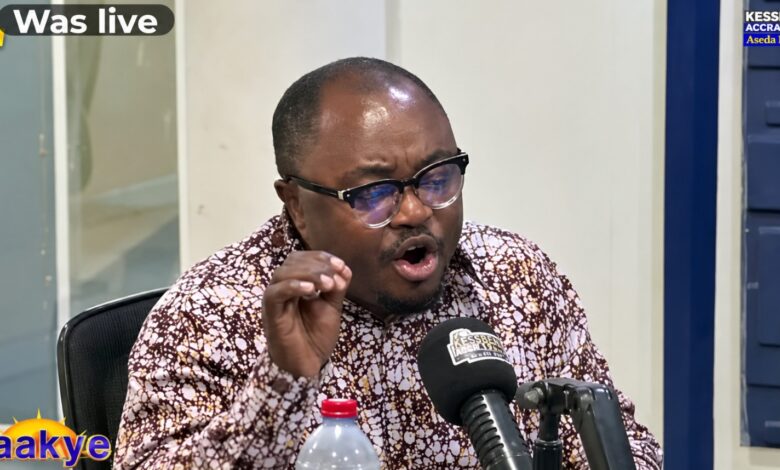
Private legal practitioner Lawyer K.K. Serbeh has argued that although the Attorney General (AG) holds the constitutional mandate to undertake criminal prosecutions, the Office of the Special Prosecutor (OSP) was established to insulate corruption-related prosecutions from political interference.
In a fierce argument held on Kessben Maakye show in Accra, he noted that the Attorney General recently sought clarification from the Supreme Court on whether the OSP requires the AG’s permission before prosecuting certain criminal cases.
Serbeh explained that while the Constitution vests prosecutorial authority in the Attorney General, that power can be delegated to another body or institution.
He noted that the OSP Act was enacted specifically to give the Special Prosecutor a measure of independence in handling corruption-related prosecutions, particularly where there may be concerns about political influence.
He argued that fears of government interference, especially in politically sensitive cases, were among the reasons Parliament created the OSP.
Citing the Supreme Court proceedings and legal submissions, Serbeh maintained that the current interpretation suggests the Attorney General may already have granted the OSP authority to prosecute cases under the OSP Act without requiring fresh approval for each prosecution.
However, he insisted that the Office cannot be considered fully independent as long as the Attorney General retains the constitutional power to discontinue prosecutions that are being handled by the OSP through a nolle prosequi.
He emphatically stated, “so long as the National Democratic Congress (NDC) is in power, I can’t foresee any NDC member ever fallen guilty of any offense under the OSP prosecution and the evidence is clear”.
Serbeh further claimed that the legal challenge stems from concerns that the OSP could one day prosecute members of the governing party NDC, adding that this has fueled attempts to limit the Office’s operational independence.
He concluded that the true independence of the OSP will remain in doubt for as long as the Attorney General retains overriding prosecutorial powers, arguing that the current legal framework leaves the anti-corruption body vulnerable to executive influence.
By Maurice Otoo