Akaneweo Kabiru Abdul Challenges Sulemana Braimah, Fourth Estate Over NLA-KGL Renegotiation Claims
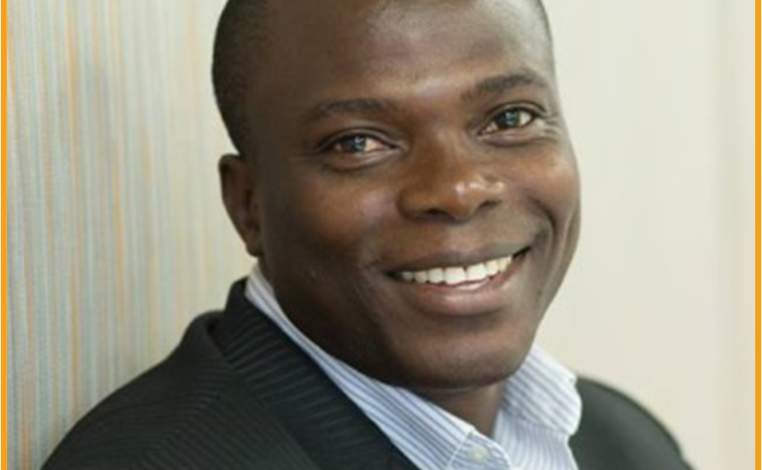
Public interest advocate Akaneweo Kabiru Abdul has pushed back against Sulemana Braimah and The Fourth Estate’s coverage of the National Lottery Authority (NLA) and KGL Technology Limited partnership, arguing that their call for outright abrogation of the deal was not backed by the official government review.
In a 20-point statement released Monday, Abdul said while illegal conduct by businessmen should be fought, Ghana must avoid a culture where “every successful indigenous Ghanaian business is presumed guilty” before facts are established. “That approach is dangerous for investment, dangerous for entrepreneurship, and dangerous for Ghana,” he wrote.
Abrogation vs Renegotiation
Abdul noted that The Fourth Estate’s 2025 investigation branded the KGL-NLA agreement “a terrible deal that should be abrogated.” But the committee set up following President John Mahama’s intervention, he said, did not recommend outright cancellation.
Instead, the committee called for a stay of the agreement and a renegotiation of financial terms to secure greater benefits for the country.
“Abrogation means terminating a contract. Renegotiation means improving a contract,” Abdul stated. “The committee adopted a far more measured, commercially grounded, and legally sustainable position than the position championed by Sulemana Braimah.”
He argued that if the committee had fully accepted The Fourth Estate’s stance, it would have recommended cancellation. “That did not happen.”
Disputed Revenue Figures
Abdul challenged The Fourth Estate’s claim that Ghana lost GHS496.8 million in 2024. The media house had calculated that KGL generated GHS3 billion in gross revenue and argued the NLA could have received GHS615 million under a 2019 arrangement, instead of the GHS118.2 million reported.
“This entire position hangs on a hypothetical assumption that the 2019 arrangement should have remained unchanged forever,” Abdul said. “Contracts are renegotiated. Risks change. Technology costs change. Market realities change.”
He added that gross revenue is not profit and does not account for prize payouts, telecom charges, software, taxes, commissions, and operational costs. “Any serious financial assessment must distinguish between revenue and profit. Revenue is not cash sitting in someone’s bank account.”
Historical Context
Abdul said critics ignore that prior to KGL’s digital operations, the NLA never recorded figures close to current levels. Industry data, he said, shows the NLA generated about GHS2.766 billion in total revenue from 2013 to 2020, with its highest annual revenue around GHS401 million.
“The more accurate question is whether KGL helped create and expand a digital lottery ecosystem that generated unprecedented revenue levels,” he said.
He cited recent data indicating KGL paid approximately GHS173.36 million to the NLA in 2025, while 29 other licensed operators paid a combined GHS44.9 million. The Ghana Lotto Operators Association, he added, has acknowledged KGL’s dominant contribution.
“No Monopoly Over Truth”
While affirming that KGL is not above criticism, Abdul said the public deserves balanced discussion, not a one-sided narrative.
“Sulemana Braimah has every right to disagree with the committee’s conclusions. What he does not have is a monopoly over truth,” he wrote. “The Republic of Ghana is governed by institutions, laws, and contractual processes not by media campaigns.”
He stressed that the ongoing process is a legal and commercial renegotiation involving stakeholders, aimed at securing a better deal for Ghana. “That objective is entirely different from the impression that has been created in some quarters that the committee endorsed their absurdity.”
Call for Scrutiny
Abdul said investigative journalism remains indispensable but must not become “self-serving activism.” Journalists, he argued, should have their assumptions and calculations subjected to the same scrutiny they apply to others.
“At the end of the day, the KGL–NLA issue is not a battle between good and evil. It is a commercial and policy dispute about how the benefits of a rapidly growing digital lottery ecosystem should be shared,” he said.
“If there is illegality, let it be proven. If there is corruption, let it be prosecuted. But if the issue is fundamentally about obtaining a better financial arrangement for the Republic, then honesty demands that we call it exactly what it is: a negotiation issue, not the grand scandal that The Fourth Estate & Sulemana Braimah attempted to portray.”