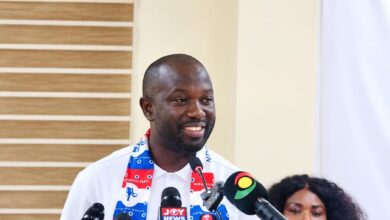
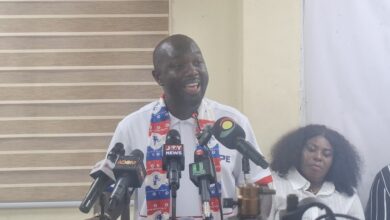
Lawyer Paul Twum-Barimah commends Foreign Ministry, Chief of Protocol Desmond Agyemang over swift evacuation of Ghanaians from South Africa

Former Member of Parliament for Dormaa East and ex-Vice Chairperson of the Foreign Affairs Committee of the 8th Parliament, Lawyer Paul Twum-Barimah, has lauded Ghana’s Ministry of Foreign Affairs and the Chief of Protocol, Desmond Agyemang, for the “swift, well-coordinated, and professionally executed” evacuation of Ghanaian nationals from South Africa, following recent anti-immigrant tensions and reported attacks on foreign nationals.
In a statement, Twum-Barimah said the timely intervention by Ghana’s diplomatic authorities demonstrates a high level of preparedness, coordination, and commitment to the protection of Ghanaian lives abroad, particularly at a time of rising regional sensitivity over migration and labour-related tensions in South Africa.
Mr Twum Barimah’s statement follows the evacuation of some stranded Ghanaians from South Africa amidst xenophobic attacks in the country.
Lawyer Twum-Barimah said the response by the Foreign Ministry reflects “a mature and responsive foreign policy posture that prioritises citizens over bureaucracy.”
“I must commend the Ministry of Foreign Affairs and the Chief of Protocol, Desmond Agyemang, for the speed and efficiency with which they handled the evacuation process. It is not every day that you see this level of coordination between our diplomatic missions and the home government in moments of crisis,” he stated.
He further noted that the evacuation exercise, which saw hundreds of Ghanaians safely transported back home, underscores the importance of strengthening Ghana’s consular response systems and emergency diplomatic channels.
“What we have witnessed is a clear demonstration that when institutions work together effectively, the state is able to protect its citizens even in complex and volatile international environments,” he added.
The evacuation was triggered by escalating unrest in parts of South Africa, where anti-immigrant protests and isolated attacks on foreign nationals raised serious safety concerns for African migrants, including Ghanaians. The situation prompted urgent diplomatic engagement between Ghana’s High Commission in Pretoria and South African authorities.
Reports indicate that nearly 300 Ghanaian nationals were successfully repatriated under a coordinated emergency arrangement facilitated by the Ghanaian mission, with assistance from South African authorities. Some of the evacuees had reportedly been stranded, while others faced heightened security risks amid the unrest.
Lawyer Twum-Barimah, who previously served on Parliament’s Foreign Affairs Committee as Vice Chair, stressed that such interventions are not only humanitarian but also strategic in protecting Ghana’s international image and safeguarding its diaspora communities.
“Every Ghanaian abroad represents the nation’s identity. When their safety is threatened, the response of the state must be immediate, decisive, and well-coordinated. In this case, I believe the Ministry has acted in a manner worthy of commendation,” he said.
He also reserved praise for Chief of Protocol Desmond Agyemang, describing his role in the coordination process as “instrumental in ensuring seamless logistics and communication between all actors involved.”
“The Chief of Protocol played a critical role in ensuring that the evacuation process was not only fast but orderly. That level of professionalism is what we expect from our public service leadership,” he noted.
The Foreign Ministry has indicated that returnees will be supported with reintegration assistance, including counselling and welfare support, as part of efforts to help them resettle and rebuild their lives in Ghana.
Lawyer Twum-Barimah emphasised that the evacuation should serve as a model for future emergency consular operations, urging continuous investment in Ghana’s diplomatic infrastructure and citizen protection mechanisms.
“This is a case study in effective crisis diplomacy. We must build on it and ensure that Ghana remains proactive, not reactive, in protecting its citizens wherever they are,” he emphasised.