Free Primary Healthcare Policy Targets 80% Universal Coverage by 2030
Government has announced an ambitious plan to raise Ghana’s universal health coverage (UHC) to 80 percent by 2030 through the rollout of a Free Primary Healthcare policy, a major reform aimed at expanding access and prioritising preventive care.
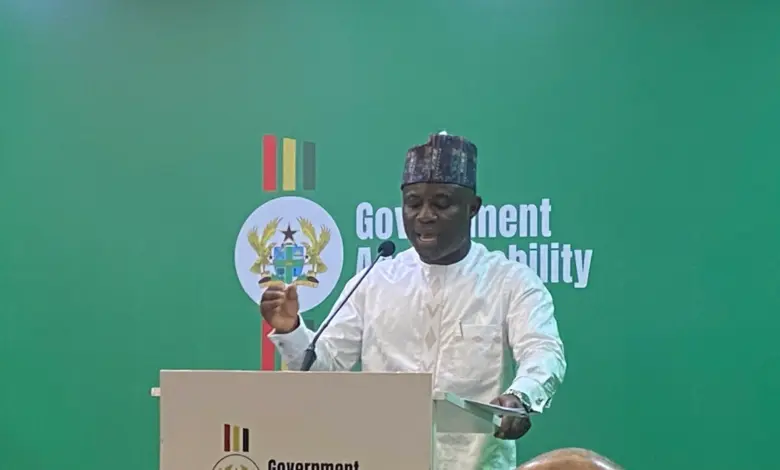
Speaking during the Government Accountability Series, Minister of Health, Hon. Kwabena Mintah Akandoh, said the policy is designed to remove financial barriers at the point of care while strengthening early detection and community-based health services.
“Our universal health coverage index now stands at about 56 percent, and we need to hit a target of 80 percent by 2030,” he stated. “This policy is about ensuring that every Ghanaian can access care early, easily and without worrying about cost.”
The Minister explained that the initiative will provide free access to a defined package of essential services at the primary healthcare level, including CHPS compounds, health centres and polyclinics nationwide.
According to him, the policy responds to persistent gaps in the health system, particularly low enrolment in the National Health Insurance Scheme (NHIS) and high out-of-pocket spending.
“Only about two-thirds of the population is actively enrolled in NHIS, which means a significant number of Ghanaians still face financial barriers when they seek care,” he noted. “In practical terms, many families are still paying out-of-pocket and risk catastrophic expenditure.”
Hon. Akandoh emphasised that the reform represents a shift from a treatment-focused system to one that prioritises prevention and early diagnosis, especially in the face of rising non-communicable diseases.
“We are facing a triple burden of disease. While we continue to manage infectious diseases, non-communicable diseases such as hypertension, diabetes, cancers and mental health conditions are rising steadily,” he said.
He warned that low awareness and late detection remain major challenges.
“Hypertension develops silently, diabetes progresses quietly, and many people do not know their status until complications occur. By the time they enter the health system, treatment becomes more expensive, more complex and less effective,” he explained.
Under the Free Primary Healthcare policy, routine screenings for conditions such as hypertension, diabetes and certain cancers will be provided at no cost, alongside maternal and child health services, immunisation, health promotion and treatment of common illnesses.
“What is changing is that care will no longer depend on when you become seriously ill. Screening becomes routine, and the system shifts from reacting to illness to preventing it,” the Minister said.
He clarified that while primary healthcare services will be free, the NHIS will remain essential for accessing higher-level care.
“When you are referred to district, regional or teaching hospitals, it is your National Health Insurance that will save you. So NHIS remains very relevant and important,” he stressed.
The policy will be implemented in phases between 2026 and 2028, beginning with 150 underserved districts across all regions.
“We are going to start with underserved districts, learn from the implementation and smoothen the edges before scaling up nationwide,” Hon. Akandoh indicated.
As part of preparations, government has procured more than 24,000 pieces of essential medical equipment to strengthen service delivery at the primary level.
“We cannot announce policies without preparing. These investments are to ensure that our facilities are equipped to deliver timely and quality care,” he said.
The Minister added that the policy will extend beyond health facilities into communities through structured outreach programmes, including home visits, school health services and public education campaigns.
“Health workers will not only wait at facilities; they will be in homes, schools, churches and workplaces—screening, educating and supporting people to stay healthy,” he noted.
On financing, Hon. Akandoh disclosed that the programme will be funded through the National Health Insurance Scheme, following the uncapping of the NHIS fund and allocations captured in the 2026 budget.
“We are not reinventing the wheel. Financing has been aligned with NHIS, and budgetary provisions have been secured,” he assured.
He concluded that the policy is central to improving health outcomes and building a resilient health system.
“This is about reducing avoidable illness and preventable deaths. Free primary healthcare is a reset towards prevention, equity and a stronger Ghana,” he said.