Food inflation drops to 4.9% under ‘Feed Ghana Programme’ — Mahama
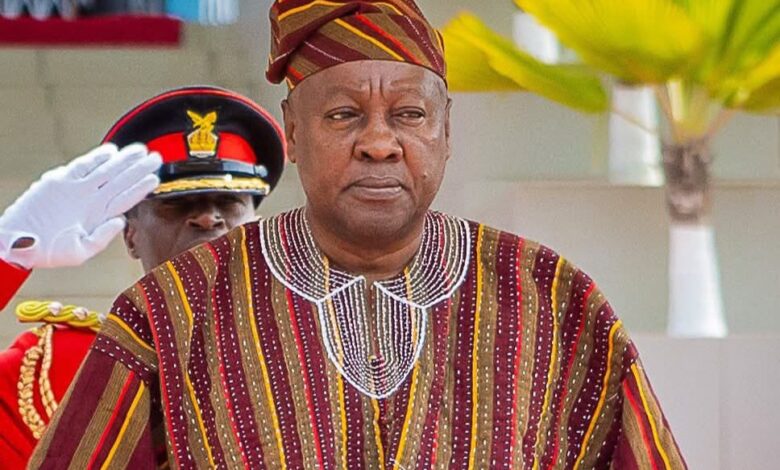
President John Dramani Mahama has announced a significant decline in Ghana’s food inflation rate, crediting the government’s Feed Ghana Programme and broader agricultural reforms for improving food security and stabilising household living costs.
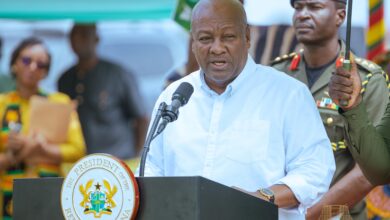
Delivering the 2026 State of the Nation Address (SONA) in Parliament, President Mahama disclosed that food inflation, which peaked at 61 percent in January 2023 and stood at 28.3 percent in January 2025, has now dropped sharply to 4.9 percent.
“Mr. Speaker, as of January 2025, food inflation stood at 28.3 percent following an unprecedented peak of 61 percent in January 2023. Today, food inflation has declined significantly to 4.9 percent, and this has provided relief to Ghanaian families and businesses,” the President told Parliament.
He said the decline reflects the impact of deliberate policy interventions under the Agriculture for Economic Transformation Agenda, with the Feed Ghana Programme serving as the flagship implementation vehicle.
“Our objective is clear — to restore food sovereignty, stabilise food prices, reduce import dependence, and create decent jobs, especially for young people, while repositioning agriculture as a strategic growth sector,” President Mahama stated.
According to the President, the government has committed GH¢300 million to the National Food Buffer Stock Company to help mop up excess produce, stabilise prices, and build strategic national food reserves.
“This is the first time Ghana has deliberately built a food reserve for national resilience,” he noted.
The President also highlighted several agricultural interventions aimed at sustaining the decline in food prices and boosting domestic production.
These include institutional farming programmes involving over 413 institutions, including the Ghana Armed Forces, Ghana Prisons Service, public universities, basic and secondary schools, and faith-based organisations.
“We are encouraging institutional farming as well as home gardening across the country to reduce household food expenditure and improve nutrition,” he said.
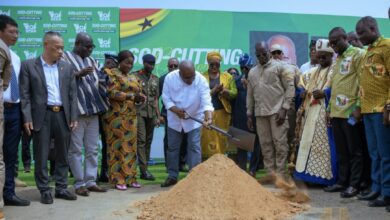
The Feed Ghana Programme also focuses on irrigation expansion, with government initiating the construction of two new mega dams, rehabilitation of eight existing irrigation dams, and development of inland valley rice schemes covering over 1,300 hectares.
President Mahama added that the government is shifting Ghana’s agriculture from rain-fed dependence to irrigation-based production to improve climate resilience and ensure year-round food supply.
“The future of Ghanaian agriculture must be irrigation-driven, climate resilient, and commercially viable,” he said.
Government has also launched a GH¢20 million agro-input distribution project targeting 50,000 farming households across six regions, with strong emphasis on youth and women participation.
President Mahama expressed confidence that continued investment in agriculture would help maintain price stability while strengthening Ghana’s long-term food security.
He reaffirmed government’s commitment to transforming Ghana’s agricultural sector as part of its broader economic recovery and industrialisation agenda.