UCC students encouraged to bridge classroom knowledge with real governance
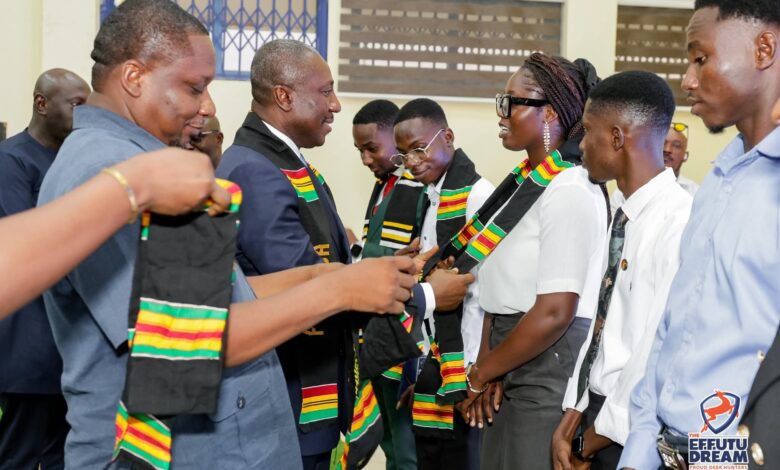
Students of the University of Cape Coast (UCC) have been urged to move beyond theoretical learning and actively connect their academic knowledge to the practical realities of governance and public leadership.
The call was made by the President of the Young Commons Forum (YCF), John Noble, during the official launch of the YCF UCC Chapter at the School of Graduate Studies Conference Hall on Saturday, February 21, 2026.
Addressing an audience made up of lecturers, student leaders, and hundreds of students, Mr. Noble stressed that while university education equips students with knowledge in political science, law, economics, education, and business, it is equally important to understand how governance functions in practice.
According to him, young people must not only debate leadership in lecture rooms but also position themselves to understand how policies are formulated, how decisions are taken at the national level, and how public institutions operate.
“We study governance in books, but we must also understand how leadership truly works in the real world,” he said, noting that the Young Commons Forum was established to bridge the gap between classroom theory and practical civic engagement.
Mr. Noble further underscored the central role of youth participation in sustaining Ghana’s democracy. He maintained that democracy flourishes when young people are informed, engaged, and courageous enough to ask critical but constructive questions.
“Democracy does not survive on silence. It thrives when young people ask questions, seek truth, and stand for integrity,” he emphasized.
He encouraged students to cultivate a culture of informed engagement, stressing that opinions expressed on national issues must be backed by facts and credible data. He urged the youth to support investigative journalism, engage public officials respectfully, and promote transparency in public discourse.
The YCF president also highlighted the power and responsibility that comes with social media use in the 21st century. While acknowledging the opportunities digital platforms provide, he cautioned against the spread of misinformation and divisive rhetoric.
“Social media should not just be a space for trends and insults, but a tool for civic responsibility,” he stated, urging students to use digital platforms to simplify complex policies for public understanding and to promote accountability.
He reminded students that leadership is not defined by titles but by character, service, and integrity. Preparation for leadership, he said, begins with discipline, responsible conduct, and ethical behaviour even within student governance structures.
Mr. Noble announced that the Young Commons Forum would organize policy dialogues, mentorship sessions, and interactive engagements with policymakers and professionals to equip students with practical insights into governance.
The launch event, which brought together student representatives from various campus bodies, was described by participants as a significant step toward deepening civic consciousness among UCC students.
As the forum begins its activities, Mr. Noble expressed optimism that students of UCC will not only excel academically but also emerge as responsible and accountable leaders committed to national development.