President Mahama: We will no longer export raw cashew
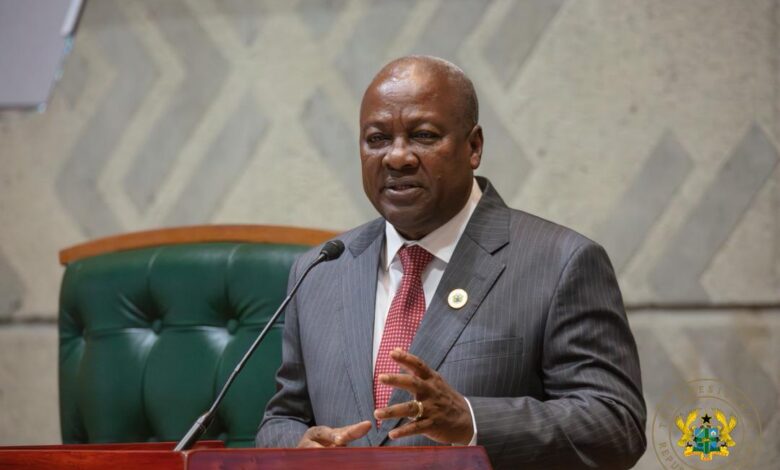
President John Dramani Mahama has declared a bold shift in Ghana’s agricultural policy, promising to end the export of raw cashew and other unprocessed tree crops to boost local processing, create jobs, and increase export earnings.
Speaking at the inaugural Ghana Tree Crops Investment Summit and Exhibition 2026, President Mahama emphasized that value addition is central to his government’s economic transformation agenda.
“We will no longer export raw cashew, raw shea, or unprocessed rubber while importing the same finished products at higher prices,” he said. “Our target is clear: 50–60 percent local processing annually, expansion of agro-industrial parks, incentives for private-sector processors, and stronger regulatory oversight.”
The President explained that the move is part of a wider strategy to diversify Ghana’s agricultural economy beyond cocoa, creating sustainable livelihoods for over 1.6 million Ghanaians employed across key tree crops, including cashew, shea, coconut, oil palm, rubber, and mango.
“These are not secondary crops,” he stressed. “They are engines of transformation. By processing locally, we increase revenue, create jobs, and strengthen our industrial base.”
President Mahama also highlighted the government’s commitment to developing the oil palm sector under the $500 million Red Gold initiative, which aims to make Ghana a net exporter of palm products and create 250,000 direct jobs.
The President linked the policy shift to Ghana’s broader economic ambitions, including a $12 billion annual export target by 2035 and the 24-hour economy framework, which seeks continuous production, processing, and export growth.
“Our 2035 ambition is bold, but achievable,” he said. “If each of us participates in growing and processing these crops, Ghana will move decisively from raw exports to industrial processing, from vulnerability to resilience, and from promise to performance.”
President Mahama concluded by inviting local and international investors to take advantage of opportunities in Ghana’s tree crop sector.
“Let this summit mark the turning point at which we climb the good tree of tree crop investment and reap its economic and social benefits,” he said.