Government Announces Major Cocoa Sector Reforms to Support Farmers and Stabilize COCOBOD
The Government of Ghana has announced sweeping reforms in the country’s cocoa sector following what it describes as years of financial mismanagement and structural challenges affecting the industry.
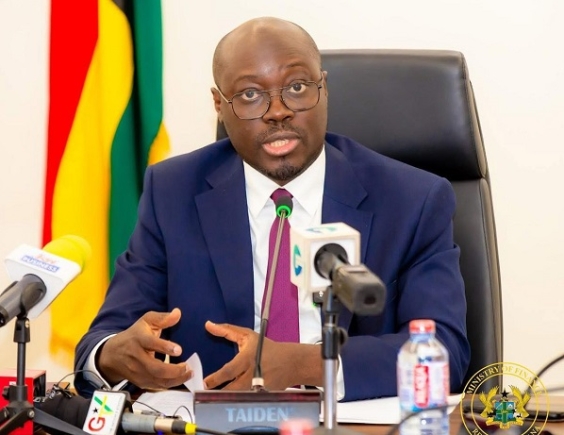
The reforms, unveiled by the Minister for Finance, Dr. Cassiel Ato Forson, are aimed at improving farmer incomes, strengthening the financial position of the Ghana Cocoa Board (COCOBOD), and ensuring long-term sustainability of the cocoa sector.
Speaking at a press briefing on Thursday, February 12, 2026, Dr. Forson said a comprehensive review of the cocoa sector over the past eight years revealed significant operational and financial challenges that required urgent attention.
“A careful review of the cocoa sector over the last eight years revealed gross mismanagement, which requires immediate and comprehensive reforms to address the challenges in the sector,” Dr. Forson stated.
Immediate Relief for Farmers
As part of the reforms, Cabinet has directed COCOBOD to begin the immediate repayment of outstanding debts owed to cocoa farmers. The government has also proposed a new Cocoa Board Bill that will introduce an automatic pricing adjustment mechanism to reflect global market conditions.
“The new bill will implement an automatic adjustment of producer price to align with movement in the world market price, exchange rate and other key variables, and guarantees a minimum of 70 percent of gross FOB price to be paid to the cocoa farmer,” Dr. Forson explained.
New Financing Model for Cocoa Purchases
Dr. Forson announced that a new financing model would replace the current system, which relied heavily on syndicated loans and forward sales of cocoa beans. The new model will involve the use of domestic cocoa bonds to finance cocoa purchases.
“The current financing model has proven not to be sustainable. The new financing model will utilize domestic cocoa bonds to purchase cocoa and repay the proceeds within each crop year,” he said.
He noted that the new model would also revive indigenous Licensed Buying Companies (LBCs) and restore the state-owned Produce Buying Company (PBC) to full operational capacity.
Expansion of Local Cocoa Processing
Government also plans to significantly increase local cocoa processing to promote value addition and job creation. Dr. Forson disclosed that Cabinet has directed that the remaining cocoa beans for the 2025/2026 crop year be allocated for domestic processing. Beginning from the 2026/2027 crop season, at least 50 percent of Ghana’s cocoa beans will be processed locally.
“Cabinet has directed that, beginning from the 2026/2027 crop season, a minimum of 50 percent of all cocoa beans should be processed locally,” he said.
The government also intends to revive the state-owned Cocoa Processing Company (CPC) to play a leading role in local processing.
Debt Restructuring to Strengthen COCOBOD
To address COCOBOD’s financial challenges, Cabinet has directed the Ministry of Finance to seek parliamentary approval to convert legacy debts totaling approximately GH¢5.8 billion owed to the Ministry of Finance and the Bank of Ghana.
“The debt conversion will restore positive equity and boost confidence in the international and local markets to support the operations of COCOBOD,” Dr. Forson noted.
Additionally, road-related liabilities amounting to GH¢4.35 billion will be transferred from COCOBOD to the Ministry of Roads and Highways and the Ministry of Finance.
Ban on Non-Core Expenditure
The Finance Minister further revealed that the new Cocoa Board Bill would prohibit COCOBOD from engaging in non-core expenditures such as road construction, which he said had significantly contributed to the institution’s financial difficulties.
“The new cocoa bill will prohibit COCOBOD from certain quasi-fiscal expenditures and other non-core expenditures going forward, and it will come with punishment if they ever do so,” he emphasized.
Government has secured a $500 million World Bank facility to take over the construction of cocoa roads and other agricultural roads.
Forensic Audit and Criminal Investigation
Cabinet has also directed the Attorney-General to initiate a forensic audit and criminal investigation into COCOBOD’s activities over the past eight years.
“Cabinet has directed the Office of the Attorney-General to commission concurrent forensic audit and criminal investigation into the activities of COCOBOD over the last eight years,” Dr. Forson disclosed.
New Producer Price Announced
Dr. Forson also announced a revision of the cocoa producer price following a significant decline in global cocoa prices. He said the Producer Price Review Committee (PPRC) has recommended that farmers receive 90 percent of the achieved gross FOB price of $4,200 per tonne.
“Effective today, Thursday, 12 February 2026, the new producer price for the remainder of the 2025/2026 crop season will now be GH¢41,392 per tonne and GH¢2,587 per bag,” he announced.
Government Reaffirms Commitment to Farmers
Dr. Forson concluded by expressing government’s appreciation to cocoa farmers and stakeholders, assuring them that the reforms would protect their interests and transform the cocoa industry.
“Cocoa has always been the mainstay of our economy, and we wish to assure farmers that these reforms will protect their interests. We strongly believe this will transform the industry,” he said.