DTI-A, Next Up @APD26: Irene H. Fiebor says AI literacy and digital skills key to youth employability
By Bright Philip Donkor
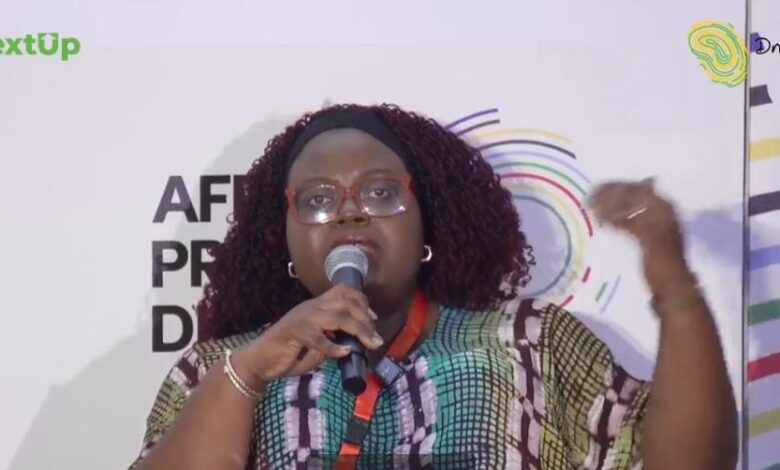
Irene H. Fiebor, Senior Instructional Designer and eLearning Project Officer at the Kofi Annan International Peacekeeping Training Centre (KAPITC), has stressed the need for young people across Africa to acquire practical digital and artificial intelligence (AI) skills in order to remain competitive in today’s evolving workplace.
She made the remarks during a panel discussion at the Powered by Drive to Inspire — Africa (DTI-A) NextUp breakfast meeting held at the Accra International Conference Centre, on the sidelines of the Africa Prosperity Dialogues 2026, Wednesday, 4th February 2026. As the name implies, NextUp affirms that African youth are next in line for global leadership, economic growth, expanded opportunities, and greater recognition on the world stage.
The panelists explored how emerging technologies — including artificial intelligence, digital payment infrastructure, and Web3 — are enabling cross-border trade, innovation, and entrepreneurship. Bernard Dzakpasu, Manager for GRC & ESG Services at KPMG West Africa, served as the moderator of the DTI-A breakfast meeting.
Ms. Fiebor said her years of experience working with educators and institutions across the continent have shown that the challenge facing many young people is not a lack of intelligence or motivation, but rather the inability to effectively apply digital tools for productive purposes.
“We have many brilliant and energetic young people. What is often missing is the ability to apply and use the digital tools that are available to us,” she noted.
According to her, one of the most critical skills for today’s youth is AI literacy, particularly the ability to use generative AI tools responsibly and effectively. She mentioned platforms such as ChatGPT, DeepSeek, Claude, and Gemini, urging young professionals to move beyond simply copying AI-generated content.
“It is not about copying and pasting whatever the AI produces, but learning how to use these tools effectively to support work and solve problems,” she explained.
Ms. Fiebor highlighted the principle of “garbage in, garbage out,” emphasizing that the quality of results generated by AI systems depends largely on the quality of prompts and instructions provided by the user. She described prompt writing as an essential skill that young people must develop to maximize the benefits of AI technology.
While acknowledging that many young people are already technology-savvy through their engagement with social media, she said the major gap lies in translating digital familiarity into professional competence.
“In many organizations, young people struggle with writing professional emails, communicating effectively in the workplace, or carrying out basic digital tasks,” she observed.
She further encouraged young professionals to master essential workplace tools such as Microsoft 365, Google Workspace, and cloud-based productivity systems, noting that these are widely used across organizations on a daily basis.