Africa must stop raw material exports – President Mahama
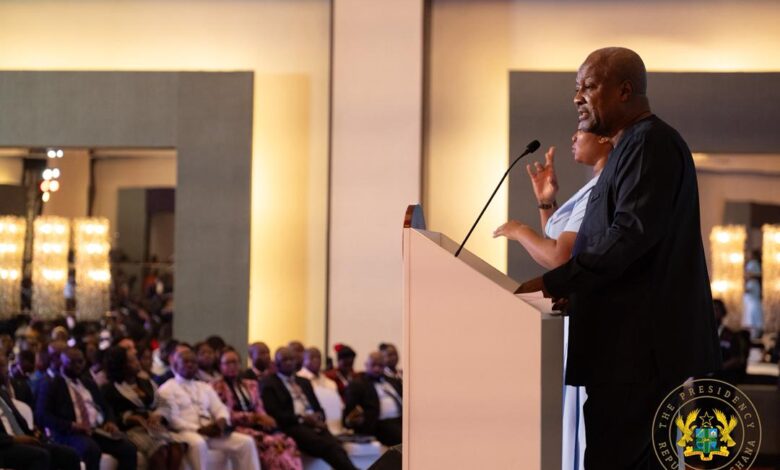
President John Dramani Mahama has urged African countries to bring an end to the export of raw materials, warning that the continent will continue to lose jobs, revenue and industrial capacity if it fails to add value to its natural resources.
Speaking at the Africa Trade Summit on Wednesday, President Mahama said Africa’s long-standing dependence on primary commodity exports had entrenched economic vulnerability and stunted industrial development.
“Africa cannot continue to export raw materials and re-import finished goods at many times their original value,” he said, describing the model as one that “exports wealth and imports unemployment.”
The President cited cocoa as a clear example of the structural imbalance facing African economies, noting that while Africa produces the majority of the world’s cocoa, it earns only a small share of the value generated by the global chocolate industry.
“This situation is not unique to cocoa,” he said. “We see the same pattern in oil, textiles, timber and mineral resources, where Africa remains at the bottom of the value chain.”
President Mahama stressed that industrialization on the continent must be anchored in value addition and beneficiation, arguing that processing Africa’s resources locally would create jobs, support technology transfer and expand domestic revenue.
Turning to Ghana’s experience, he said the country was deliberately shifting away from a commodity-export model towards a value-added economy. According to him, this strategy prioritizes agro-processing, manufacturing and industrial clusters aligned with Ghana’s natural endowments.
“Our focus is to add value to what we produce—cocoa, cashew, oil palm, cassava, petroleum, gold, manganese and bauxite—so that these resources can drive real economic transformation,” President Mahama said.
He added that value addition was also critical to the success of the African Continental Free Trade Area (AfCFTA), noting that meaningful intra-African trade would only be achieved if countries traded finished and semi-finished goods rather than raw materials.
“Beneficiation is not optional; it is essential if Africa is to industrialize, compete globally and secure prosperity for its people,” he said.
The Africa Trade Summit brings together heads of state, policymakers, business leaders and development partners to discuss strategies for boosting industrialization, strengthening regional value chains and expanding intra-African trade.