Judicial Overreach or Legitimate Protection? …The Complex Case of Press Freedom vs. Individual Rights
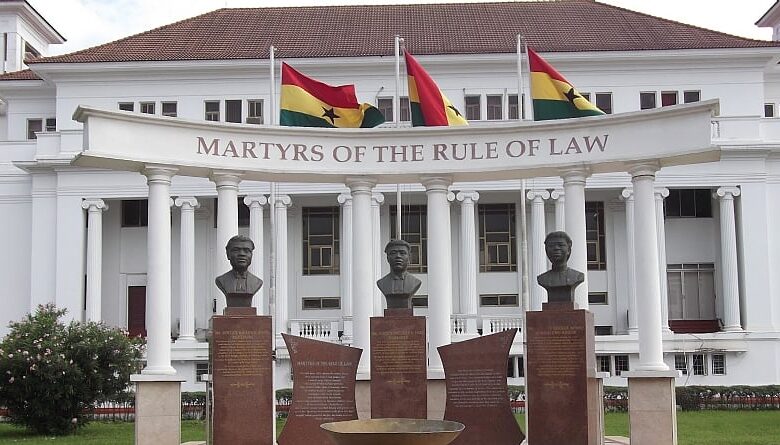
In a landmark decision that has sent shockwaves through Ghana’s legal and journalistic communities, the Human Rights Court 2 in Accra has delivered a ruling that epitomizes the delicate balance between press freedom and individual privacy rights, as the Judge, Justice Nana Brew places a perpetual injunction on an Investigative Journalist, Innocent Samuel Appiah, prohibiting him exposing infractions on the Group CEO of Lysaro group of Companies, Cynthia Adjei.
According to the Judge, “Ghanaian Investigative journalists have the right to gather and publish but this right is not absolute. The publication of an information about an individual can potentially infringe on the human rights. That is the right to privacy. Hence, the need for it to report to the Police, the CID, EOCO and other institutions to take up whenever they have done partially of the investigations.
“So what it is, is that, from totality of evidence, I arrived that what the applicant is seeking is that the information gathered and the communication that he is trying to take it from the applicant infringes on her human rights and under Article 18 (2) and other aspects of the human rights of her privacy, based on that, I hereby enter judgement on behalf of the applicant.”
The case of Innocent Samuel Appiah versus Cynthia Adjei represents a critical inflection point in the ongoing dialogue about the boundaries of investigative journalism and judicial intervention. Ever since the case started in January 2025, till the dark day on November 7, 2025, Mrs. Adjei has never stepped foot in the court room.
The Genesis of a Controversial Injunction
At the heart of this legal battle is Mr. Appiah, an investigative journalist renowned for his uncompromising approach to uncovering systemic irregularities. His investigation into Lysaro Group and its CEO, Cynthia Adjei, promised to expose what he alleged were significant ethical breaches in corporate governance and potential conflicts of public interest.
Mr. Appiah had sent a questionnaire to Mrs. Adjei, whose husband is the immediate past acting Managing Director of GOIL PLC, to respond to allegations of several government land acquisitions, tax compliance, conflict of interest and non-renewal of her company for over 10 years.
Instead of responding to the issue, Mrs. Adjei, who had first reported the matter to the East Legon Police, and then to her cousin, Farouk Al-Wahab to intervene, rather sought solace at the Court claiming invasion of privacy and breaching the Right to Information Act and Data Protection Act because, according to her, these were not used to acquire documents from the Office of the Registrar of Companies, whilst dodging the real issues.
The judicial response was swift and unprecedented. Justice Nana Brew issued a perpetual injunction that goes beyond typical legal remedies, effectively creating a permanent gag order on Mr. Appiah’s investigative work related to Mrs. Adjei and Lysaro Group. This ruling builds upon an earlier interlocutory injunction from June 2025, which had already placed significant constraints on the journalist’s reporting.
Legal and Ethical Complexities
The case raises profound questions about the role of the judiciary in mediating between individual rights and public interest journalism. Justice Brew’s ruling hinges on a controversial interpretation of human rights protections, suggesting that the potential reputational damage to Mrs. Adjei would be irreparable and cannot be adequately compensated through monetary damages.
Key points of contention include: Scope of Judicial Intervention; Press Freedom Implications; and Potential Conflicts of Interest.
The perpetual injunction represents an extraordinary step that many legal experts argue goes beyond the traditional boundaries of judicial protection. By permanently preventing Mr. Appiah from publishing his investigative findings, the court appears to be acting as a pre-emptive censor.
The ruling sends a chilling message to investigative journalists. It suggests that powerful individuals can effectively silence critical reporting through judicial mechanisms, potentially undermining the fundamental role of journalism as a societal watchdog.
Adding layers of complexity are the murmured allegations of potential conflicts of interest. Questions have been raised about the alleged relationship between Justice Brew and Bobby Banson, Mrs. Adjei’s legal counsel, though these remain unsubstantiated at present.
The Investigative Context
Mr. Appiah’s investigation centered on several critical areas: land acquisition practices by Lysaro Group; potential irregularities in contract awards; questions surrounding tax compliance; possible conflicts of interest in business operations as well as the non-renewal of her companies with the Office of the Registrar of Companies that she has been using for her work.
Rather than addressing these substantive allegations through transparency or legal counter-arguments, Mrs. Adjei chose the path of judicial suppression – a strategy that paradoxically draws more attention to the very issues she seeks to keep hidden.
Broader Implications for Journalism and Governance
This case transcends individual actors, representing a critical moment in Ghana’s ongoing struggle to balance institutional accountability with individual protections. It raises fundamental questions: thus, when does judicial protection become judicial overreach; how can investigative journalism fulfill its societal role when faced with such legal barriers; what mechanisms exist to prevent the abuse of legal processes to suppress legitimate public interest reporting?
Legal and Journalistic Perspectives
Prominent legal scholars have expressed deep concern. “A perpetual injunction of this nature fundamentally undermines the principle of press freedom,” notes Dr. Wilberforce Kwame Mensah, a constitutional law expert. “It represents a dangerous precedent that could be weaponized to suppress critical reporting,” he contended, calling on the Judicial Council to look into the Judge’s conduct.
Journalistic organizations have been equally vocal, viewing the ruling as a direct threat to investigative journalism’s core mission of holding powerful entities accountable. Whilst some have described the ruling as shameful on the part of the Judge, others called on him to honourably exit the Bench as he doesn’t deserve to be put there.
The Path Forward
The case is likely to face further legal challenges. Mr. Appiah’s legal team is preparing to appeal, arguing that the injunction represents an unconstitutional infringement on press freedom and public interest reporting.
The broader societal impact is already evident. The ruling has sparked a national conversation about the limits of judicial intervention, the protection of journalistic integrity, and the mechanisms of accountability in both public and private sectors.
Conclusion
The Appiah v. Adjei case is more than a legal dispute – it is a critical litmus test for Ghana’s commitment to press freedom, transparency, and democratic accountability. As the legal proceedings continue, the case will undoubtedly serve as a pivotal reference point in discussions about the delicate balance between individual rights and public interest journalism.
The judiciary finds itself at a critical crossroads: Will it be an instrument of transparency and accountability, or a tool for suppressing legitimate investigative reporting? Only time will reveal the full implications of this landmark ruling.