We can’t leave failed WASSCE candidates to their fate – Mitchell Amoamah and Francisca Amoako write
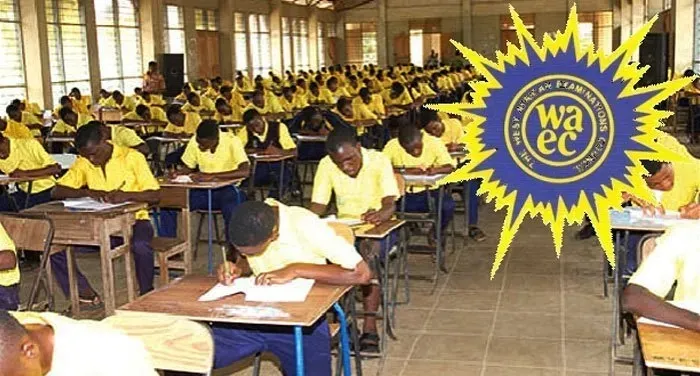
The West African Senior School Certificate Examination (WASSCE) results released recently have attracted a flood of reactions.
Moderates have described the outcome as “worrying,” while others, less restrained, have chosen stronger words such as “disappointing,” “disastrous,” and “a true reflection”.
Whichever label one prefers, the 2025 WASSCE results are an embarrassment to the country.
They expose deep-rooted flaws in Ghana’s education system, problems that have accumulated over at least the past decade.
The details make the picture clearer. One in every four candidates failed Mathematics. Social Studies, often referred to as the easiest paper, recorded an alarming drop. Only 55.82% of candidates obtained A1–C6, a steep decline from 71.53% in 2024. This means 122,449 candidates, representing 27.50%, failed the subject.
The other core subjects offer little comfort. Nearly 30% of candidates failed English Language, while Integrated Science saw some 61,243 candidates obtaining an F9. An additional 100,363 students scored either D7 or E8 in the same subject.
Although the full Chief Examiner’s Report is yet to be released, WAEC officials have given preliminary explanations for the mass failures. A key challenge noted in both Mathematics and Social Studies is weak problem-solving skills. Many candidates struggled not only to explain their solutions but also to even provide them.
The consequences of this year’s results are significant. The number of students qualifying for university admission will drop sharply. Those who fail to qualify will be forced to either resit the exams as private candidates or navigate the stark reality of a system where second attempts are neither encouraged nor adequately supported.
Contrary to the loud commentary blaming the students, the failure is not theirs alone. It reflects systemic shortcomings. If we fail to reintegrate these students into pathways toward tertiary education, the nation will bear the cost.
Worse still, many students may never get a second chance. Some come from families unable to support a resit; others will simply lose interest or confidence. Losing these young people at the end of high school would be devastating for them and for the nation.
It will significantly affect Ghana’s total productivity. If Senior High School leavers lack the requisite skills and qualifications, productivity is likely to be reduced.
Similarly, overdependence on families. Most Ghanaian families already operate under tight budgets. When youth cannot progress, parents must continue to provide food, accommodation, health care, and others.
This situation further borders on a national security concern. Youngsters who will be denied the opportunity to pursue higher education due to their failure may be left with no option but to indulge in social vices. In line with this, the country will experience higher crime rates.
Moreover, youth unemployment may increase as many will struggle with stable jobs. Idle youths will be forced to actively engage in violent protests and political unrest.
We cannot abandon thousands of young people to uncertain futures. The government must take active steps to track these candidates and support their next steps. Encouraging and enabling them to resit failed papers is essential. Teachers’ training must be strengthened to equip them with the relevant skills in their delivery. The provision of extra classes is essential. It serves as a support system for students in weak subjects.
While factors such as social media distractions and the previous government’s attempts to gloss over deep issues have contributed to the crisis, finger-pointing will not solve the problem. It only deepens it, and in Ghana, it quickly degenerates into a political contest.
To the students, failure is not fatal. Perseverance and studying must be the benchmark. You can always perform better when you put in the efforts. That Mathematics, English Language, or Social Studies paper you failed today could be the very subject you end up teaching one day.