“We Are Still Engaging Zipline; No Service Has Been Halted – Health Minister Clarifies’
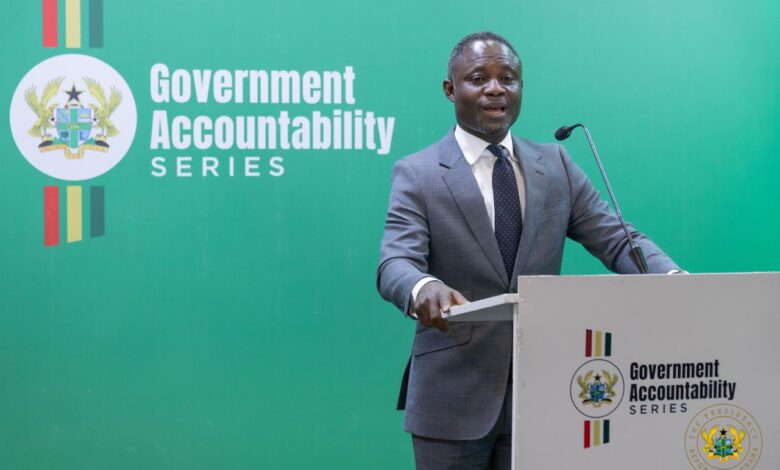
The Minister for Health, Hon. Kwabena Mintah Akandoh, has clarified that government is in active discussions with global drone-delivery company Zipline to review the terms of its operations in Ghana, insisting that the goal is to secure value for money for the state.
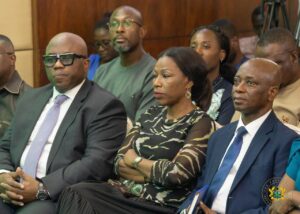
Speaking during “Government Accountability Series” at the Presidency today December 1, 2025, the Minister disclosed that the original contract, signed in 2018 and implemented in 2019, contains take-or-pay clauses that commit the Government of Ghana (GoG) to pay $88,000 per centre per month, regardless of usage levels. With six operational centres, the country currently pays over half a million dollars every month for the service.
“A contract was signed in 2018, and as part of that contract, Ghana is supposed to pay $88,000 per centre per month. With six centres, we are paying a little over half a million dollars every month,” the Minister stated.
He further revealed that although the agreement was presented at the time as one that would not burden the Consolidated Fund, the reality has been different.
“The then Minister responsible for Health said clearly on the floor of Parliament that the public purse was not going to come in here. Yet today, Government of Ghana is paying huge sums of money every month for the same service,” Hon. Akandoh noted, referencing parliamentary records.
Hard-to-Reach Areas Only 12% of Deliveries
The Minister emphasised that the initial justification for the Zipline contract was to support hard-to-reach communities and emergency medical services. However, a detailed review of operations conducted by the Ministry shows that only a small portion of deliveries fall under these categories.
“Upon review, what we realized is that the hard-to-reach areas constitute only 12% of the activities—just twelve percent—and emergency services constitute only 4%,” he said.
He added that many of the items delivered by drones fall outside the original intent of the programme.
“It will interest you to know that they fly items like condoms, mosquito nets, blood donor cards—not blood, but blood donor cards—syringes, needles, and even educational materials like textbooks, exercise books and uniforms,” he revealed.
Government Is Not Abandoning Zipline
Contrary to media reports suggesting a withdrawal or termination of the service, Hon. Akandoh stressed that the government is committed to engagement—not abandonment.
“If you hear that we are not engaging Zipline, it is not true. We have met them more than three times, and we are still engaging them. The President has directed that everything we do must deliver value for money,” he said.
The Minister reaffirmed that the drone delivery system remains important but must operate under terms that align with national priorities and economic realities.
“We all agree technology is important. But we must ensure value for money. That is the directive His Excellency the President has given to all ministries, including the Ministry of Health,” he emphasized.
Government’s Next Steps
Hon. Akandoh indicated that government is working with all stakeholders, including Zipline, to restructure the operational model, redefine deliverables and review cost implications to ensure the service provides maximum benefit to citizens.
“We want to know how to achieve efficiency, reduce waste and improve value for money. That is all we are doing, and Zipline is cooperating in these discussions,” he said.
The Minister assured the public that no essential health service will be disrupted as engagements continue.