Mahama Must Account for $4bn 24-Hour Economy Before Promising $10bn New Economy – IERPP
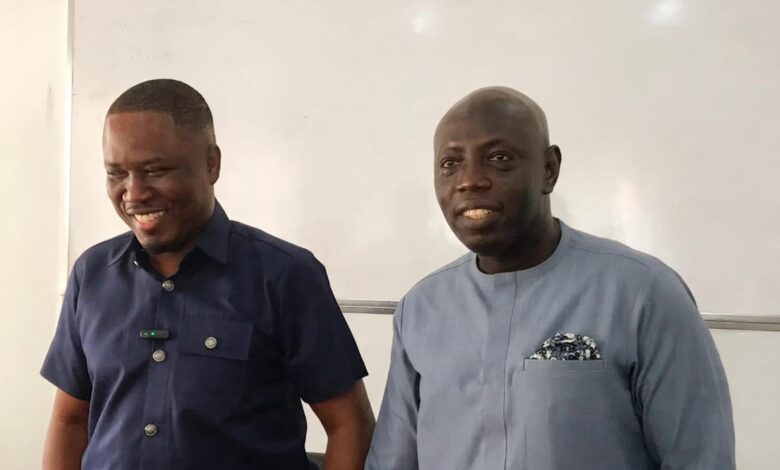
Professor Isaac Boadi, Executive Director of the Institute of Economic Research and Public Policy (IERPP), has challenged President John Dramani Mahama’s government to account for the funds, projects and jobs associated with its $4 billion 24-Hour Economy programme before seeking public support for the proposed $10 billion New Economy initiative.
Addressing a press conference at the IERPP Conference Room at Adabraka, Accra, on Tuesday, October 27, 2026, Prof. Boadi said the government had yet to provide satisfactory evidence of the results achieved under the original programme, despite announcing a significantly larger economic initiative.
He said the situation raised serious questions about the credibility of public commitments, the management of national resources and the government’s ability to translate ambitious economic promises into sustainable employment opportunities, particularly for young people.
Prof. Boadi recalled that on June 30, 2025, Presidential Advisor on the 24-Hour Economy, Augustus Goosie Obuadum Tanoh, announced plans to mobilise $4 billion over four years for the programme, while Abdul-Nasser Suglo Alidu, then Head of Strategy and Programmes at the Secretariat, set a target of at least 1.7 million jobs within the same period.
He noted that President Mahama subsequently launched the 24-Hour Economy and Accelerated Export Development Programme, popularly known as 24H+, on July 2, 2025, with the stated objectives of transforming production, expanding exports, attracting private investment and creating jobs.
However, Prof. Boadi said the government’s inability to provide a verified figure for jobs created under the initiative undermined public confidence in the programme.
Citing a MyJoyOnline report published on October 19, 2026, he said Mr. Suglo Alidu had admitted that the Secretariat could not provide a total figure for the jobs created by the programme.
Prof. Boadi quoted Mr. Suglo Alidu as saying: “I won’t be able to give you a number in terms of the total number of jobs the 24-hour economy created. We don’t want to throw numbers around.”
According to Prof. Boadi, it was troubling that a programme launched with a target of 1.7 million jobs could not provide a verified account of its employment outcomes more than a year after its launch.
He said the development suggested that the government had announced its employment ambitions before putting in place an adequate system to measure and verify the results.
Prof. Boadi argued that the absence of reliable job-creation figures made it difficult for Ghanaians to assess whether the programme was delivering on its promises.
Questions over $5.5bn in project agreements
Prof. Boadi also questioned claims by the 24-Hour Economy Secretariat in July 2026 that project agreements worth approximately $5.5 billion had been signed, with four projects expected to generate more than 160,000 direct jobs.
He said the figures required further clarification, particularly regarding the distinction between agreements signed, financing secured, funds disbursed, projects completed and jobs actually created.
According to Prof. Boadi, the signing of project agreements should not be presented as proof that the projects had been fully financed or that their anticipated employment opportunities had materialised.
He therefore called on the government to disclose how much money had actually been disbursed under the original programme, how much of the reported $5.5 billion represented binding financing commitments and how many projects had reached the implementation stage.
He further demanded details of the proportion of the original $4 billion target that had been secured and the outstanding financing gap.
Prof. Boadi maintained that the government must distinguish between projected employment figures and independently verifiable jobs, including permanent, temporary and indirect employment.
$90m and $110m budget discrepancy
The IERPP Executive Director also raised concerns about what he described as inconsistencies in the 2026 Budget documents regarding allocations for the 24-Hour Economy programme.
He said the detailed expenditure table in the 2026 Budget presented by Finance Minister Dr. Cassiel Ato Forson on November 13, 2025, listed GH¢90 million for the programme, comprising GH¢70 million for goods and services and GH¢20 million for capital expenditure.
However, Prof. Boadi said the Budget Speech cited an allocation of GH¢110 million, creating a discrepancy that required an official explanation.
He questioned why the two budget documents reported different figures for the same flagship programme and called on the government to disclose the amounts actually released and spent, as well as the measurable outputs achieved with the funds.
Prof. Boadi stressed that a budgetary allocation did not automatically translate into money released or expenditure incurred, insisting that the public deserved a clear account of the programme’s financial performance.
He also called for an independent mechanism through which citizens could monitor expenditure and assess the programme’s contribution to employment creation.
Accountability concerns
Prof. Boadi’s concerns come amid President Mahama’s announcement on August 14, 2026, of a proposed $10 billion New Economy programme, expected to be implemented over four years at an estimated rate of $2.5 billion annually across seven priority sectors.
He said the proposal included $5 billion earmarked for agriculture and agro-processing, sectors he acknowledged were important to Ghana’s productive transformation.
However, Prof. Boadi questioned why the government was introducing a substantially larger economic programme before providing a comprehensive account of the financing and results of the 24-Hour Economy initiative.
He said the government must demonstrate that the proposed New Economy programme was backed by a credible financing plan, clear implementation arrangements and measurable targets rather than relying on ambitious announcements.
According to Prof. Boadi, the finance minister had indicated that consultations on the programme were ongoing and that full details would be presented in the 2027 Budget.
He questioned how the government intended to finance the proposed $10 billion programme, what proportion would come from public resources and how much would be sourced from private investors, development partners and financial institutions.
Prof. Boadi also urged the government to clarify whether the programme would create additional fiscal obligations or contingent liabilities that could eventually impose costs on taxpayers.
He called for the publication of the proposed programme’s investment criteria, sectoral allocations, implementation timetable and accountability arrangements before its full rollout.
Prof. Boadi said the ultimate test of the New Economy initiative would be whether it created sustainable jobs and delivered tangible economic benefits to ordinary Ghanaians.
He cited the expectations of unemployed graduates, traders and young farmers, arguing that they needed evidence that the proposed investment would translate into employment and productive opportunities rather than remain a headline figure.
Five demands
Prof. Boadi outlined five key demands to the government, calling for their implementation without further delay.
First, he called for the publication of a comprehensive financing and implementation report on the 24-Hour Economy, detailing funds pledged, agreements signed, money disbursed, expenditure incurred and projects completed.
Second, he demanded independently verifiable job-creation figures that clearly distinguish permanent, temporary and indirect employment from projected jobs.
Third, he called for the reconciliation of the GH¢90 million and GH¢110 million figures in the 2026 Budget documents, alongside disclosure of actual releases and expenditure.
Fourth, Prof. Boadi demanded the publication of the proposed New Economy programme’s financing structure, investment criteria, sector allocations, implementation timetable and accountability mechanisms.
Fifth, he called for the establishment of a public dashboard, supported by periodic independent audits, to track financial commitments, disbursements, project milestones and jobs created.
Prof. Boadi said the measures were necessary to strengthen public confidence and ensure that major economic programmes were assessed against verifiable outcomes.
He argued that Ghana’s challenge was not necessarily a shortage of economic plans but the absence of sufficient accountability for the promises made under those plans.
According to Prof. Boadi, the recurring pattern of announcing ambitious financial targets without providing a comprehensive account of previous commitments risked weakening public trust in government economic initiatives.
He questioned what lessons the government had learnt from the $4 billion 24-Hour Economy programme, what financing had been secured and what safeguards would ensure that the proposed $10 billion New Economy initiative delivered better results.
Prof. Boadi maintained that until the government provided supporting documents, audited figures and verifiable evidence of progress, Ghanaians would remain justified in demanding answers about the credibility of the new proposal.
He insisted that the public had a right to know not only how much the government intended to invest but also how much it had actually invested, how many sustainable jobs had been created and what value the country had received.
“The era of announcing numbers must end. The era of accounting for results must begin,” Prof. Boadi said in his statement.
He urged the Mahama administration to prioritise transparency, financial accountability and measurable outcomes in the implementation of its flagship economic programmes.