CPCR Urges Gov’t to Stop Common Fund Allocations to MPs
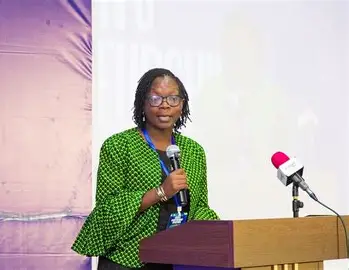
The Chairperson of the Steering Committee of the Citizens’ Platform on Constitutional Reform (CPCR), Professor Akosua Keseboa Darkwah, has urged the government to reconsider its decision to continue allocating a portion of the District Assemblies Common Fund to Members of Parliament.
Prof. Darkwah said the practice blurs the distinction between the legislative duties of MPs and the executive and development responsibilities of district assemblies.
“We believe this confuses the legislative role of Members of Parliament with the executive and development responsibilities of district assemblies. All such allocations should, therefore, end,” she said.
She made the remarks at a press conference in Accra on Tuesday, where the CPCR presented its position on the ongoing constitutional review process and the government’s response to the recommendations of the Kwasi Prempeh Constitution Review Committee.
The CPCR, facilitated by CDD-Ghana, STAR-Ghana Foundation and the Democracy Hub, brings together civil society organisations, activists and citizens to promote engagement, advocacy and accountability in Ghana’s constitutional reform process.
Prof. Darkwah also called on the government to reconsider its proposal to establish the Democracy Fund solely through ordinary legislation, with its funding subject to annual executive discretion.
She argued that the Democracy Fund, along with funding for institutions such as the Electoral Commission, the National Commission for Civic Education (NCCE) and the Commission on Human Rights and Administrative Justice (CHRAJ), should be constitutionally protected and ring-fenced.
On the election of Metropolitan, Municipal and District Chief Executives (MMDCEs), she called for an open electoral process that gives every qualified citizen a fair opportunity to contest, without restrictions imposed through presidential nomination, shortlisting or vetting by executive institutions.
Prof. Darkwah also urged the government to reconsider its proposal to increase Parliament’s size to 300 members through the addition of 24 proportional-representation seats.
She said the proposed study on proportional representation should be undertaken immediately and used to develop a meaningful system within the existing ceiling of 276 MPs.
She further opposed the proposed removal of the National Media Commission’s constitutional responsibility to protect the independence of state-owned media and the transfer of that responsibility to the President and other executive institutions.
“We believe the commission’s authority over the state-owned media, its press-freedom mandate and its funding must remain constitutionally protected,” she said.
Prof. Darkwah described the issues as fundamental to civil society, citing their implications for institutional independence, the separation of powers, citizens’ rights and the integrity of the constitutional reform process.
She urged the government to give serious consideration to the concerns raised by civil society and not treat its position paper as the final word on the constitutional review process.
By Esther Padmore Amonoo