More than US$20 million spent repairing fibre cuts in 2025 – Sam George
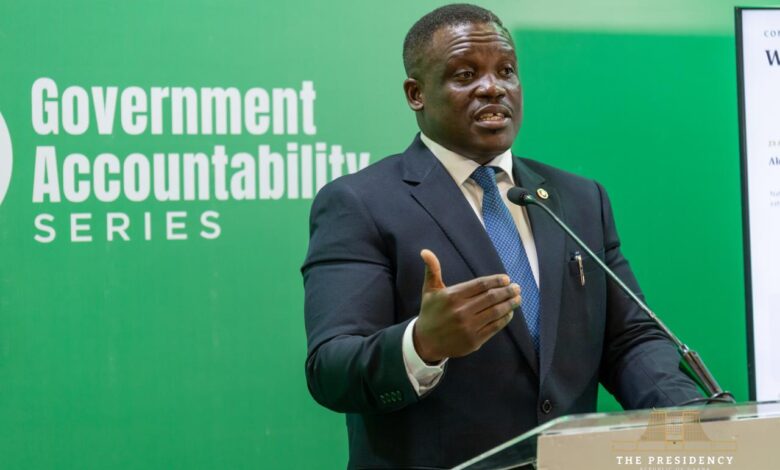
More than US$20 million was spent repairing damaged fibre-optic infrastructure in Ghana in 2025, according to Minister for Communication, Digital Technology and Innovations, Samuel Nartey George.
The Minister said the high cost of repairing fibre cuts has become a major challenge for the telecommunications sector, contributing to network disruptions and affecting the quality and reliability of digital services across the country.
Speaking during the Government Accountability Series, Mr George disclosed that Ghana recorded nearly 4,300 fibre cuts in the first half of 2026 alone, putting the country on course to record close to 9,000 fibre cuts by the end of the year if the trend continues.
He explained that road construction activities account for about 49 per cent of fibre cuts, while illegal mining, commonly known as galamsey, contributes about 25 per cent, with private and estate development activities accounting for the remaining 26 per cent.
According to him, the financial burden goes beyond the direct cost of replacing damaged cables, as fibre cuts also result in service interruptions, reduced network quality and additional operational costs for telecommunications companies.
He cited an incident along the Winneba-Mankessim road, where damage to fibre infrastructure resulted in a network outage lasting about 17 hours and affected data services towards Cape Coast.
He said another fibre cut subsequently caused an outage lasting approximately 19 hours, highlighting the vulnerability of telecommunications infrastructure to ongoing construction activities.
To address the problem, the Ministry is pushing for a “Dig Once” policy, under which fibre ducts or chambers would be incorporated into road construction projects to reduce the need to repeatedly excavate roads when telecommunications infrastructure is deployed.
The Minister also said government was working on a coordination framework requiring road agencies and contractors to engage telecommunications operators before undertaking excavation works in areas where fibre infrastructure may be located.
He indicated that the framework could include enforceable penalties and cost-recovery mechanisms for parties whose activities damage fibre infrastructure.
Hon. Sam George stressed that protecting fibre infrastructure is critical to Ghana’s digital transformation, particularly as the country expands broadband connectivity, digital government services, mobile financial services and other technology-driven activities.
He said government would continue engaging stakeholders to reduce avoidable fibre cuts and ensure that investments in digital infrastructure translate into reliable and affordable connectivity for citizens.